
基质金属蛋白酶1作为肝细胞癌中线粒体氧化应激相关生物标志物的鉴定与验证
Identification and validation of MMP1 as a biomarker associated with mitochondrial oxidative stress in liver hepatocellular carcinoma.
作者信息
Wang Zhihui, Zhou Hao, Zhang Lie, Liu Xin, Wang Hui
机构信息
Department of Gastrointestinal Surgery, Tongji Medical College, Wuhan Central Hospital, Huazhong University of Science and Technology, No. 26 Shengli Street, Jiang'an District, Wuhan, 430000, Hubei Province, China.
Department of General Surgery, Tianjin Medical University General Hospital, Tianjin, 300000, China.
出版信息
Sci Rep. 2025 Jul 7;15(1):24276. doi: 10.1038/s41598-025-10076-0.
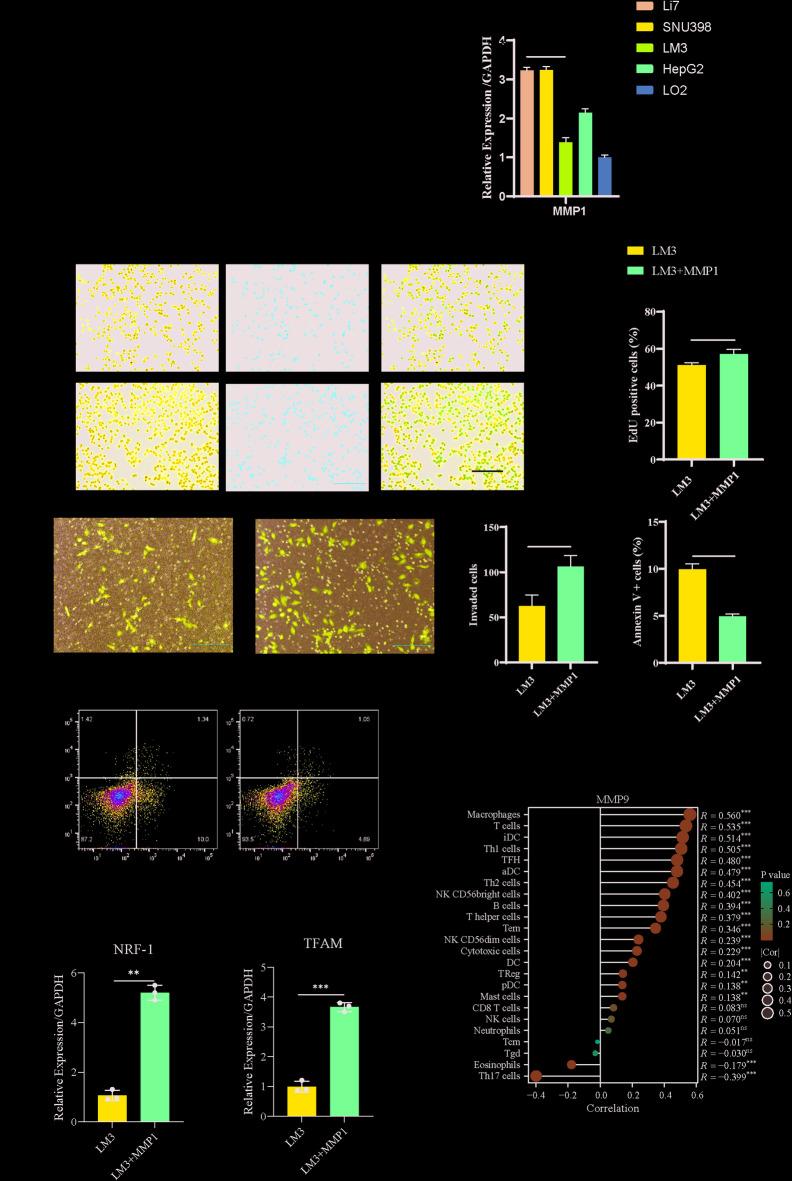
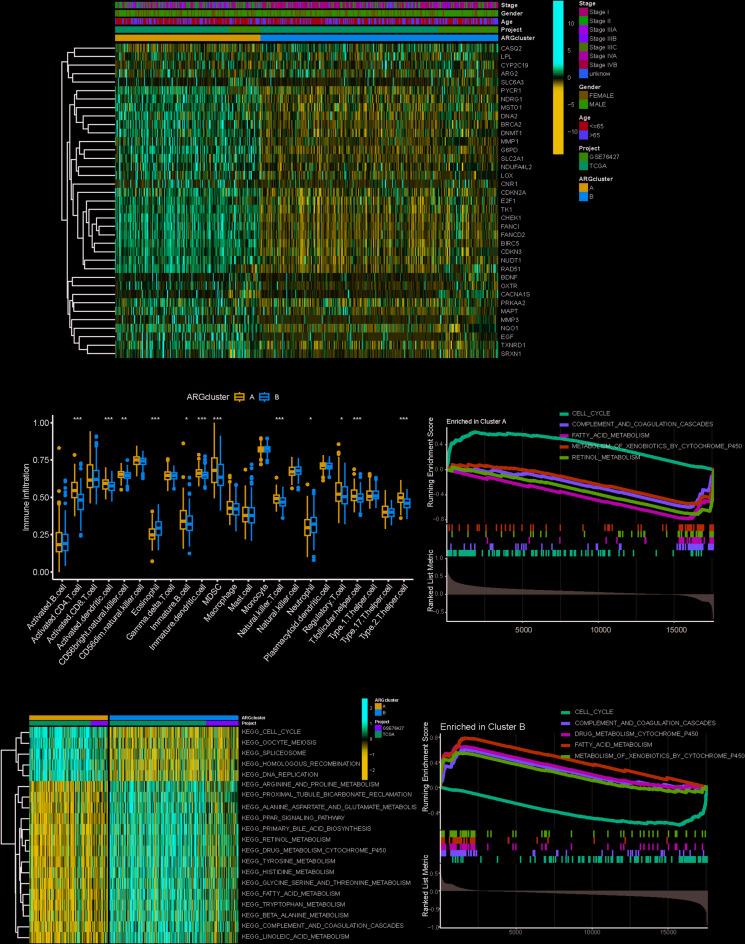
Mitochondrial oxidative stress plays a critical role in cancer development and progression. However, there is limited research on the relationship between mitochondrial oxidative stress and liver hepatocellular carcinoma (LIHC). Mitochondrial oxidative stress-related genes were collected from Genecards Portal. Prognosis-linked genes (PLGs) were identified by univariate Cox regression analysis. A risk model was constructed based on the PLGs using least absolute shrinkage and selection operator (LASSO) analysis. Receiver operating characteristic (ROC) curves were used to determine the predictive ability of the model. The expression levels of the prognostic genes were verified in the cell lines. Cell proliferation, apoptosis, and invasion assays were conducted to investigate the functional role of the target gene. We constructed a novel risk model based on 9 prognostic genes (CYP2C19, CASQ2, LPL, TXNRD1, CACNA1S, SLC6A3, OXTR, BIRC5, and MMP1). Survival analysis showed that patients with a low-risk score had a much better overall survival (OS). Prognostic risk score was found to be an independent predictor of prognosis. Patients in the high-risk group had a less favorable tumor microenvironment characterized by a lower degree of immune cell infiltration. Among the nine prognostic genes, MMP1, identified as the most promising candidate, demonstrated the capacity to enhance tumor cell proliferation and invasion. Our investigation reveals the oncogenic role of mitochondrial oxidative stress in LIHC. For the first time, we established a risk prediction model for mitochondrial oxidative stress in patients with LIHC. MMP1 has the potential to function as a promising biomarker in LIHC.
线粒体氧化应激在癌症的发生和发展中起着关键作用。然而,关于线粒体氧化应激与肝细胞癌(LIHC)之间关系的研究却很有限。从Genecards数据库收集线粒体氧化应激相关基因。通过单因素Cox回归分析确定预后相关基因(PLGs)。使用最小绝对收缩和选择算子(LASSO)分析基于PLGs构建风险模型。采用受试者工作特征(ROC)曲线来确定该模型的预测能力。在细胞系中验证预后基因的表达水平。进行细胞增殖、凋亡和侵袭实验以研究靶基因的功能作用。我们基于9个预后基因(CYP2C19、CASQ2、LPL、TXNRD1、CACNA1S、SLC6A3、OXTR、BIRC5和MMP1)构建了一个新的风险模型。生存分析表明,低风险评分的患者总生存期(OS)明显更好。发现预后风险评分是预后的独立预测因子。高风险组患者的肿瘤微环境较差,其免疫细胞浸润程度较低。在这9个预后基因中,MMP1被确定为最有前景的候选基因,它具有促进肿瘤细胞增殖和侵袭的能力。我们的研究揭示了线粒体氧化应激在LIHC中的致癌作用。我们首次建立了LIHC患者线粒体氧化应激的风险预测模型。MMP1有可能成为LIHC中有前景的生物标志物。



 Zotero 插件