
2004年至2024年癌症中蛋白质棕榈酰化的研究趋势:文献计量与可视化分析
Research trends of protein palmitoylation in cancer from 2004 to 2024: a bibliometric and visualization analysis.
作者信息
Peng Yufeng, Peng Kewei, Wang Yi, Li Luyao, Lu Yuefei
机构信息
Department of Oncology, Zhenhai Hospital of Traditional Chinese Medicine, Ningbo, China.
The Rehabilitation Department of Wuhan No. 4 Hospital, Wuhan, China.
出版信息
Front Oncol. 2025 Jun 23;15:1571870. doi: 10.3389/fonc.2025.1571870. eCollection 2025.
BACKGROUND
Protein palmitoylation is a dynamic and reversible lipid modification that has attracted increasing attention in cancer research in recent years. Palmitoylation involves the covalent attachment of palmitic acid (C16) to cysteine residues, altering the protein's hydrophobicity and thereby affecting its membrane localization, stability, and functional activity. Recently, palmitoylation has been closely associated with the development and progression of various cancers, making it a key factor in cancer biology research.
METHODS
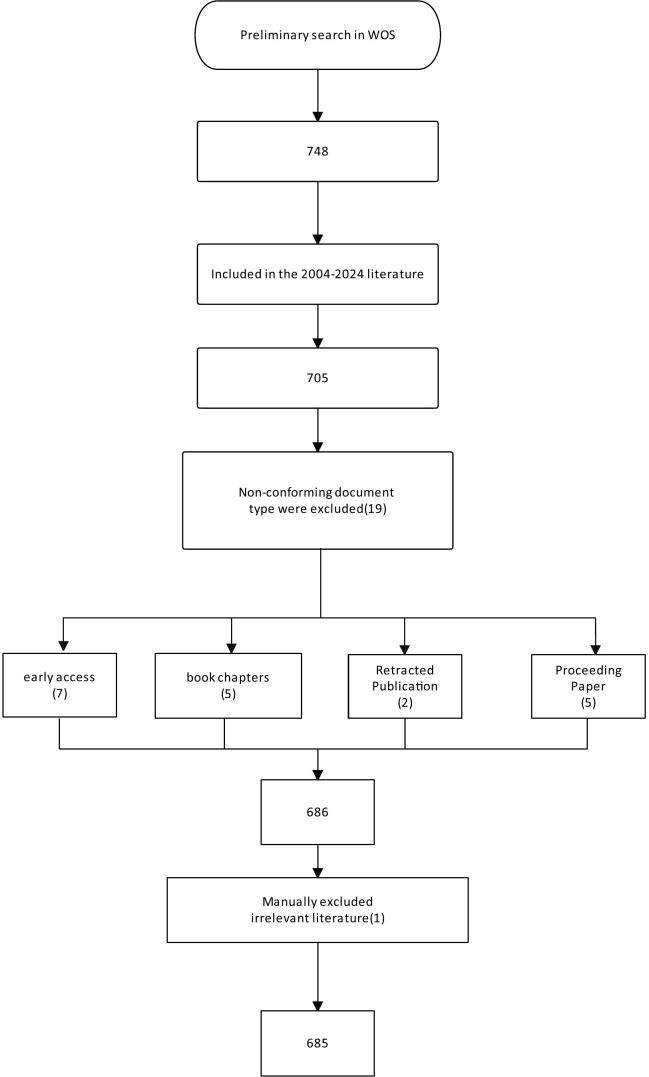
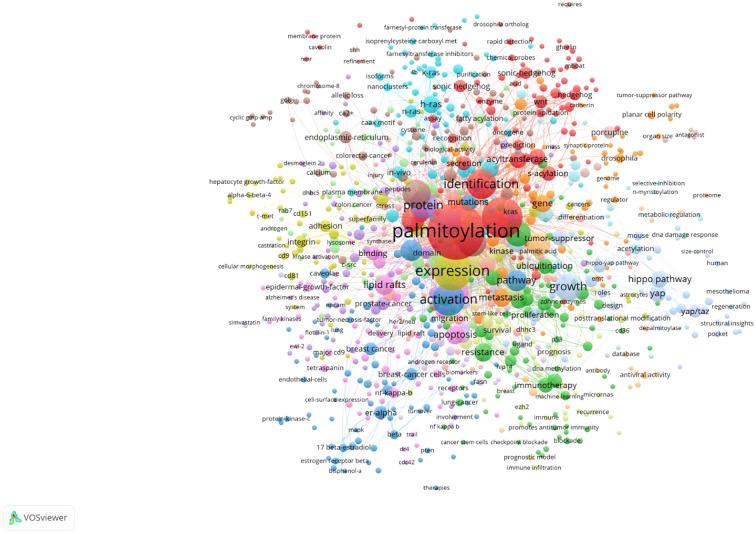
This study conducted a systematic bibliometric analysis using the Web of Science Core Collection (WoSCC) as the data source. A total of 685 papers published between January 1, 2004, and December 31, 2024, on the relationship between protein palmitoylation and cancer were selected. Information such as article titles, abstracts, and keywords was extracted to analyze publication trends, research hotspots, and collaboration networks among authors and institutions, thus assessing the dynamics of research in this field.
RESULTS
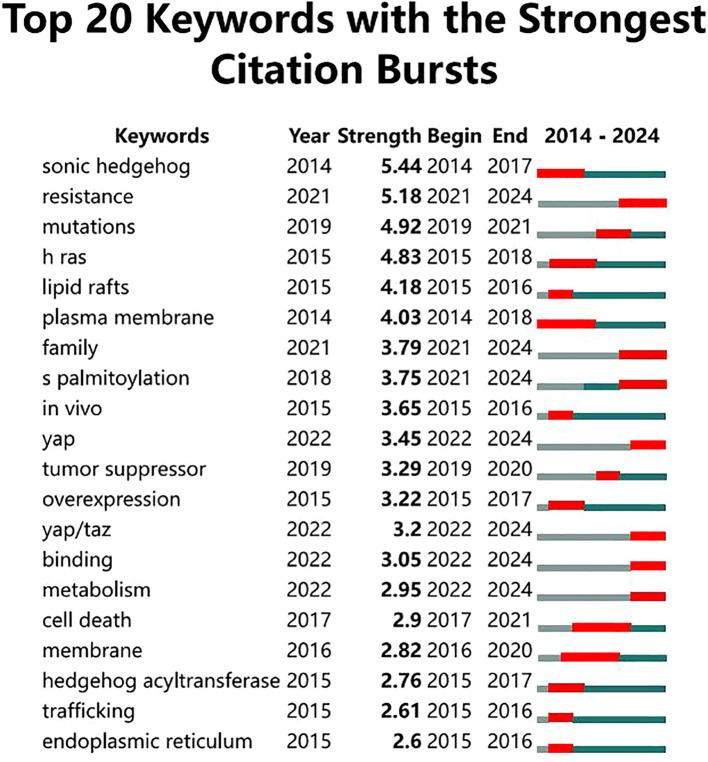
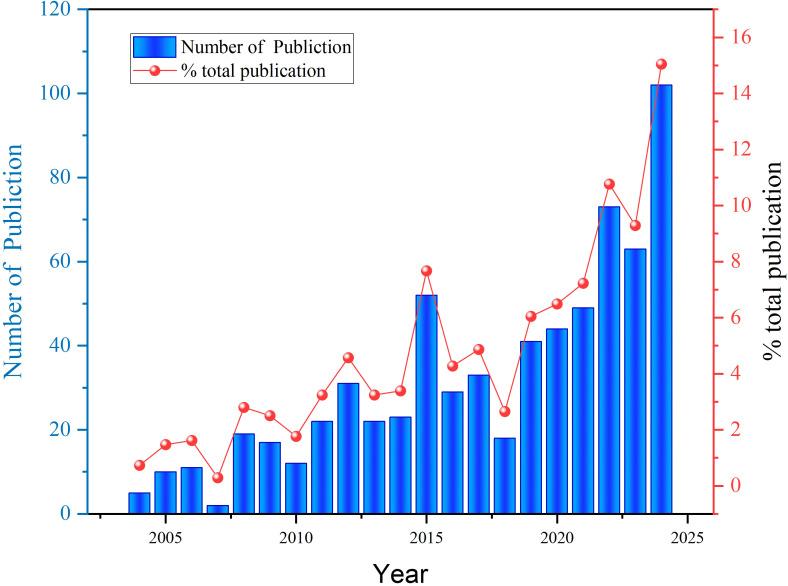
The analysis revealed that from 2004 to 2024, a total of 685 papers were published on the relationship between protein palmitoylation and cancer, with a significant increase in publications after 2020. The United States and China are the leading countries in this field, with institutions like Harvard University and the Chinese Academy of Sciences making substantial contributions. Research hotspots have shifted from early mechanistic studies to cancer-specific applications, particularly in areas such as tumor immune evasion, metabolic reprogramming, and therapeutic strategies, where significant progress has been made.
CONCLUSION
Future efforts should concentrate on three primary directions: constructing high-resolution pan-cancer palmitoylation site maps to unveil subtype-specific modification patterns; developing subtype-selective inhibitors targeting the ZDHHC enzyme family to overcome the toxicity limitations of current broad-spectrum inhibitors; and establishing international research alliances to integrate China's high productivity with the United States' translational expertise, thereby bridging regional disparities between basic research and clinical innovation, ultimately advancing palmitoylation regulatory networks toward precision therapeutic strategies.
背景
蛋白质棕榈酰化是一种动态且可逆的脂质修饰,近年来在癌症研究中受到越来越多的关注。棕榈酰化涉及棕榈酸(C16)与半胱氨酸残基的共价连接,改变蛋白质的疏水性,从而影响其膜定位、稳定性和功能活性。最近,棕榈酰化与各种癌症的发生和发展密切相关,使其成为癌症生物学研究的关键因素。
方法
本研究以Web of Science核心合集(WoSCC)为数据源进行了系统的文献计量分析。共筛选出2004年1月1日至2024年12月31日期间发表的685篇关于蛋白质棕榈酰化与癌症关系的论文。提取文章标题、摘要和关键词等信息,分析出版趋势、研究热点以及作者和机构之间的合作网络,从而评估该领域研究的动态变化。
结果
分析显示,2004年至2024年期间,共发表了685篇关于蛋白质棕榈酰化与癌症关系的论文,2020年后发表量显著增加。美国和中国是该领域的主要国家,哈佛大学和中国科学院等机构做出了重大贡献。研究热点已从早期的机制研究转向癌症特异性应用,特别是在肿瘤免疫逃逸、代谢重编程和治疗策略等领域取得了显著进展。
结论
未来的工作应集中在三个主要方向:构建高分辨率的泛癌棕榈酰化位点图谱,以揭示亚型特异性修饰模式;开发针对ZDHHC酶家族的亚型选择性抑制剂,以克服当前广谱抑制剂的毒性限制;建立国际研究联盟,将中国的高生产力与美国的转化专业知识相结合,从而弥合基础研究与临床创新之间的区域差距,最终推动棕榈酰化调控网络向精准治疗策略发展。


 Zotero 插件