
用于神经型布鲁氏菌病诊断的潜在微小RNA生物标志物的鉴定
Identification of potential miRNA biomarkers for neurobrucellosis diagnosis.
作者信息
Liu Meiling, Feng Liping, Shi Shujun, Guo Yuzhou, Lv Menghan, Li Zhengyu, Wang Xintian, Yang Hao, Zhang Zhelin
机构信息
Department of Neurology, The Affiliated Hospital of Inner Mongolia Medical University, Hohhot, China.
Xing'an League Disease Prevention and Control Center, Ulanhot, China.
出版信息
Front Physiol. 2025 Jun 23;16:1463597. doi: 10.3389/fphys.2025.1463597. eCollection 2025.
BACKGROUND
Neurobrucellosis (NB) is a rare complication of brucellosis that presentis with a variety of clinical symptoms, complicating its diagnosis. This study aimed to analyze the microRNA (miRNA) profile of cerebrospinal fluid (CSF) in NB patients to identify potential biomarkers for NB diagnosis.
METHODS
Small RNA sequencing was utilized to identify differential expressed miRNAs (DEmiRNAs) in CSF samples from both control and NB patients (in-house cohort). The GSE107554 dataset (validation cohort) from the GEO database was used to validate the expression levels of these DEmiRNAs. Subsequently, LASSO regression analysis was conducted to construct a diagnostic risk score model based on common miRNAs identified in both the in-house and validation cohorts.
RESULTS
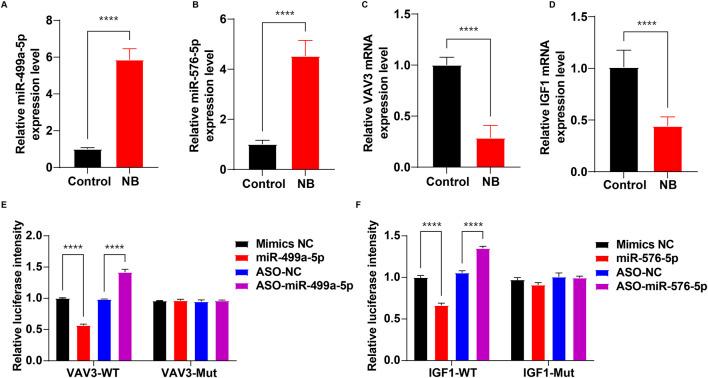
The study identified 51 DEmiRNAs between the control and NB groups, based on the data from the in-house cohort. Among these, four common miRNAs (miR-342-3p, miR-576-5p, miR-15b-5p and miR-499a-5p) were significantly elevated in the infection group compared to controls in both the in-house and validation cohorts. Subsequently, a novel NB diagnostic signature comprising two miRNAs (miR-576-5p and miR-499a-5p) was developed using the LASSO regression analysis. Receiver operating characteristic (ROC) analysis demonstrated the good diagnostic potential of this miRNA signature in both cohorts. RT-qPCR analysis indicated elevated levels of miR-576-5p and miR-499a-5p in CSF samples of NB patients compared to controls. Additionally, RT-qPCR results revealed decreased levels of VAV3 (vav guanine nucleotide exchange factor 3, a target of miR-499a-5p) and IGF1 (insulin like growth factor 1, a target of miR-576-5p) in the CSF samples of NB patients.
CONCLUSION
Collectively, miR-576-5p and miR-499a-5p may serve as potential biomarkers for the diagnosis of NB.
背景
神经型布鲁氏菌病(NB)是布鲁氏菌病的一种罕见并发症,临床表现多样,使其诊断复杂化。本研究旨在分析NB患者脑脊液(CSF)中的微小RNA(miRNA)谱,以确定NB诊断的潜在生物标志物。
方法
利用小RNA测序鉴定对照和NB患者(内部队列)CSF样本中的差异表达miRNA(DEmiRNA)。来自GEO数据库的GSE107554数据集(验证队列)用于验证这些DEmiRNA的表达水平。随后,进行LASSO回归分析,以基于内部和验证队列中鉴定出的常见miRNA构建诊断风险评分模型。
结果
基于内部队列的数据,该研究在对照和NB组之间鉴定出51个DEmiRNA。其中,在内部和验证队列中,与对照组相比,感染组中四个常见的miRNA(miR-342-3p、miR-576-5p、miR-15b-5p和miR-499a-5p)显著升高。随后,使用LASSO回归分析开发了一种包含两个miRNA(miR-576-5p和miR-499a-5p)的新型NB诊断特征。受试者操作特征(ROC)分析表明,该miRNA特征在两个队列中均具有良好的诊断潜力。RT-qPCR分析表明,与对照组相比,NB患者CSF样本中miR-576-5p和miR-499a-5p水平升高。此外,RT-qPCR结果显示,NB患者CSF样本中VAV3(vav鸟嘌呤核苷酸交换因子3,miR-499a-5p的靶标)和IGF1(胰岛素样生长因子1,miR-576-5p的靶标)水平降低。
结论
总体而言,miR-576-5p和miR-499a-5p可能作为NB诊断的潜在生物标志物。




 Zotero 插件