
营养基因组学与低碳水化合物生酮饮食在个性化医疗中的相互作用。
The interplay between nutrigenomics and low-carbohydrate ketogenic diets in personalized healthcare.
作者信息
Almoghrabi Yousef M, Eldakhakhny Basmah M, Bima Abdulhadi I, Sakr Hussein, Ajabnoor Ghada M A, Gad Hoda M, Mohammad Fatma Azzahraa H, Elsamanoudy Salma A, Awan Akram Z, Elsamanoudy Ayman Z
机构信息
Clinical Biochemistry Department, Faculty of Medicine, King Abdulaziz University, Jeddah, Saudi Arabia.
King Fahd Medical Research Center, Regenerative Medicine Unit, King Abdulaziz University, Jeddah, Saudi Arabia.
出版信息
Front Nutr. 2025 Jun 23;12:1595316. doi: 10.3389/fnut.2025.1595316. eCollection 2025.
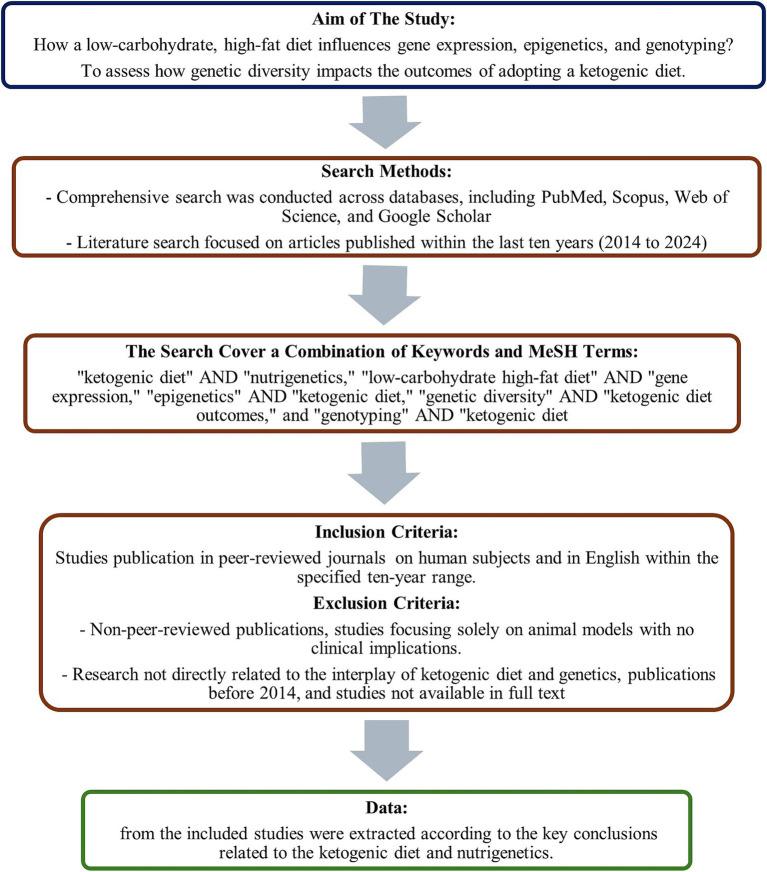
The field of nutrigenomics explores the interaction between diet and gene expression, examining how nutrients function as signaling molecules that influence cellular processes, protein synthesis, and metabolite production. This discipline aims to design diets that promote genomic stability through various genetic mechanisms, including minimizing DNA damage and epigenetic modifications, among others. Nutrigenomic profiling helps identify individual dietary needs and responses to food interventions. Nutrigenetics, a subfield of nutritional genomics, investigates how genetic variations affect nutrient metabolism and health outcomes. It operates on the principle that genetic differences influence nutrient absorption and metabolism, shaping disease susceptibility and treatment responses. Therefore, integrating nutrigenetics into dietary planning enables the development of personalized nutrition strategies to improve health and prevent disease. One key application of nutrigenomics is its impact on various diets, including the Low-Carbohydrate ketogenic diet (LCKD), a high-fat, low-carbohydrate regimen that induces ketosis. In this metabolic state, ketone bodies serve as energy sources and signaling molecules. Research suggests that LCKD may influence gene expression and epigenetic mechanisms, modulating inflammation-related pathways, oxidative stress, and metabolic regulation. Additionally, KD has been associated with improved insulin sensitivity, glucose control, lipid profiles, and weight loss. However, genetic factors affecting LCKD response require further investigation to refine personalized dietary recommendations. This review highlights the significance of nutrigenomics, focusing on the interplay between the LCKD and genetic factors. A comprehensive understanding of these interactions is essential for developing personalized dietary strategies that optimize LCKD benefits while mitigating potential risks, ultimately contributing to individualized nutritional guidance within a precision health framework.
营养基因组学领域探索饮食与基因表达之间的相互作用,研究营养素如何作为信号分子影响细胞过程、蛋白质合成和代谢物产生。这一学科旨在通过各种遗传机制设计促进基因组稳定性的饮食,包括尽量减少DNA损伤和表观遗传修饰等。营养基因组分析有助于确定个体的饮食需求以及对食物干预的反应。营养遗传学作为营养基因组学的一个子领域,研究基因变异如何影响营养代谢和健康结果。它基于这样一个原则,即基因差异会影响营养物质的吸收和代谢,从而影响疾病易感性和治疗反应。因此,将营养遗传学纳入饮食规划能够制定个性化的营养策略,以改善健康状况和预防疾病。营养基因组学的一个关键应用是其对各种饮食的影响,包括低碳水化合物生酮饮食(LCKD),这是一种高脂肪、低碳水化合物的饮食方案,可诱导酮症。在这种代谢状态下,酮体作为能量来源和信号分子。研究表明,LCKD可能会影响基因表达和表观遗传机制,调节炎症相关途径、氧化应激和代谢调节。此外,生酮饮食还与改善胰岛素敏感性、血糖控制、血脂水平和体重减轻有关。然而,影响LCKD反应的遗传因素需要进一步研究,以完善个性化的饮食建议。本综述强调了营养基因组学的重要性,重点关注LCKD与遗传因素之间的相互作用。全面了解这些相互作用对于制定个性化饮食策略至关重要,这些策略能够优化LCKD的益处,同时降低潜在风险,最终在精准健康框架内提供个性化的营养指导。


 Zotero 插件