
急性心力衰竭和心源性休克的有创血流动力学监测
Invasive Hemodynamic Monitoring in Acute Heart Failure and Cardiogenic Shock.
作者信息
Baldetti Luca, Cosenza Marcello, Galdieri Carmine, Gallone Guglielmo, Ricchetti Gianluca, Gaspardone Carlo, Peveri Beatrice, Gramegna Mario, Cianfanelli Lorenzo, Calvo Francesco, Pazzanese Vittorio, Pieri Marina, Sacchi Stefania, Ajello Silvia, Scandroglio Anna Mara
机构信息
Cardiac Intensive Care Unit, IRCCS San Raffaele Scientific Institute, 20132 Milan, Italy.
Città della Salute e della Scienza, Ospedale Molinette, University of Turin, 10126 Turin, Italy.
出版信息
Rev Cardiovasc Med. 2025 Jun 19;26(6):27034. doi: 10.31083/RCM27034. eCollection 2025 Jun.
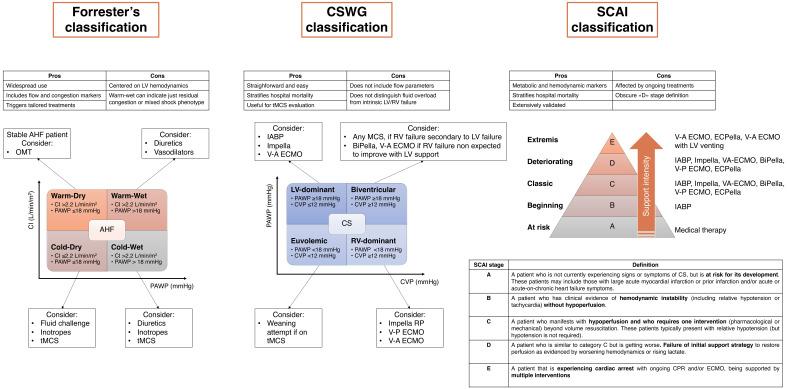
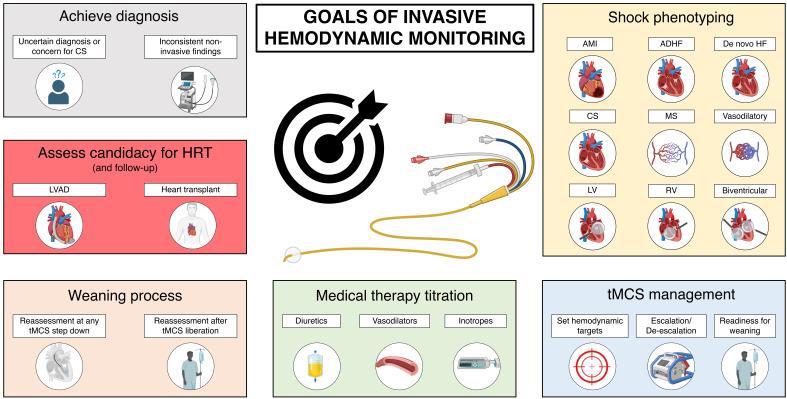
Invasive hemodynamic monitoring provides essential information for managing acute heart failure (AHF) and cardiogenic shock (CS) patients, aiding circulatory shock phenotyping and in individualized and hemodynamically-based therapeutic management. The hemodynamic trajectory after the initial care bundle has been provided refines prognostication and anticipates hospital outcomes. Invasive hemodynamic monitoring also tracks the clinical response to supportive measures, providing objective background for therapeutic escalation/de-escalation, facilitating titration of vasoactive/temporary mechanical circulatory support (tMCS) to achieve an optimal balance between native heart function and device assistance, and allowing for a repeated reassessment of hemodynamics during the support weaning phase. Therefore, complete hemodynamic assessment (i.e., arterial line, central venous catheter, and pulmonary artery catheter) is recommended for any patient in overt CS; however, we also provide some pragmatic clinical, imaging, and laboratory criteria to identify patients with beginning stages of CS, which could also benefit from complete invasive hemodynamic assessment. The specific hemodynamic phenotypes that can be applied in clinical practice and case-based examples of how the invasive hemodynamic phenotype can change following therapeutic actions are presented to provide pragmatic guidance on invasive hemodynamic monitoring. This review also aims to summarize the available monitoring technologies, describing the current limitations of each one and the perspective for future developments in the era of artificial intelligence. The gaps in evidence that still characterize pulmonary catheter use, i.e., lack of a robust positive randomized clinical trial in CS, are discussed, along with the wide background of non-randomized studies currently supporting its use in the CS field. The reappraisal of invasive hemodynamic monitoring, closely linked to the advent and increasing adoption of tMCS, sets the stage for greater adoption of this clinical tool in the future, as it remains a fundamental tool for the intensive care cardiologist.
有创血流动力学监测为急性心力衰竭(AHF)和心源性休克(CS)患者的管理提供重要信息,有助于循环休克的表型分析以及基于血流动力学的个体化治疗管理。在实施初始治疗方案后,血流动力学轨迹可优化预后并预测住院结局。有创血流动力学监测还可追踪对支持措施的临床反应,为治疗升级/降级提供客观依据,有助于调整血管活性药物/临时机械循环支持(tMCS)的剂量,以在心脏自身功能和设备辅助之间实现最佳平衡,并在支持撤离阶段对血流动力学进行反复重新评估。因此,对于任何明显处于CS的患者,建议进行全面的血流动力学评估(即动脉置管、中心静脉导管和肺动脉导管);不过,我们也提供一些实用的临床、影像学和实验室标准,以识别处于CS早期阶段的患者,这些患者也可能从全面的有创血流动力学评估中获益。本文介绍了可应用于临床实践的特定血流动力学表型,以及治疗措施后有创血流动力学表型可能发生变化的病例,为有创血流动力学监测提供实用指导。本综述还旨在总结现有的监测技术,描述每种技术目前的局限性以及人工智能时代未来发展的前景。讨论了肺导管使用中仍存在的证据空白,即CS中缺乏强有力的阳性随机临床试验,并介绍了目前支持其在CS领域使用的广泛的非随机研究背景。与tMCS的出现和越来越广泛的应用密切相关的有创血流动力学监测的重新评估,为该临床工具在未来更广泛的应用奠定了基础,因为它仍然是重症监护心脏病专家的基本工具。


 Zotero 插件