
从RNA测序数据中对以前未见过的表观转录组进行多模态零样本学习。
Multimodal zero-shot learning of previously unseen epitranscriptomes from RNA-seq data.
作者信息
Song Yiyou, Song Bowen, Huang Daiyun, Nguyen Anh, Hu Lihong, Meng Jia, Wang Yue
机构信息
Jiangsu Key Laboratory for Functional Substance of Chinese Medicine, School of Pharmacy, Nanjing University of Chinese Medicine, 138 Xianlin Avenue, Qixia District, Nanjing 210023, China.
Department of Public Health, School of Medicine, Nanjing University of Chinese Medicine, 138 Xianlin Avenue, Qixia District, Nanjing 210023, China.
出版信息
Brief Bioinform. 2025 Jul 2;26(4). doi: 10.1093/bib/bbaf332.
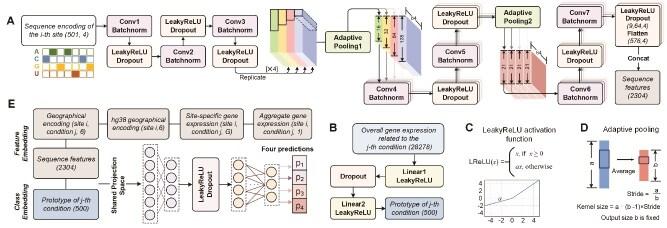
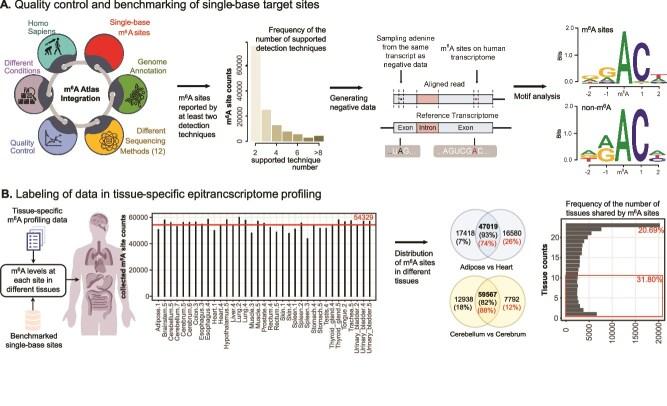
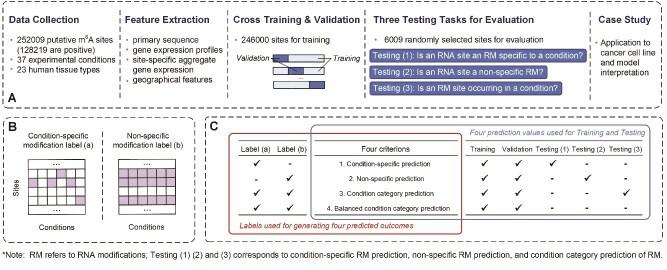
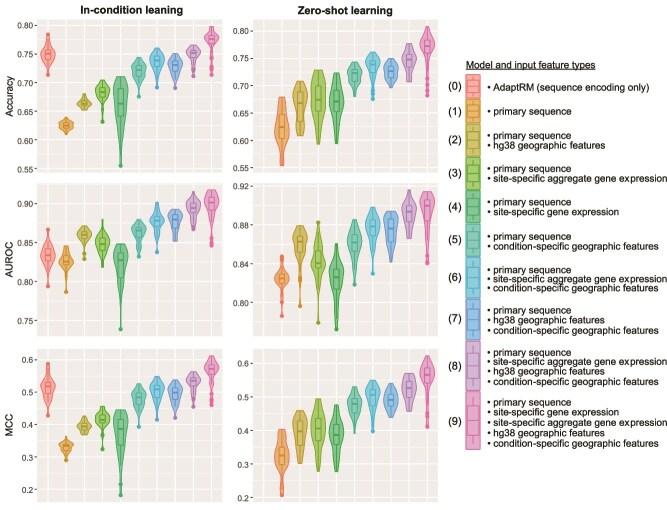
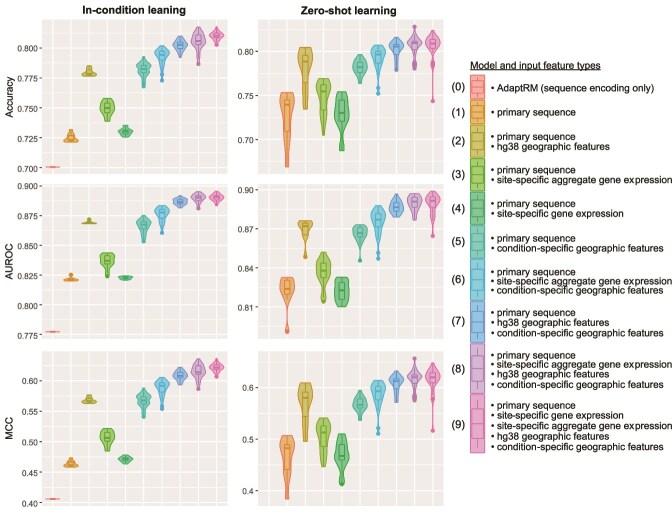
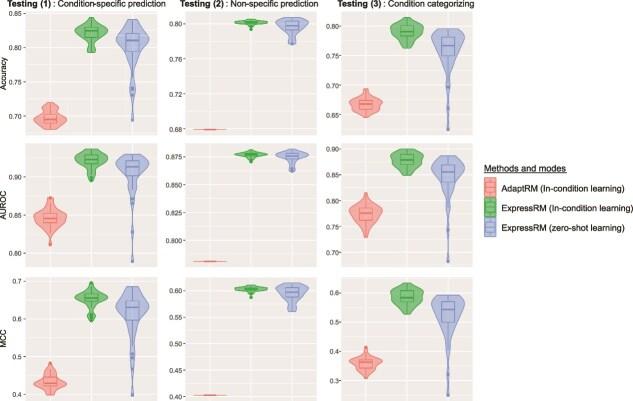
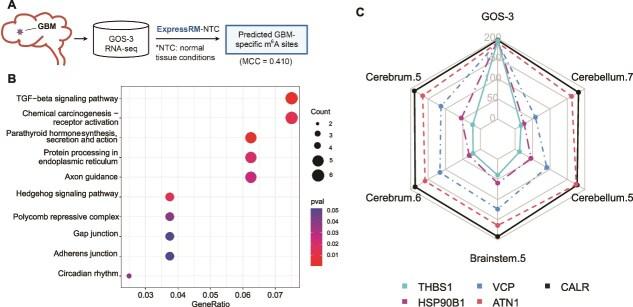
Precise identification of condition-specific epitranscriptomes is of critical importance for investigating the dynamics and versatile functions of RNA modification under various biological contexts. Existing approaches for predicting condition-specific RNA modification are usually trained on epitranscriptome data obtained from the same condition, which limited their usage, as such data are available only for a small number of conditions due to the technical difficulties and high expenses of epitranscriptome profiling technologies. We present ExpressRM, a multimodal zero-shot learning framework for predicting condition-specific RNA modification sites in previously unseen contexts from genome and RNA-seq data. Different from existing in-condition learning approaches, this method does not rely on matched epitranscriptome data for training, which greatly expands its applicability. On a benchmark dataset comprising epitranscriptomes and matched transcriptomes of 37 human tissues, we demonstrate that ExpressRM can accurately predict epitranscriptomes of previously unseen conditions from their transcriptomes only, and the performance is comparable to existing in-condition learning algorithms that require epitranscriptome data from the same condition. Additionally, the method has the capability of differentiating highly dynamic RNA methylation sites from more static (or house-keeping) ones. With a case study, we show that ExpressRM can uncover N6-methyladenosine RNA methylation sites in glioblastoma using only its RNA-seq data, and unveils novel and previously validated pathological insights. Together, these results suggest that the proposed multimodal zero-shot learning framework can effectively leverage transcriptome knowledge to explore the dynamic roles of RNA modifications in previously unseen experimental setups, providing valuable insights into vast biological contexts where RNA-seq is routinely used but epitranscriptome profiling has not yet been covered.
精确识别特定条件下的表观转录组对于研究各种生物学背景下RNA修饰的动态变化和多样功能至关重要。现有的预测特定条件下RNA修饰的方法通常是在从相同条件下获得的表观转录组数据上进行训练的,这限制了它们的应用,因为由于表观转录组分析技术的技术难度和高成本,此类数据仅适用于少数条件。我们提出了ExpressRM,这是一个多模态零样本学习框架,用于从基因组和RNA测序数据中预测以前未见过的背景下的特定条件下的RNA修饰位点。与现有的条件内学习方法不同,该方法不依赖匹配的表观转录组数据进行训练,这大大扩展了其适用性。在一个包含37个人类组织的表观转录组和匹配转录组的基准数据集上,我们证明ExpressRM仅从转录组就能准确预测以前未见过的条件下的表观转录组,其性能与需要相同条件下的表观转录组数据的现有条件内学习算法相当。此外,该方法有能力区分高度动态的RNA甲基化位点和更静态(或管家)的位点。通过一个案例研究,我们表明ExpressRM仅使用胶质母细胞瘤的RNA测序数据就能发现N6-甲基腺苷RNA甲基化位点,并揭示新的和先前已验证的病理见解。总之,这些结果表明,所提出的多模态零样本学习框架可以有效地利用转录组知识,在以前未见过的实验设置中探索RNA修饰的动态作用,为广泛的生物学背景提供有价值的见解,在这些背景中,RNA测序经常被使用,但表观转录组分析尚未涉及。



 Zotero 插件