
加速度计数据中的复杂性和碎片化信号。
Signals of complexity and fragmentation in accelerometer data.
作者信息
Weinans Els, Rector Jerrald L, Charman Sarah, Stefanetti Renae J, Jimenez-Moreno Cecilia, Gorman Gráinne S, van de Leemput Ingrid, van As Daniël, Melis René, van Engelen Baziel
机构信息
Copernicus Institute of Sustainable Development, Environmental Science, Faculty of Geosciences, Utrecht University, Utrecht, The Netherlands.
Department of Geriatrics, Radboud Institute for Health Sciences, Radboud University Medical Centre, Nijmegen, The Netherlands.
出版信息
PLoS One. 2025 Jul 9;20(7):e0326522. doi: 10.1371/journal.pone.0326522. eCollection 2025.
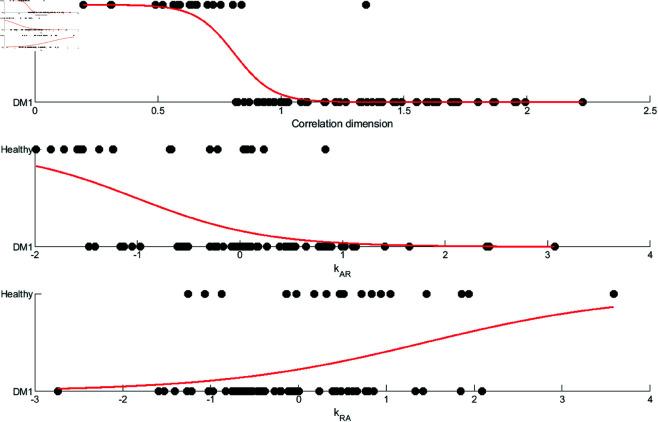
There is a growing interest to analyze physiological data from a complex systems perspective. Accelerometer data is one type of data that is easy to obtain but often difficult to analyze for insights beyond basic levels of description. Previous work hypothesizes that an individual's activity pattern can be seen as a complex dynamical system. Here, we explore this hypothesis further by investigating whether complexity-based measures quantifying repetitiveness and fragmentation of activity captured via accelerometer can detect health differences beyond traditional measures. Our results demonstrate that healthy individuals have a higher regularity (indicated by a lower correlation dimension), a higher probability of activity after a period of rest, and a lower probability of a period of rest after a period of activity compared with patients living with Myotonic Dystrophy type I (DM1), a chronic, progressive, complex, multisystem disease. For the correlation dimension, this difference was independent of the average, coefficient of variation and autocorrelation of the activity signals. This suggests that the correlation dimension can extract clinically relevant information from accelerometer data. Therefore, our results corroborate the idea that a complexity perspective may help to reveal the emergent characteristics of health and disease.
从复杂系统的角度分析生理数据的兴趣与日俱增。加速度计数据是一种易于获取的数据类型,但要进行超出基本描述水平的深入分析往往很困难。先前的研究假设个人的活动模式可被视为一个复杂的动态系统。在此,我们通过研究基于复杂性的测量方法(用于量化通过加速度计捕获的活动的重复性和碎片化)能否检测出超出传统测量方法的健康差异,进一步探讨这一假设。我们的结果表明,与患有I型强直性肌营养不良(DM1,一种慢性、进行性、复杂的多系统疾病)的患者相比,健康个体具有更高的规律性(以较低的关联维数表示)、在一段时间休息后进行活动的概率更高,以及在一段时间活动后出现休息时段的概率更低。对于关联维数而言,这种差异与活动信号的平均值、变异系数和自相关无关。这表明关联维数可以从加速度计数据中提取临床相关信息。因此,我们的结果证实了这样一种观点,即复杂性视角可能有助于揭示健康和疾病的涌现特征。


 Zotero 插件