
肠道微生物群在mRNA-1273疫苗接种后对SARS-CoV-2体液反应中的作用。
The role of intestinal microbiota in the humoral response to SARS-CoV-2 after mRNA-1273 vaccination.
作者信息
Tarriño María, Gutiérrez-Bautista Juan Francisco, Durán María José Olivares, Garcia-Diaz Abel, Cabrera-Serrano Antonio José, Sainz Juan, Cobo Fernando, Rodriguez Teresa, Reguera Juan Antonio, Bernal Mónica, López-Nevot Miguel Ángel, Sampedro Antonio
机构信息
Servicio de Microbiología, University Hospital Virgen de las Nieves, 18014, Granada, Spain.
Programa de Doctorado en Biomedicina, University of Granada, 18016, Granada, Spain.
出版信息
Sci Rep. 2025 Jul 9;15(1):24731. doi: 10.1038/s41598-025-11103-w.
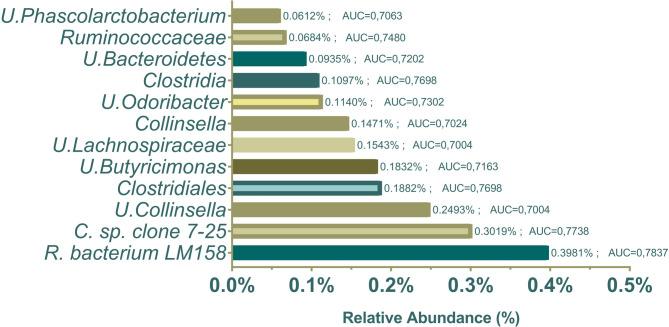
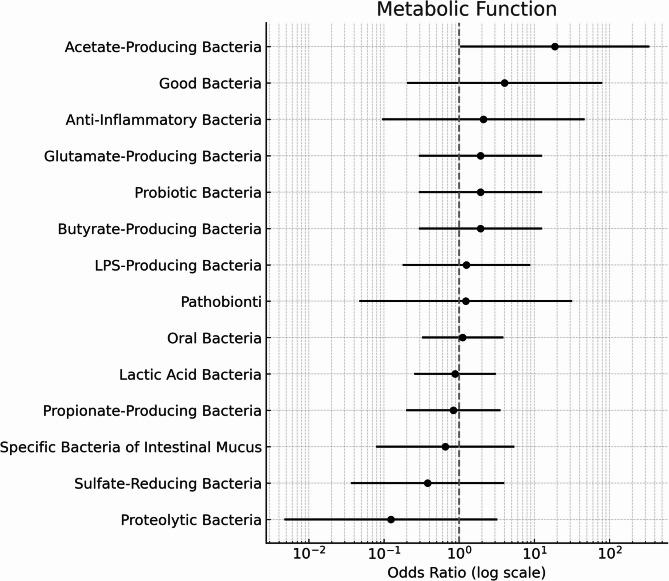
The gut microbiota plays a key role in shaping immune responses, including those induced by vaccination. Its impact on the humoral response to mRNA-based SARS-CoV-2 vaccines, however, remains underexplored. We analyzed gut microbiota composition and anti-Spike (S) IgG levels in 50 healthcare workers vaccinated with the mRNA-1273 SARS-CoV-2 vaccine. Participants were stratified into low, medium, and high responders based on IgG titers 30 days post-vaccination. Stool samples were collected at baseline, and 16 S rRNA sequencing was used to assess microbiota diversity and taxonomic profiles. Alpha diversity indices showed no significant differences across response groups. However, specific microbial signatures were associated with vaccine response. Higher relative abundance of Clostridia, Clostridiales, Ruminococcaceae, and Odoribacter splanchnicus correlated with stronger IgG responses. Functional microbiome analysis revealed enrichment of acetate-producing pathways in high responders (p = 0.012), suggesting a role for short-chain fatty acids in enhancing vaccine-induced immunity. Logistic regression and Random Forest models identified these taxa as predictors of strong antibody responses. The area under the ROC curve (AUC) for individual taxa ranged from 0.70 to 0.76, indicating moderate predictive performance. Conversely, taxa such as Hallella and Sutterella wadsworthensis were linked to lower responses. These findings support a modulatory role of the gut microbiota in mRNA vaccine immunogenicity and highlight microbial metabolic functions as potential targets to boost vaccine efficacy in personalized immunization strategies.
肠道微生物群在塑造免疫反应中起着关键作用,包括疫苗接种诱导的免疫反应。然而,其对基于mRNA的SARS-CoV-2疫苗体液反应的影响仍未得到充分研究。我们分析了50名接种mRNA-1273 SARS-CoV-2疫苗的医护人员的肠道微生物群组成和抗刺突(S)IgG水平。根据接种疫苗后30天的IgG滴度,将参与者分为低、中、高反应者。在基线时收集粪便样本,并使用16S rRNA测序评估微生物群多样性和分类学特征。α多样性指数在各反应组之间没有显著差异。然而,特定的微生物特征与疫苗反应相关。梭菌纲、梭菌目、瘤胃球菌科和内脏气味杆菌的相对丰度较高与更强的IgG反应相关。功能微生物组分析显示,高反应者中乙酸生成途径富集(p = 0.012),表明短链脂肪酸在增强疫苗诱导的免疫中发挥作用。逻辑回归和随机森林模型将这些分类群确定为强抗体反应的预测因子。单个分类群的ROC曲线下面积(AUC)范围为0.70至0.76,表明预测性能中等。相反,诸如哈雷氏菌和瓦兹沃思萨特氏菌等分类群与较低反应相关。这些发现支持肠道微生物群在mRNA疫苗免疫原性中的调节作用,并突出了微生物代谢功能作为个性化免疫策略中提高疫苗效力的潜在靶点。

 Zotero 插件