
新冠疫情中死亡率和重症监护病房收治情况的人工智能预测模型:对12000名患者的回顾性队列研究
AI Predictive Model of Mortality and Intensive Care Unit Admission in the COVID-19 Pandemic: Retrospective Population Cohort Study of 12,000 Patients.
作者信息
Ruiz Giardin Jose Manuel, Garnica Óscar, Mesa Plaza Nieves, SanMartín López Juan Víctor, Farfán Sedano Ana, Madroñal Cerezo Elena, Duarte Millán Miguel Ángel, Izquierdo Martínez Aida, Rivas Luis, Rivilla Marta, Morales Ortega Alejandro, Frutos Pérez Begoña, De Ancos Aracil Cristina, Calderón Ruth, Soria Fernandez Guillermo, Marrero Francés Jorge, Bernal Bello David, Satué Bartolomé Jose Ángel, Toledano Macías María, Piedrabuena García Sara, Guerrero Santillán Marta, Cristóbal Rafael, Mora Belen, Velázquez Ríos Laura, García de Viedma Vanesa, Cuenca Ruiz Paula, Ayala Larrañaga Ibone, Carpintero Lorena, Lara Celia, Llerena Alvaro Ricardo, García Bermúdez Virginia, Delgado Cárdenas Gema, Pardo Rovira Paloma, Tejero Sánchez Elena, Domínguez García Maria Jesús, Mariño Carolina, Bravo Cristina, Ontañon Ana, García Mario, Hidalgo Pérez Jose Ignacio, Prieto Menchero Santiago, González Pereira Natalia, Gonzalo Pascua Sonia, Tarancón Rey Jorge, Lechuga Suárez Luis Antonio
机构信息
Medicina Interna-Infecciosas, Hospital Universitario de Fuenlabrada, Fuenlabrada, Spain.
CIBERINFECT, Centro de Investigación Biomédica en Red, Madrid, Spain.
出版信息
J Med Internet Res. 2025 Jul 10;27:e70674. doi: 10.2196/70674.
BACKGROUND
One of the main challenges with COVID-19 has been that although there are known factors associated with a worse prognosis, clinicians have been unable to predict which patients, with similar risk factors, will die or require intensive care unit (ICU) care.
OBJECTIVE
This study aimed to develop a personalized artificial intelligence model to predict the patient risk of mortality and ICU admission related to SARS-CoV-2 infection during the initial medical evaluation before any kind of treatment.
METHODS
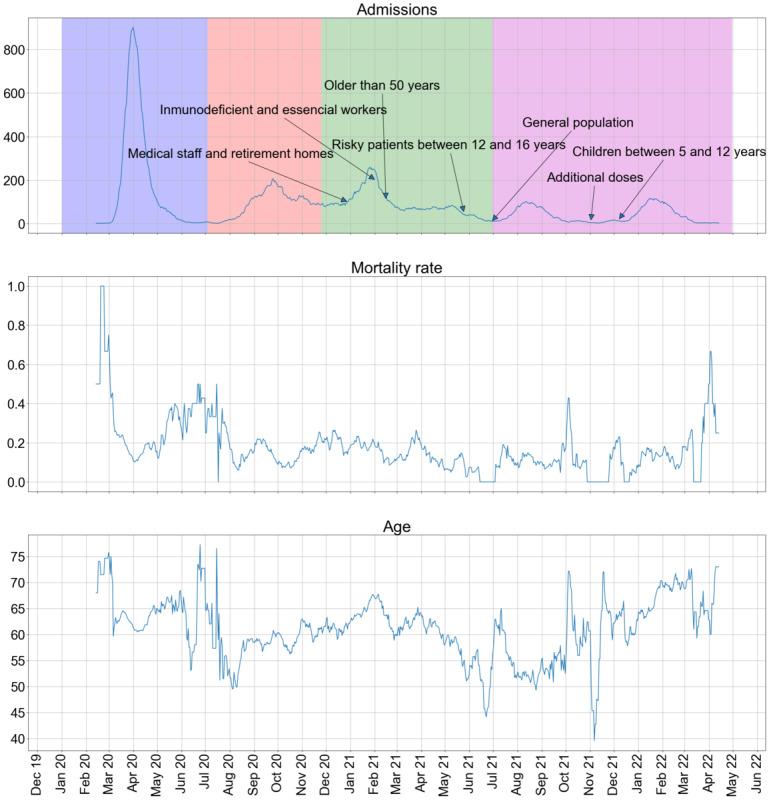
It is a population-based, observational, retrospective study covering from February 1, 2020, to January 24, 2023, with different circulating SARS-CoV-2 viruses, vaccinated status, and reinfections. It includes patients attended by the reference hospital in Fuenlabrada (Madrid, Spain). The models used the random forest technique, Shapley Additive Explanations method, and processing with Python (version 3.10.0; Python Software Foundation) and scikit-learn (version 1.3.0). The models were applied to different epidemic SARS-CoV-2 infection waves. Data were collected from 11,975 patients (4998 hospitalized and 6737 discharged). Predictive models were built with records from 4758 patients and validated with 6977 patients after evaluation in the emergency department. Variables recorded were age, sex, place of birth, clinical data, laboratory results, vaccination status, and radiologic data at admission.
RESULTS
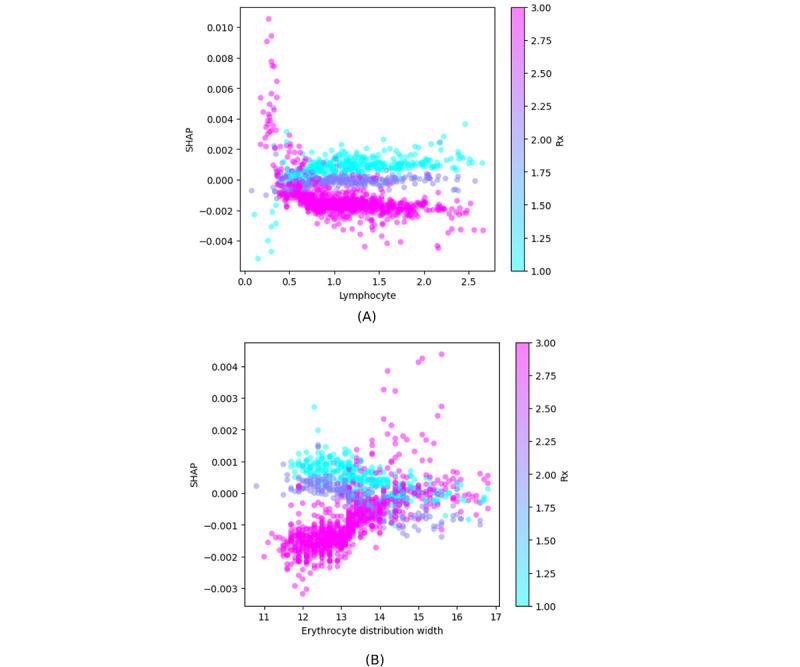
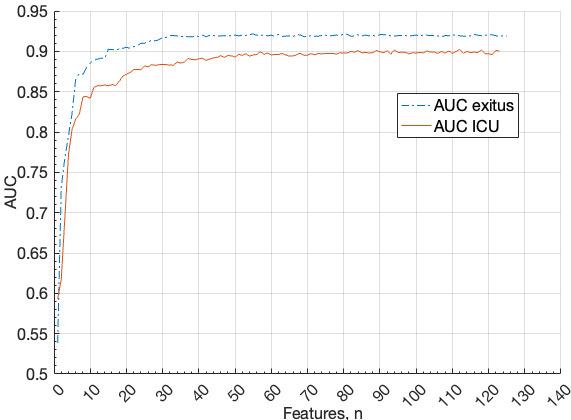
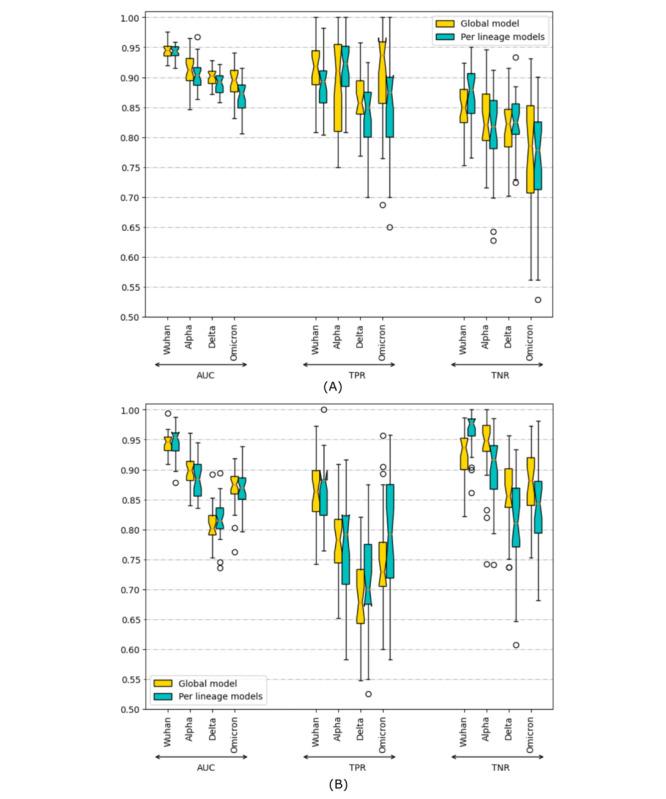
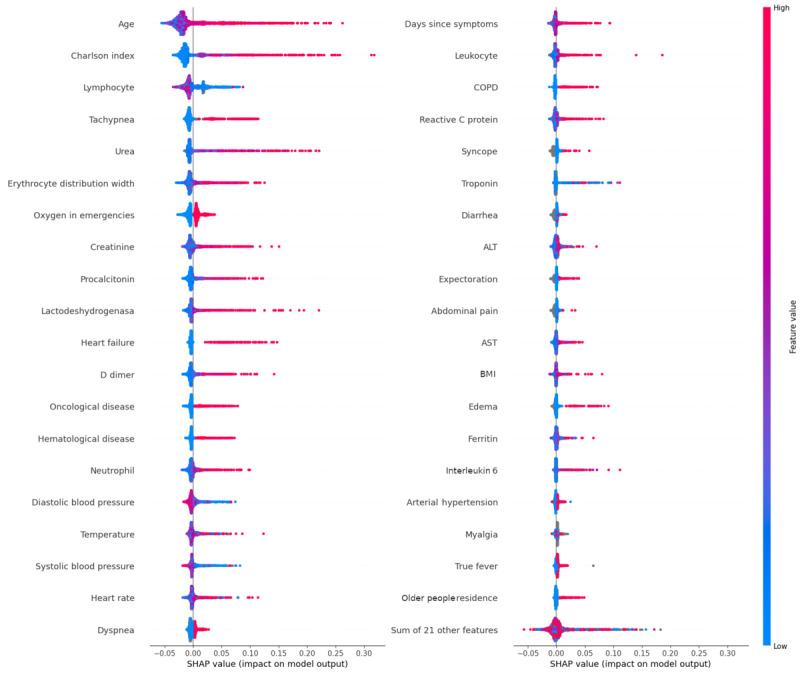
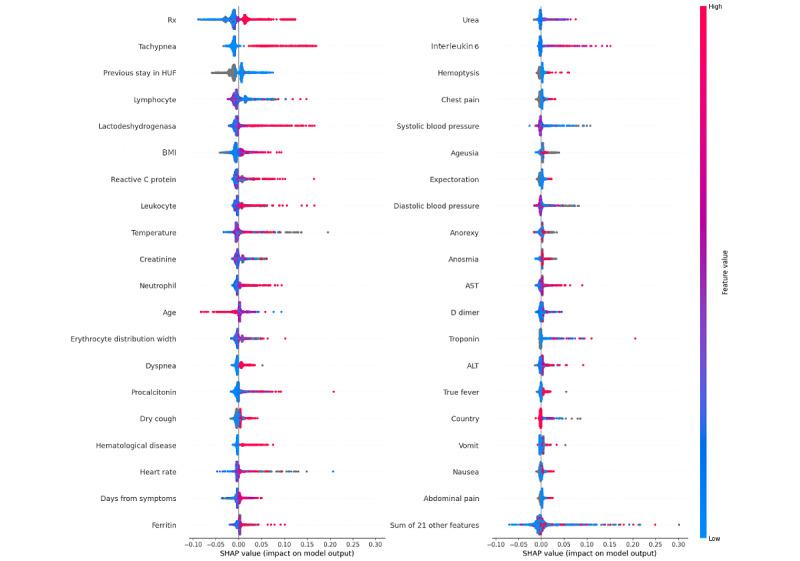
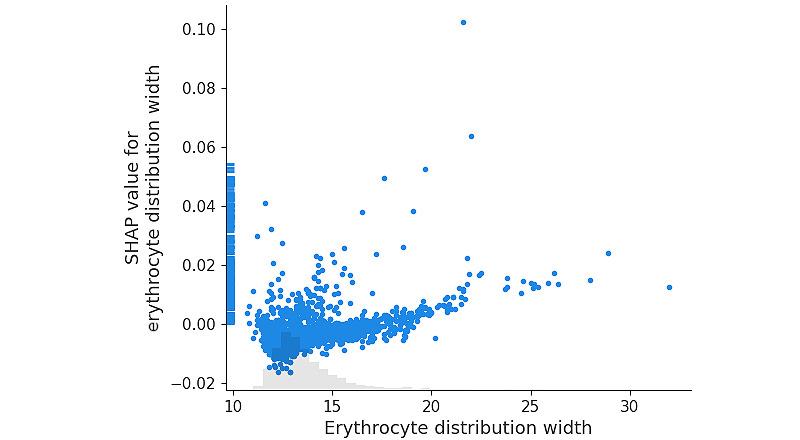
The best mortality predictor achieved an area under the receiver operating characteristic curve (AUC) of 0.92, sensitivity of 0.89, specificity of 0.82, positive predictive value (PPV) of 0.35, and mean negative predictive value (NPV) of 0.98. The ICU admission predictor had an AUC of 0.89, sensitivity of 0.75, specificity of 0.88, PPV of 0.37, and NPV of 0.98. During validation, the mortality model exhibited good performance for the nonhospitalized group, achieving an AUC of 0.95, sensitivity of 0.88, specificity of 0.98, PPV of 0.21, and NPV of 0.99, predicting the death of 30 of 34 patients who were not hospitalized. For the hospitalized patients, the mortality model achieved an AUC of 0.85, sensitivity of 0.86, specificity of 0.74, PPV of 0.24, and NPV of 0.98. The model for predicting ICU admission had an AUC of 0.82, sensitivity of 1.00, specificity of 0.59, PPV of 0.05, and NPV of 1.00. The models' metrics presented stability along all pandemic waves. Key mortality predictors included age, Charlson value, and tachypnea. The worse prognosis was linked to high values in urea, erythrocyte distribution width, oxygen demand, creatinine, procalcitonin, lactate dehydrogenase, heart failure, D-dimer, oncological and hematological diseases, neutrophil, and heart rate. A better prognosis was linked to higher values of lymphocytes and systolic and diastolic blood pressures. Partial or no vaccination provided less protection than full vaccination.
CONCLUSIONS
The artificial intelligence models demonstrated stability across pandemic waves, indicating their potential to assist in personal health services during the 3-year pandemic, particularly in early preventive and predictive clinical situations.
背景
新型冠状病毒肺炎(COVID-19)的主要挑战之一在于,尽管已知一些与预后较差相关的因素,但临床医生仍无法预测哪些具有相似风险因素的患者会死亡或需要重症监护病房(ICU)护理。
目的
本研究旨在开发一种个性化人工智能模型,以预测在任何治疗之前的初始医学评估期间,感染严重急性呼吸综合征冠状病毒2(SARS-CoV-2)的患者的死亡风险和入住ICU的风险。
方法
这是一项基于人群的观察性回顾性研究,涵盖2020年2月1日至2023年1月24日,涉及不同传播的SARS-CoV-2病毒、疫苗接种状况和再次感染情况。研究对象包括西班牙马德里丰拉夫拉达参考医院接诊的患者。模型采用随机森林技术、沙普利值加法解释方法,并使用Python(3.10.0版本;Python软件基金会)和scikit-learn(1.3.0版本)进行处理。这些模型应用于不同的SARS-CoV-2感染流行波。数据收集自11975例患者(4998例住院患者和6737例出院患者)。预测模型基于4758例患者的记录构建,并在急诊科评估后用6977例患者进行验证。记录的变量包括年龄、性别、出生地、临床数据、实验室检查结果、疫苗接种状况和入院时的放射学数据。
结果
最佳死亡预测模型的受试者工作特征曲线下面积(AUC)为0.92,灵敏度为0.89,特异度为0.82,阳性预测值(PPV)为0.35,平均阴性预测值(NPV)为0.98。入住ICU预测模型的AUC为0.89,灵敏度为0.75,特异度为0.88,PPV为0.37,NPV为0.98。在验证过程中,死亡模型在非住院组表现良好,AUC为0.95,灵敏度为0.88,特异度为0.98,PPV为0.21,NPV为0.99,预测了34例非住院患者中的30例死亡。对于住院患者,死亡模型的AUC为0.85,灵敏度为0.86,特异度为0.74,PPV为0.24,NPV为0.98。预测入住ICU的模型AUC为0.82,灵敏度为1.00,特异度为0.59,PPV为0.05,NPV为1.00。模型的指标在所有疫情波中均表现出稳定性。主要的死亡预测因素包括年龄、查尔森值和呼吸急促。预后较差与尿素、红细胞分布宽度、氧需求、肌酐、降钙素原、乳酸脱氢酶、心力衰竭、D-二聚体、肿瘤和血液系统疾病、中性粒细胞和心率的高值有关。预后较好与淋巴细胞、收缩压和舒张压的较高值有关。部分接种或未接种疫苗提供的保护低于全程接种。
结论
人工智能模型在各疫情波中均表现出稳定性,表明其在三年疫情期间协助个人健康服务的潜力,特别是在早期预防和预测临床情况下。


 Zotero 插件