
由系统发育独特性的空间尺度所证明的高生物多样性价值区域。
Areas of High Biodiversity Value Evidenced by the Spatial Scaling of Phylogenetic Uniqueness.
作者信息
Baselga Andrés, Martín-Devasa Ramiro, Gómez-Rodríguez Carola
机构信息
CRETUS, Department of Zoology, Genetics and Physical Anthropology, Universidade de Santiago de Compostela, Santiago de Compostela, Spain.
CRETUS, Department of Functional Biology (Area of Ecology), Universidade de Santiago de Compostela, Santiago de Compostela, Spain.
出版信息
Ecol Lett. 2025 Jul;28(7):e70179. doi: 10.1111/ele.70179.
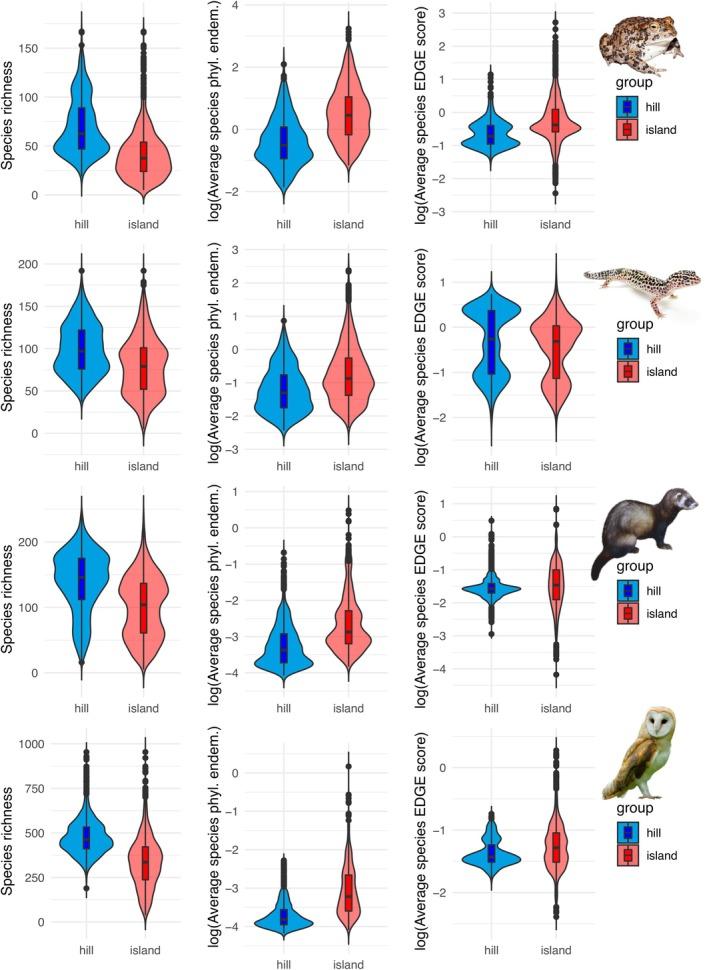
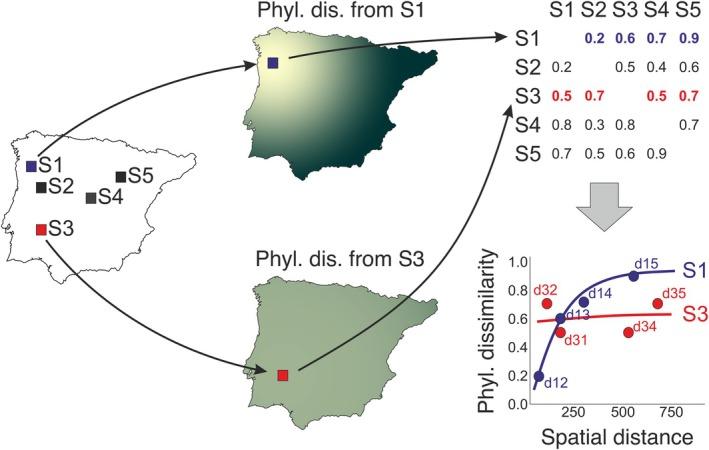
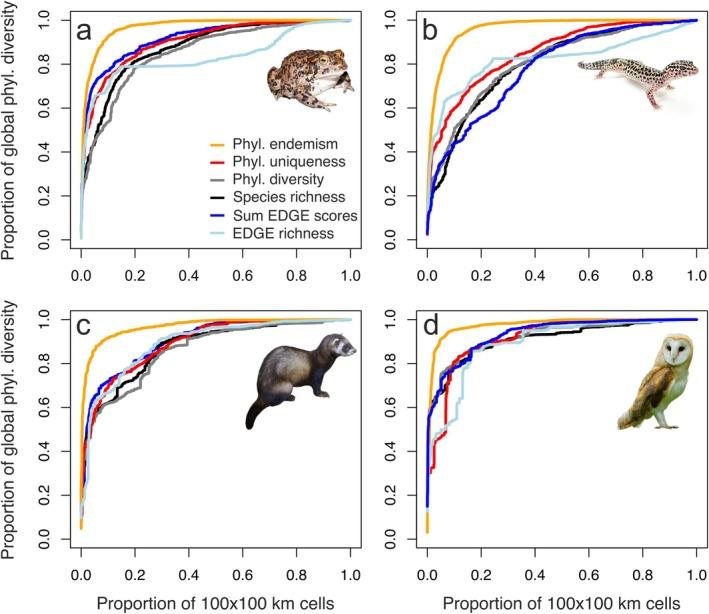
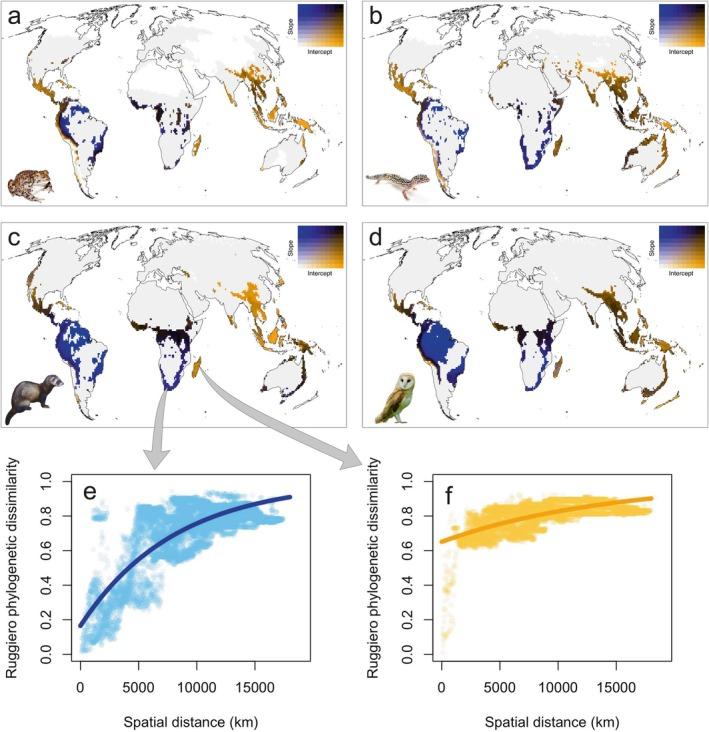
Distinct biological communities have high conservation value because they harbour species that cannot be preserved elsewhere. However, community uniqueness is scale-dependent: irreplaceability depends on whether community dissimilarity emerges at small or large spatial scales. To assess conservation value, here we integrate phylogenetic endemism with the spatial scaling of phylogenetic uniqueness in terrestrial vertebrates. We show that phylogenetic endemism is the most efficient single criterion to maximise global phylogenetic diversity within the smallest land area. Moreover, the spatial scaling of phylogenetic uniqueness allows distinguishing globally distinct but regionally less unique sites '(evolutionary hills)', from highly irreplaceable sites even at small scales '(evolutionary islands)', which support lower local diversity but host species that are both evolutionarily unique and threatened. This approach provides a non-heuristic and stable baseline to identify high-value biodiversity areas and offers a powerful tool for prioritising conservation efforts to safeguard evolutionary heritage effectively.
不同的生物群落具有很高的保护价值,因为它们拥有无法在其他地方保存的物种。然而,群落独特性取决于尺度:不可替代性取决于群落差异是在小尺度还是大尺度上出现。为了评估保护价值,我们在此将系统发育特有性与陆生脊椎动物系统发育独特性的空间尺度相结合。我们表明,系统发育特有性是在最小陆地区域内最大化全球系统发育多样性的最有效单一标准。此外,系统发育独特性的空间尺度允许区分全球独特但区域独特性较低的地点(“进化山丘”)和即使在小尺度上也具有高度不可替代性的地点(“进化岛屿”),后者支持较低的局部多样性,但拥有进化上独特且受到威胁的物种。这种方法为识别高价值生物多样性区域提供了一个非启发式且稳定的基线,并为有效保护进化遗产的保护工作优先级提供了一个强大工具。


 Zotero 插件