
磷酸盐在生理和病理矿化中的作用:重要却常被忽视。
Phosphate in Physiological and Pathological Mineralization: Important yet Often Unheeded.
作者信息
Qin Wen, Yu San-Yang, Gao Jia-Lu, Yan Jian-Fei, Wan Qian-Qian, Jia Shuai-Lin, Tay Franklin, Jiao Kai, Niu Lina
机构信息
State Key Laboratory of Oral and Maxillofacial Reconstruction and Regeneration, National Clinical Research Center for Oral Diseases & Shaanxi Key Laboratory of Stomatology, Department of Prosthodontics, School of Stomatology The Fourth Military Medical University Xi'an Shaanxi PR China.
School and Hospital of Stomatology China Medical University Shenyang Liaoning PR China.
出版信息
MedComm (2020). 2025 Jul 13;6(7):e70298. doi: 10.1002/mco2.70298. eCollection 2025 Jul.
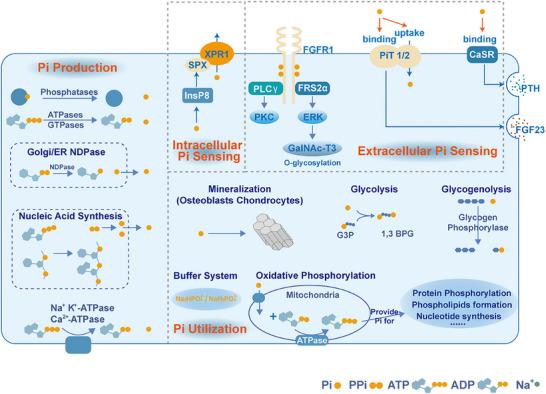
Phosphate is an important element in biological processes, particularly in the formation and metabolism of mineralized tissues such as bones and teeth. The imbalance of phosphate is also closely related with pathological mineralization. Restoring the phosphate homeostasis is an attractive target to treat diseases related with pathological mineralization. However, the inherent consistency of phosphate's role in both physiological and pathological mineralization has been overlooked in previous investigations. This review highlights the multifaceted role of phosphate as a building block, and as a signaling molecule that regulates the activity of mineralizing cells in both physiological and pathological mineralization. This direct and indirect role of phosphate acts as a bridge between physiological and pathological mineralization. The review also discusses the genetic mutations associated with phosphate-related mineralization disorders, emphasizing the need for further genetic and molecular research to uncover additional factors and mechanisms. Future research directions proposed include enhancing our understanding of phosphate sensing and regulation mechanisms, investigating new therapeutic agents, and developing reliable biomarkers for early diagnosis and treatment of phosphate-related mineralization disorders. By advancing our knowledge in these areas, we can improve the prevention, diagnosis, and treatment of phosphate-related mineralization disorders to enhance patient outcomes and their quality of life.
磷酸盐是生物过程中的一种重要元素,尤其在骨骼和牙齿等矿化组织的形成和代谢中。磷酸盐失衡也与病理性矿化密切相关。恢复磷酸盐稳态是治疗与病理性矿化相关疾病的一个有吸引力的靶点。然而,在以往的研究中,磷酸盐在生理和病理性矿化中作用的内在一致性被忽视了。本综述强调了磷酸盐作为构建单元以及作为在生理和病理性矿化中调节矿化细胞活性的信号分子的多方面作用。磷酸盐的这种直接和间接作用充当了生理和病理性矿化之间的桥梁。该综述还讨论了与磷酸盐相关矿化障碍相关的基因突变,强调需要进一步开展遗传学和分子研究以揭示更多因素和机制。提出的未来研究方向包括加深我们对磷酸盐感知和调节机制的理解、研究新型治疗药物以及开发用于早期诊断和治疗磷酸盐相关矿化障碍的可靠生物标志物。通过在这些领域取得进展,我们可以改善磷酸盐相关矿化障碍的预防、诊断和治疗,以提高患者的治疗效果和生活质量。



 Zotero 插件