
利用三维打印的附加雾化腔通过振动网式雾化器进行大稀释体积的黏菌素雾化:概念验证
Utilizing a three-dimensional printed additional nebulization chamber for colistin nebulization with a large diluent volume through a vibrating mesh nebulizer: proof of concept.
作者信息
Chen Chao-Yu, Liu Wei-Lun, Lin Heng-Liang, Liu Hsia-Wei, Yang Shih-Hsing, Chao Ke-Yun
机构信息
Department of Respiratory Therapy, Fu Jen Catholic University Hospital, Fu Jen Catholic University, New Taipei City, Taiwan.
Department of Life Science, Fu Jen Catholic University, New Taipei City, Taiwan.
出版信息
Eur Clin Respir J. 2025 Jul 11;12(1):2531615. doi: 10.1080/20018525.2025.2531615. eCollection 2025.
INTRODUCTION
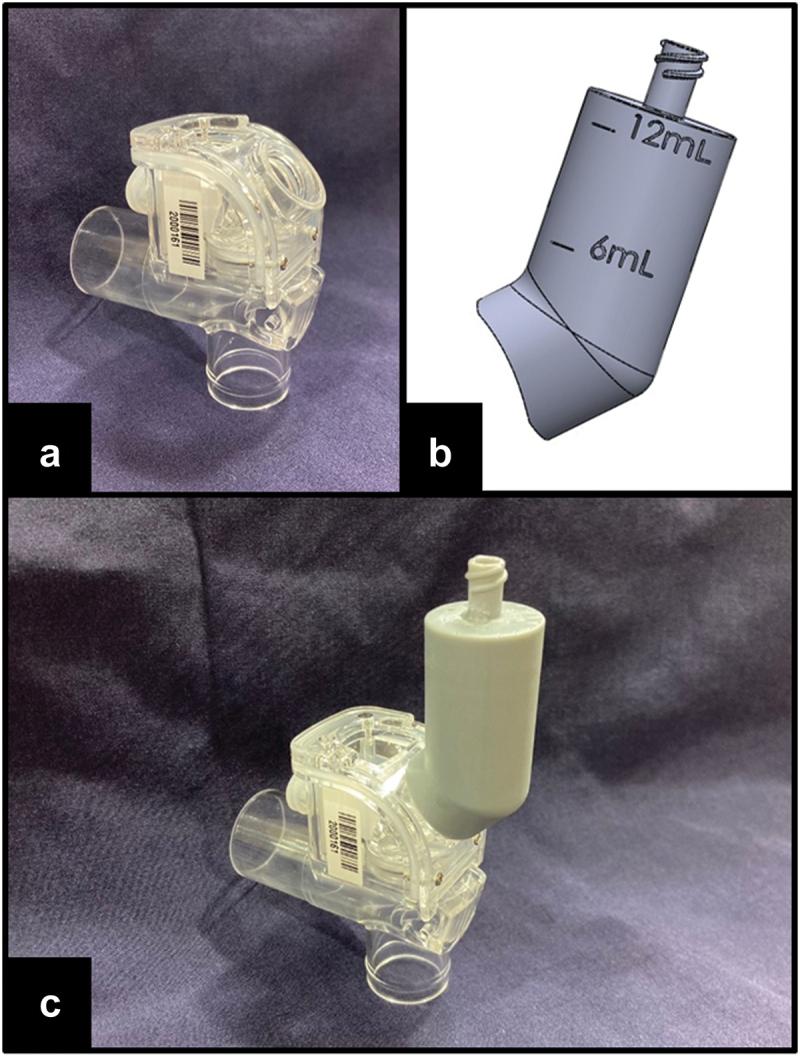
The volume of colistimethate sodium (CMS) that can be administered in a single application using a vibrating mesh nebulizer (VMN) is related to the capacity of the nebulization chamber. This study designed and tested a nebulization chamber and assessed the effects of the diluent volume on colistin nebulization.
METHODS
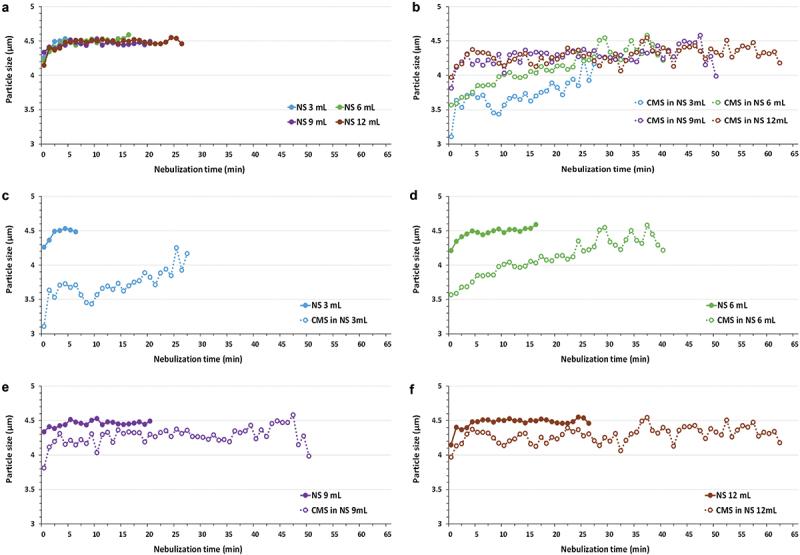
A bench study was conducted to evaluate the performance of the nebulization chamber. A 7-day clinical scenario involving the nebulization of two diluent volumes of CMS (6 and 12 mL) was simulated. Each diluent volume was nebulized for seven consecutive days. Particle size and viscosity were analyzed for four diluent volumes of CMS (3 mL, 6 mL, 9 mL, and 12 mL).
RESULTS
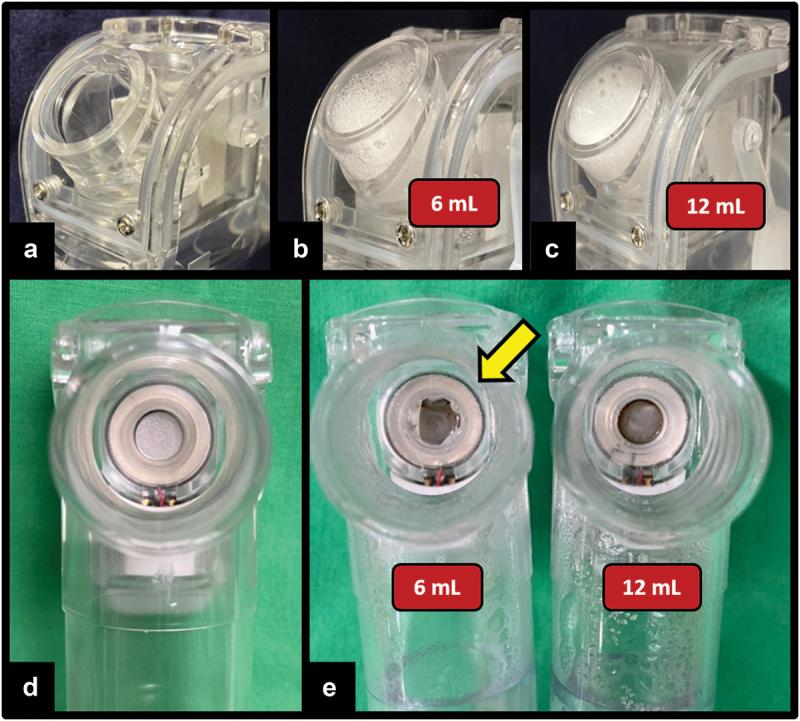
After 7 consecutive days of nebulization, residual colistin crystals were observed in both diluent volumes, with a higher incidence in the 6-mL than in the 12-mL diluent volume. The VMN malfunctioned once on day 5 when using the 6 mL diluent volume. Nebulized colistin output was inversely correlated with diluent viscosity.
CONCLUSION
The additional nebulization chamber facilitated the nebulization of a larger diluent volume of CMS in a single nebulization course. Larger diluent volumes resulted in fewer residual CMS crystals and lower diluent viscosity.
引言
使用振动网孔雾化器(VMN)单次给药时可给予的多粘菌素甲磺酸钠(CMS)体积与雾化腔容量有关。本研究设计并测试了一种雾化腔,并评估了稀释剂体积对多粘菌素雾化的影响。
方法
进行了一项实验台研究以评估雾化腔的性能。模拟了一个为期7天的临床场景,涉及两种稀释剂体积(6毫升和12毫升)的CMS雾化。每种稀释剂体积连续雾化7天。对四种稀释剂体积(3毫升、6毫升、9毫升和12毫升)的CMS进行了粒径和粘度分析。
结果
连续雾化7天后,两种稀释剂体积中均观察到残留的多粘菌素晶体,6毫升稀释剂体积中的发生率高于12毫升稀释剂体积。使用6毫升稀释剂体积时VMN在第5天出现一次故障。雾化的多粘菌素输出与稀释剂粘度呈负相关。
结论
额外的雾化腔有助于在单次雾化过程中雾化更大稀释剂体积的CMS。更大的稀释剂体积导致残留的CMS晶体更少且稀释剂粘度更低。
 Zotero 插件