
探索用于肌层浸润性膀胱癌新辅助化疗和根治性膀胱切除术后反应及生存的新型基因组生物标志物。
Exploring novel genomic biomarkers for response and survival after neoadjuvant chemotherapy and radical cystectomy of muscle-invasive bladder cancer.
作者信息
Holmsten K, De Laere B, Sjödahl G, Lindberg J, Costa Svedman F, Östling P, Eriksson P, Liedberg F, Ullén A
机构信息
Department of Oncology-Pathology, Karolinska Institute, Stockholm, Sweden; Department of Oncology, Capio S:t Görans Hospital, Stockholm, Sweden.
Department of Human Structure and Repair, Ghent University, Ghent, Belgium; Department of Medical Epidemiology and Biostatistics, Karolinska Institute, Stockholm, Sweden.
出版信息
ESMO Open. 2025 Jul 14;10(8):105512. doi: 10.1016/j.esmoop.2025.105512.
BACKGROUND
Neoadjuvant cisplatin-based combination chemotherapy (NAC) is standard perioperative treatment of patients with muscle-invasive urothelial bladder cancer (MIBC); however, about half of the patients experience recurrence of the disease. Biomarkers for response and survival represent an unmet medical need. We used tumor specimens from transurethral resections of the bladder to explore genomic alterations and their association with response and survival in MIBC patients treated by NAC and radical cystectomy.
PATIENTS AND METHODS
A pan cancer panel with single-nucleotide polymorphism backbone-based sequencing approach with coverage of the most commonly perturbed cancer genes and low-pass whole genome sequencing was applied for genomic characterization of 110 clinical routine patients treated with NAC before radical cystectomy. Pathological response rates, recurrence-free and overall survival were assessed.
RESULTS
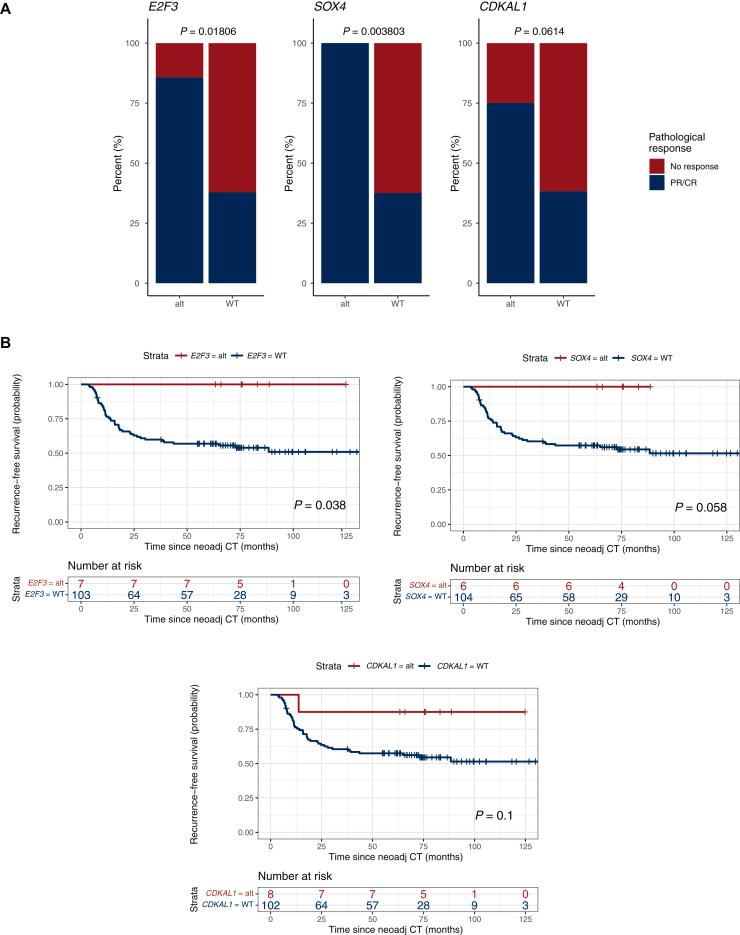
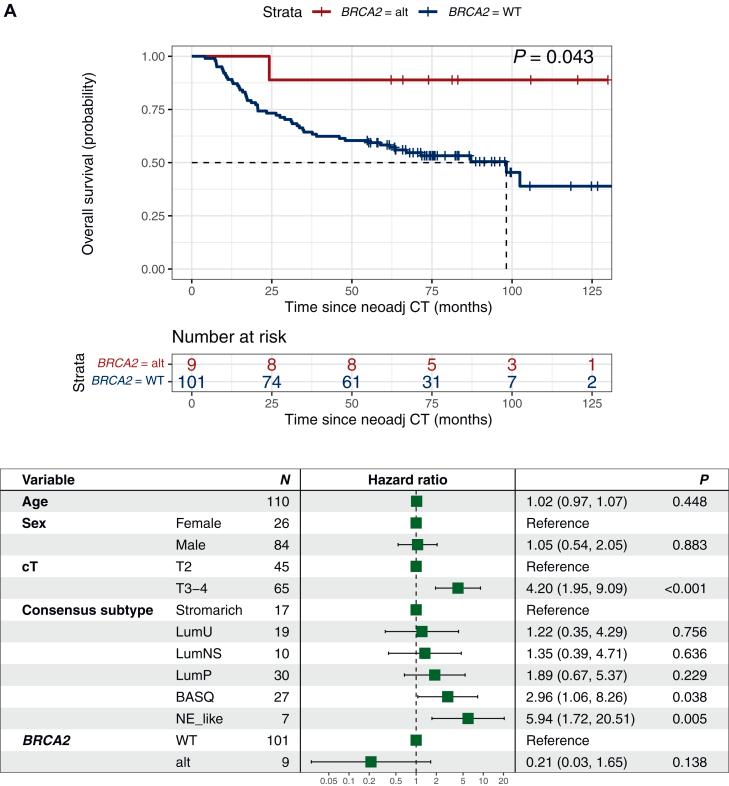
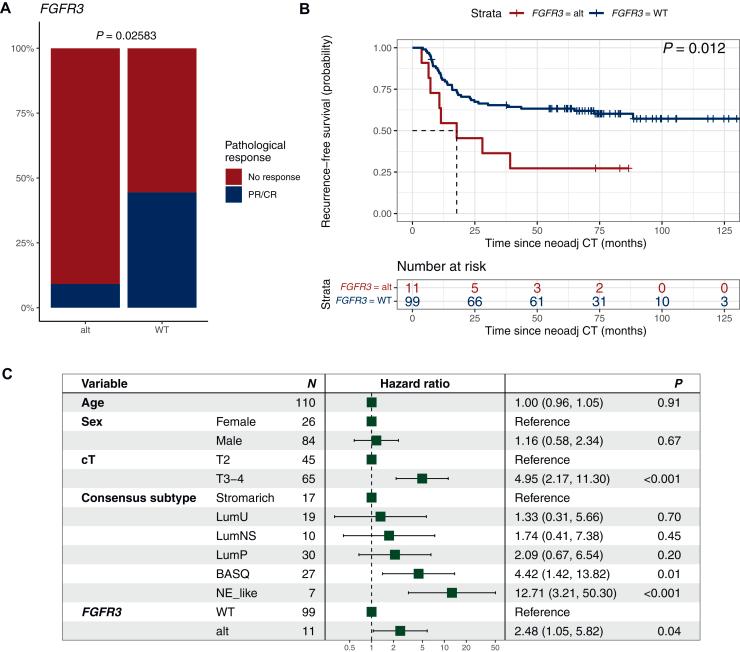
Amplifications of genes on chromosome 6p22.3, particularly of the E2F3 and SOX4 gene loci, were associated with improved response and survival to NAC. Patients harboring these alterations had a high pathological treatment response rate and all remained recurrence-free during a median follow-up of 5 years. Conversely, patients with FGFR3 mutations demonstrated impaired response and survival, whereas CDKN1A mutations appeared not related to treatment response but may serve as a biomarker for poor prognosis.
CONCLUSIONS
We found the panel-based sequencing approach feasible for exploring genomic alterations associated with clinical benefits of NAC and radical cystectomy. Amplifications of genes on chromosome 6p22.3 and FGFR3 and CDKN1A mutations hold promise as biomarkers associated with response and survival to NAC.
背景
以顺铂为基础的新辅助联合化疗(NAC)是肌肉浸润性尿路上皮膀胱癌(MIBC)患者围手术期的标准治疗方法;然而,约一半的患者会出现疾病复发。预测反应和生存的生物标志物仍是未被满足的医学需求。我们利用膀胱经尿道切除术获取的肿瘤标本,探索接受NAC和根治性膀胱切除术治疗的MIBC患者的基因组改变及其与反应和生存的关联。
患者和方法
采用基于单核苷酸多态性骨架测序方法的泛癌基因检测板,覆盖最常见的癌症相关基因,并进行低深度全基因组测序,对110例在根治性膀胱切除术前接受NAC治疗的临床常规患者进行基因组特征分析。评估病理反应率、无复发生存率和总生存率。
结果
6号染色体p22.3区域基因的扩增,特别是E2F3和SOX4基因位点的扩增,与NAC治疗反应和生存改善相关。携带这些改变的患者病理治疗反应率高,在中位随访5年期间均无复发。相反,FGFR3突变患者的反应和生存受损,而CDKN1A突变似乎与治疗反应无关,但可能作为预后不良的生物标志物。
结论
我们发现基于基因检测板的测序方法可用于探索与NAC和根治性膀胱切除术临床获益相关的基因组改变。6号染色体p22.3区域基因的扩增以及FGFR3和CDKN1A突变有望作为与NAC反应和生存相关的生物标志物。


 Zotero 插件