
免疫治疗中的肿瘤类器官:从疾病建模到转化研究。
Tumor organoids in immunotherapy: from disease modeling to translational research.
作者信息
Si Qi, Tao Shuhan, Wu Jizhun, Ma Jing, Li Zhengxing, Feng Xiaohang, Song Jianping, Kong Tiantian, Zhou Zhuolong
机构信息
Department of Colorectal Surgery, the Second Affiliated Hospital, and Zhejiang University-University of Edinburgh Institute, Zhejiang University, Hangzhou, Zhejiang, China.
Department of Biomedical Engineering, Shenzhen University, Shenzhen, Guangdong, China.
出版信息
J Immunother Cancer. 2025 Jul 15;13(7):e011733. doi: 10.1136/jitc-2025-011733.
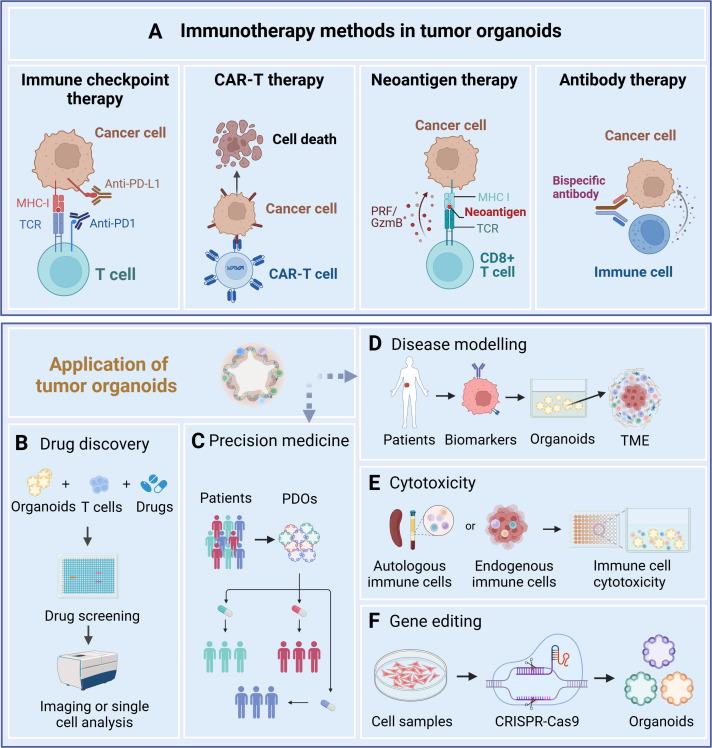
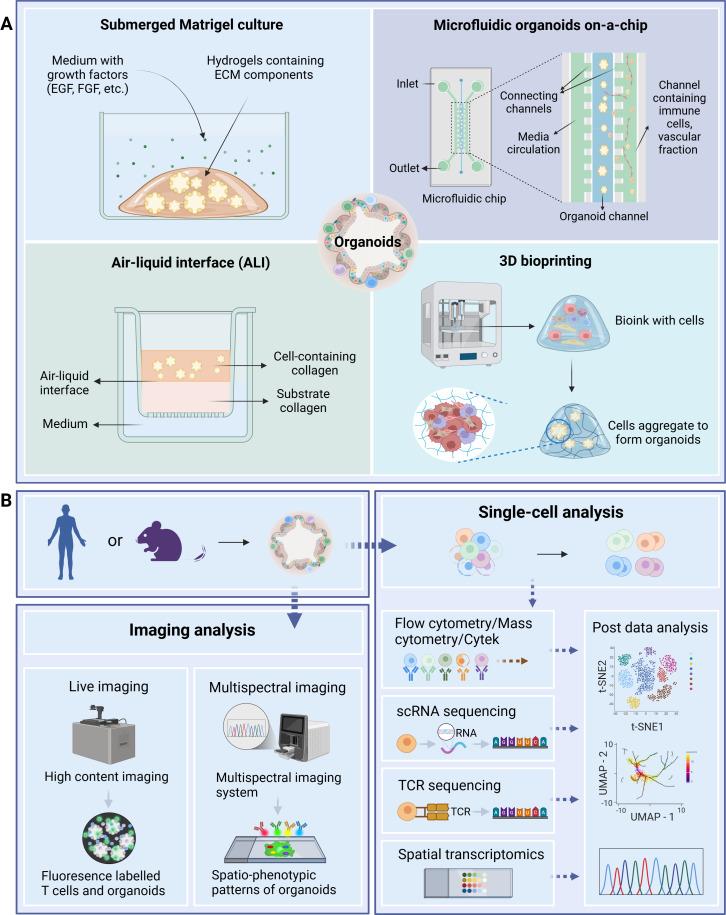
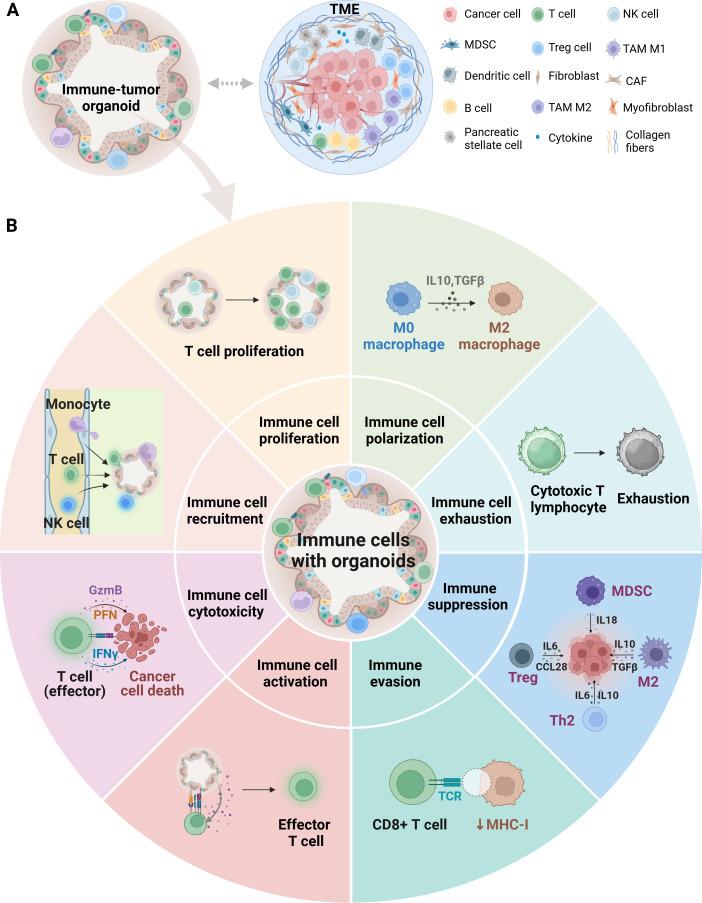
Tumor organoids have emerged as transformative tools in cancer research, enabling the study of tumor biology and immunology in a physiologically relevant, three-dimensional in vitro environment. Derived from patient tumor samples, these self-organizing structures recapitulate the histological and genetic heterogeneity of tumors and their microenvironment, offering significant advantages over traditional two-dimensional cell cultures and animal models. This work provides a comprehensive overview of tumor organoid generation, their characteristics, and their use as models to study tumor-immune interactions. We discuss how tumor organoids faithfully recapitulate tumor heterogeneity, support immune cell infiltration, and simulate immunosuppressive environments, making them ideal platforms for investigating immunotherapy strategies. Emerging technologies, including advanced imaging and single-cell analysis, as well as gene editing tools, further enhance the utility of tumor organoids in dissecting immune-tumor interactions at unprecedented resolution. We also highlight the translational potential of tumor organoids in preclinical immunotherapy research. Organoids offer a promising approach for predicting patient response to immunotherapy and developing personalized treatment strategies. As tumor organoid technology continues to evolve, its application in clinical settings holds great promise for advancing cancer immunotherapy, improving patient outcomes, and overcoming the challenges of drug resistance. Finally, the future direction of tumor organoid development is speculated according to current challenges.
肿瘤类器官已成为癌症研究中具有变革性的工具,能够在生理相关的三维体外环境中研究肿瘤生物学和免疫学。这些自组织结构源自患者肿瘤样本,概括了肿瘤及其微环境的组织学和基因异质性,与传统的二维细胞培养和动物模型相比具有显著优势。这项工作全面概述了肿瘤类器官的生成、其特征以及作为研究肿瘤 - 免疫相互作用模型的用途。我们讨论了肿瘤类器官如何忠实地概括肿瘤异质性、支持免疫细胞浸润并模拟免疫抑制环境,使其成为研究免疫治疗策略的理想平台。包括先进成像和单细胞分析以及基因编辑工具在内的新兴技术,进一步提高了肿瘤类器官以前所未有的分辨率剖析免疫 - 肿瘤相互作用的效用。我们还强调了肿瘤类器官在临床前免疫治疗研究中的转化潜力。类器官为预测患者对免疫治疗的反应和制定个性化治疗策略提供了一种有前景的方法。随着肿瘤类器官技术不断发展,其在临床环境中的应用有望推动癌症免疫治疗、改善患者预后并克服耐药性挑战。最后,根据当前挑战推测了肿瘤类器官发展的未来方向。
 Zotero 插件