
钠-葡萄糖协同转运蛋白2抑制剂在非糖尿病慢性肾脏病中的应用:作用机制、疗效及安全性
Application of SGLT-2 inhibitors in non-diabetic CKD: mechanisms, efficacy, and safety.
作者信息
Zhang Bing, Deng Liufei
机构信息
Department of Nephrology, Caidian District People's Hospital, Wuhan, China.
出版信息
Front Med (Lausanne). 2025 Jul 1;12:1574693. doi: 10.3389/fmed.2025.1574693. eCollection 2025.
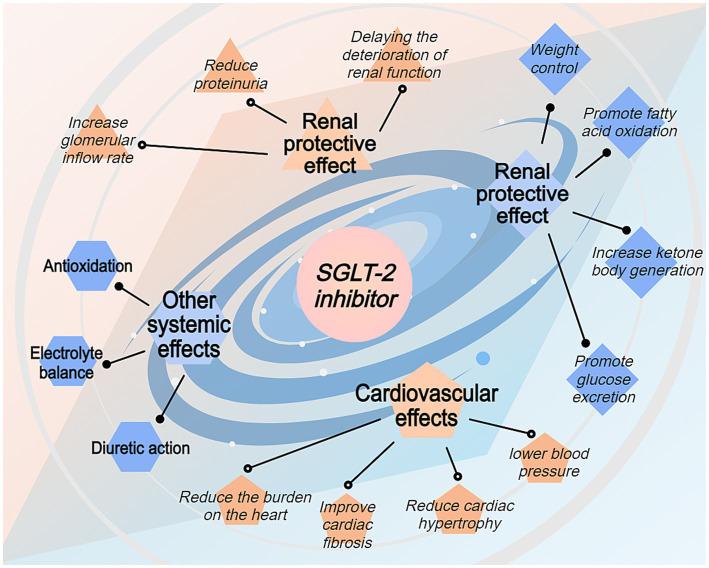
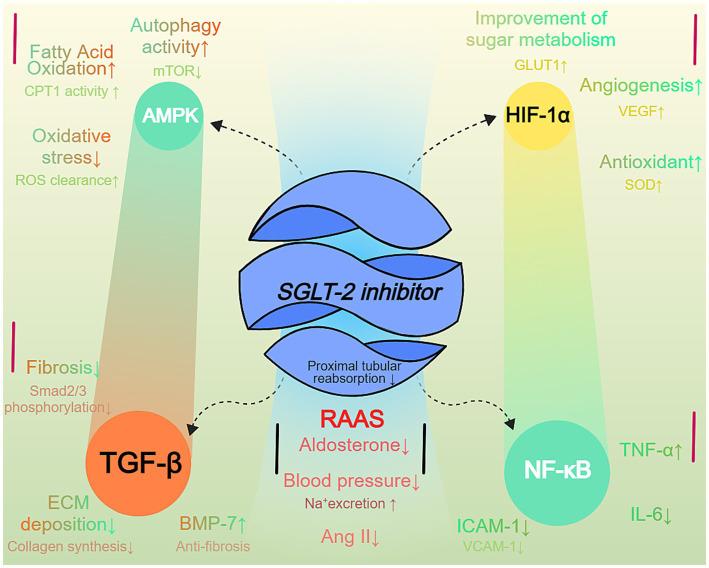
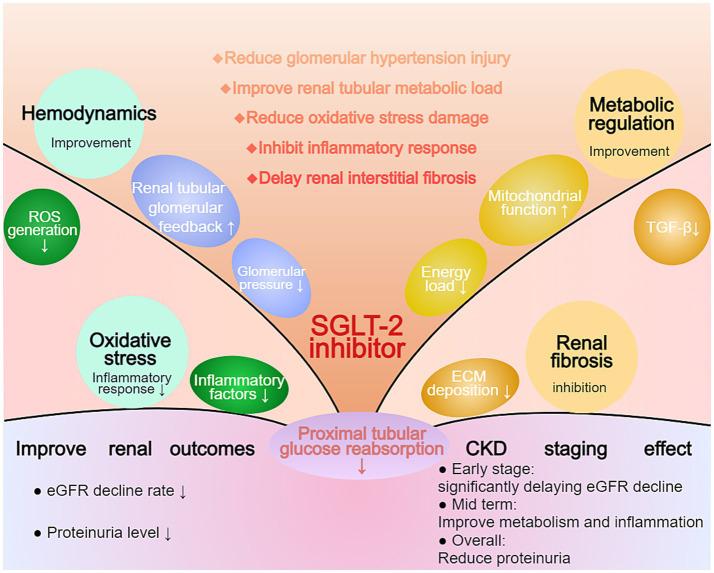
Chronic kidney disease (CKD) represents a major global public health challenge, significantly impacting patients' quality of life and placing a heavy burden on healthcare systems. While diabetes and hypertension are the primary risk factors for CKD, non-diabetic CKD also constitutes a significant proportion, with its complex pathological mechanisms necessitating the development of novel therapeutic strategies. Sodium-glucose cotransporter 2 (SGLT-2) inhibitors, initially developed for diabetes management, have recently demonstrated remarkable renal and cardiovascular protective effects in patients with non-diabetic CKD. SGLT-2 inhibitors exert their effects through multiple mechanisms, including reactivating the tubulo-glomerular feedback, reducing glomerular pressure and filtration rate, decreasing proteinuria, inhibiting inflammation and fibrosis, and improving systemic metabolic parameters such as lowering blood pressure, uric acid levels, and body weight. These effects not only slow the progression of kidney function decline but also significantly reduce the risk of end-stage renal disease (ESRD) and cardiovascular events. Landmark clinical trials such as DAPA-CKD, CREDENCE, and EMPA-KIDNEY provide strong scientific evidence supporting the use of SGLT-2 inhibitors in non-diabetic CKD, demonstrating their broad clinical benefits and excellent safety profile. Despite potential adverse effects such as urinary tract infections, hypotension, and diabetic ketoacidosis, appropriate patient selection and personalized treatment strategies can effectively manage these risks. The multi-system effects of SGLT-2 inhibitors not only expand their clinical indications but also offer new hope for the comprehensive management of non-diabetic CKD patients, with significant clinical implications and broad future application potential.
慢性肾脏病(CKD)是一项重大的全球公共卫生挑战,严重影响患者的生活质量,并给医疗系统带来沉重负担。虽然糖尿病和高血压是CKD的主要危险因素,但非糖尿病性CKD也占很大比例,其复杂的病理机制需要开发新的治疗策略。最初用于治疗糖尿病的钠-葡萄糖协同转运蛋白2(SGLT-2)抑制剂,最近在非糖尿病性CKD患者中显示出显著的肾脏和心血管保护作用。SGLT-2抑制剂通过多种机制发挥作用,包括重新激活肾小管-肾小球反馈、降低肾小球压力和滤过率、减少蛋白尿、抑制炎症和纤维化,以及改善全身代谢参数,如降低血压、尿酸水平和体重。这些作用不仅减缓了肾功能下降的进程,还显著降低了终末期肾病(ESRD)和心血管事件的风险。DAPA-CKD、CREDENCE和EMPA-KIDNEY等具有里程碑意义的临床试验提供了强有力的科学证据,支持在非糖尿病性CKD中使用SGLT-2抑制剂,证明了它们广泛的临床益处和良好的安全性。尽管存在诸如尿路感染、低血压和糖尿病酮症酸中毒等潜在不良反应,但适当的患者选择和个性化治疗策略可以有效管理这些风险。SGLT-2抑制剂的多系统作用不仅扩大了其临床适应症,也为非糖尿病性CKD患者的综合管理带来了新希望,具有重大的临床意义和广阔的未来应用潜力。
 Zotero 插件