
鉴定和验证与干细胞及端粒维持机制相关的基因作为乳腺癌生物标志物
Identification and validation of genes related to stem cells and telomere maintenance mechanisms as biomarkers for breast cancer.
作者信息
Zhen Shuang, Huang Lifeng, Zhu Qiannan, Chen Rui, Wang Jue, Zha Xiaoming
机构信息
Department of Breast Surgery, Department of General Surgery, The First Affiliated Hospital with Nanjing Medical University, Nanjing, China.
出版信息
Front Immunol. 2025 Jul 1;16:1618193. doi: 10.3389/fimmu.2025.1618193. eCollection 2025.
BACKGROUND
Stem cell-related genes (SCRGs) and telomere maintenance mechanism-related genes (TMMRGs) are pivotal in breast cancer (BC) pathogenesis by facilitating tumor cell proliferation and self-renewal. This study employed integrated transcriptomic and single-cell RNA sequencing (scRNA-seq) analyses to investigate SCRGs and TMMRGs as potential biomarkers for BC and to elucidate their underlying cellular mechanisms.
METHODS
Total RNA was extracted from eight BC tumor samples and eight matched adjacent non-tumorous tissues. Differential expression profiling, protein-protein interaction (PPI) network construction, and Molecular Complex Detection (MCODE) were conducted. Biomarker candidates were identified using the least absolute shrinkage and selection operator (LASSO) algorithm, followed by pathway enrichment and immunological analyses. Publicly available scRNA-seq datasets were utilized to delineate BC cell types, with emphasis on cellular subsets exhibiting differential biomarker expression. Heterogeneity, communication, and pseudo-temporal analyses of key cells were examined. Biomarker expression was further validated by reverse transcription-quantitative polymerase chain reaction (RT-qPCR).
RESULTS
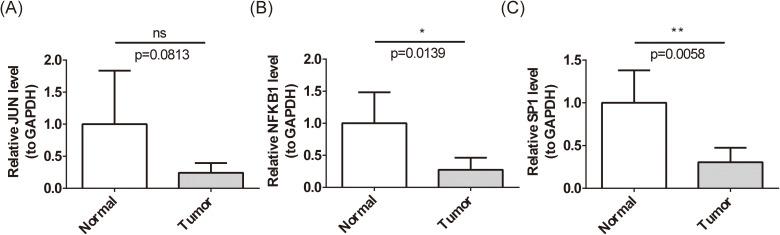
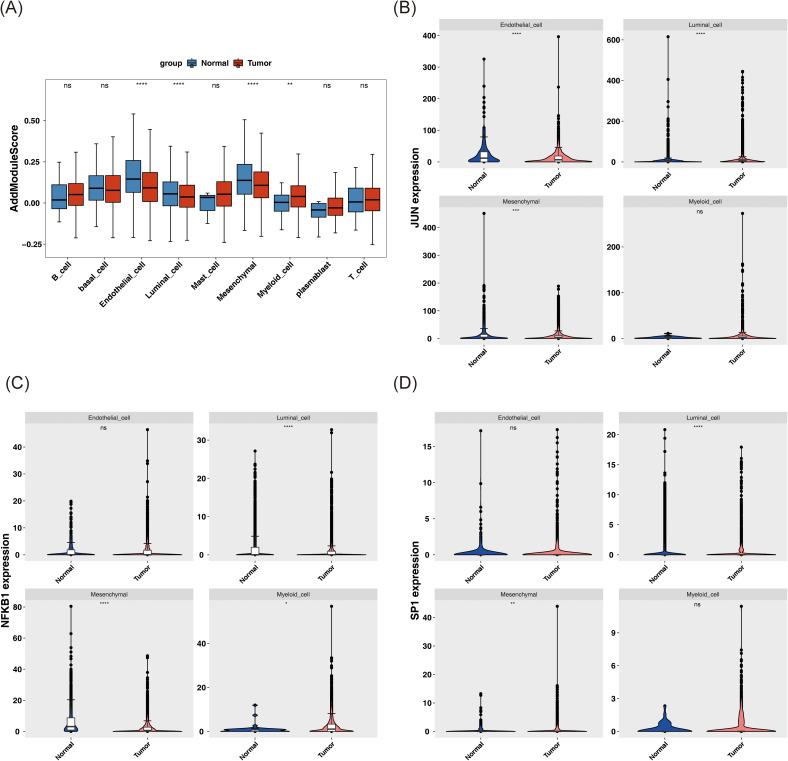
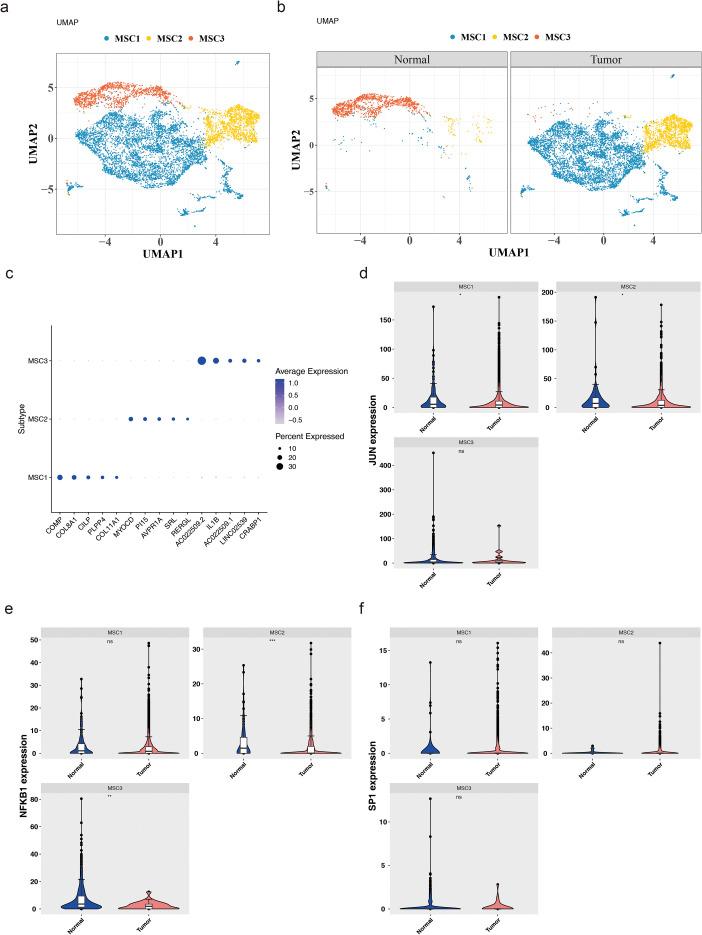
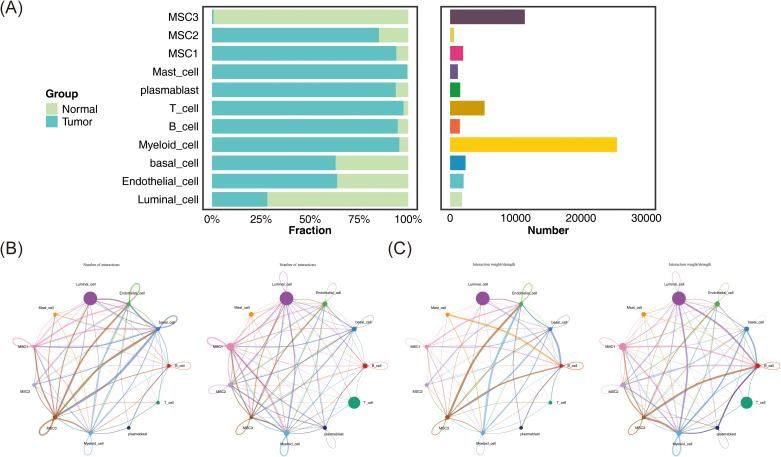
JUN, NFKB1, and SP1 were significantly downregulated in BC, potentially modulating disease progression through mechanisms involving extracellular matrix (ECM) remodeling, intracellular signaling, oxidative stress response, and translational regulation. Activated B cells and natural killer (NK) cells demonstrated elevated infiltration levels, accompanied by increased expression of immune checkpoint molecules CD200, CD274, TIGIT, TNFRSF25, and TNFSF15. Nine distinct cellular lineages were annotated, among which mesenchymal cells exhibited pronounced biomarker expression differences and enhanced differentiation potential, designating them as key cellular mediators. Interactions between mesenchymal subpopulations (MSC1, MSC2, MSC3) and other cell types were markedly reduced in BC, despite an overall expansion in mesenchymal cell numbers during disease progression. MSC1 emerged as the predominant subtype. RT-qPCR analyses corroborated the downregulation of JUN, NFKB1, and SP1 in BC tissues.
CONCLUSION
JUN, NFKB1, and SP1 were identified as potential biomarkers for BC. These findings highlight the critical role of mesenchymal cells in tumor biology and suggest potential therapeutic targets.
背景
干细胞相关基因(SCRGs)和端粒维持机制相关基因(TMMRGs)通过促进肿瘤细胞增殖和自我更新在乳腺癌(BC)发病机制中起关键作用。本研究采用综合转录组学和单细胞RNA测序(scRNA-seq)分析来研究SCRGs和TMMRGs作为BC潜在生物标志物,并阐明其潜在的细胞机制。
方法
从8个BC肿瘤样本和8个匹配的相邻非肿瘤组织中提取总RNA。进行差异表达谱分析、蛋白质-蛋白质相互作用(PPI)网络构建和分子复合物检测(MCODE)。使用最小绝对收缩和选择算子(LASSO)算法鉴定生物标志物候选物,随后进行通路富集和免疫分析。利用公开可用的scRNA-seq数据集描绘BC细胞类型,重点关注表现出生物标志物差异表达的细胞亚群。检查关键细胞的异质性、通讯和拟时间分析。通过逆转录定量聚合酶链反应(RT-qPCR)进一步验证生物标志物表达。
结果
JUN、NFKB1和SP1在BC中显著下调,可能通过涉及细胞外基质(ECM)重塑、细胞内信号传导、氧化应激反应和翻译调控的机制调节疾病进展。活化的B细胞和自然杀伤(NK)细胞显示浸润水平升高,同时免疫检查点分子CD200、CD274、TIGIT、TNFRSF25和TNFSF15的表达增加。注释了9个不同的细胞谱系,其中间充质细胞表现出明显的生物标志物表达差异和增强的分化潜能,将它们指定为关键细胞介质。尽管在疾病进展期间间充质细胞数量总体增加,但BC中间充质亚群(MSC1、MSC2、MSC3)与其他细胞类型之间的相互作用明显减少。MSC1成为主要亚型。RT-qPCR分析证实了BC组织中JUN、NFKB1和SP1的下调。
结论
JUN、NFKB1和SP1被鉴定为BC的潜在生物标志物。这些发现突出了间充质细胞在肿瘤生物学中的关键作用,并提示了潜在的治疗靶点。






 Zotero 插件