
纳米和微塑料颗粒对人类健康风险评估的暴露场景。
Exposure scenarios for human health risk assessment of nano- and microplastic particles.
作者信息
Lane Taylor, Wardani Ira, Koelmans Albert A
机构信息
Aquatic Ecology and Water Quality Management Group, Department of Environmental Sciences, Wageningen University, Wageningen, 6700 AA The Netherlands.
出版信息
Microplast nanoplast. 2025;5(1):28. doi: 10.1186/s43591-025-00134-9. Epub 2025 Jul 14.
UNLABELLED
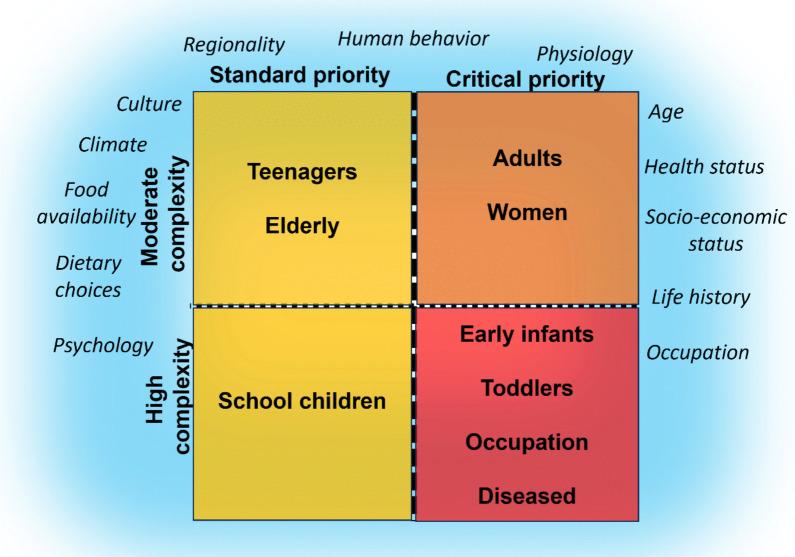
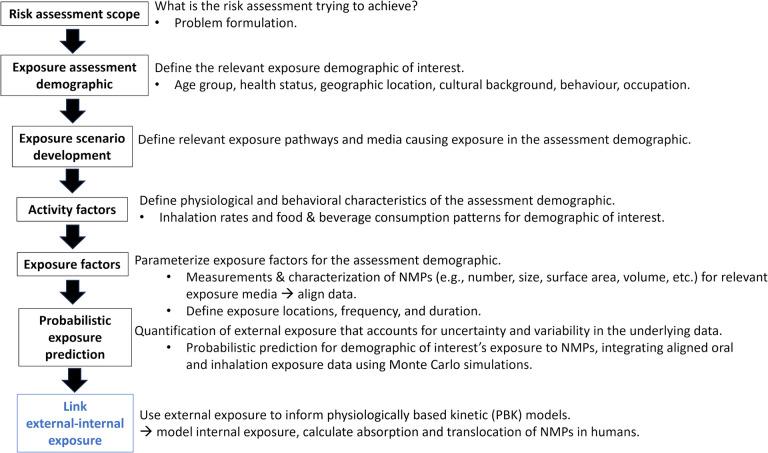
Evidence of nano- and microplastic particles being present in the human body has increased in recent years, yet there is no acceptable methodology to perform a human health risk assessment for these particles because of limitations in the exposure and hazard assessments. Exposure assessment can be improved by establishing comprehensive and justifiable exposure scenarios for a defined exposure demographic, thoroughly describing the relevant exposure pathways, and performing multidimensional data alignment, thereby facilitating probabilistic estimates of nano- and microplastic particle exposure. General considerations of exposure scenarios are outlined, along with specifics details on the complexity and prioritization for nine demographic groups: adults; women; the elderly; individuals with disease; individuals employed in high-hazard occupations; and children demographics, including early infants, toddlers, school children, and teenagers. Recommendations to advance exposure assessments and scenarios are also provided which suggest: i) the use of well-defined exposure scenarios for demographics that are prioritized according to their level of complexity and concern; ii) a thorough description of relevant activity factors (physiological parameters, behavioural traits) and exposure factors (duration, frequency, media characterization) for the chosen demographic; iii) thorough descriptions of exposure via ingestion and inhalation, and in the case of early infants, including exposure via maternal transfer; iv) multidimensional data alignment and probabilistic methods to enable credible comparisons of exposure data across studies and inform physiologically based toxicokinetic models to estimate internal exposure.
SUPPLEMENTARY INFORMATION
The online version contains supplementary material available at 10.1186/s43591-025-00134-9.
未标注
近年来,人体中存在纳米和微塑料颗粒的证据有所增加,但由于暴露评估和危害评估存在局限性,目前尚无可接受的方法对这些颗粒进行人体健康风险评估。通过为特定的暴露人群建立全面且合理的暴露场景、详尽描述相关暴露途径以及进行多维度数据比对,可改进暴露评估,从而有助于对纳米和微塑料颗粒暴露进行概率估计。本文概述了暴露场景的一般考量因素,并详细说明了九类人群(成年人、女性、老年人、患病个体、从事高风险职业的个体以及儿童群体,包括早期婴儿、幼儿、学龄儿童和青少年)的复杂性和优先级。还提供了推进暴露评估和场景设定的建议,包括:i)针对根据复杂性和关注度排序的人群,使用定义明确的暴露场景;ii)对所选人群的相关活动因素(生理参数、行为特征)和暴露因素(持续时间、频率、介质特征)进行详尽描述;iii)详尽描述经口摄入和吸入暴露情况,对于早期婴儿,还包括经母体转移的暴露情况;iv)采用多维度数据比对和概率方法,以便对不同研究中的暴露数据进行可靠比较,并为基于生理的毒代动力学模型提供信息,以估计体内暴露量。
补充信息
在线版本包含可在10.1186/s43591 - 025 - 00134 - 9获取的补充材料。
 Zotero 插件