
墨西哥的精氨酸酶缺乏症:代谢参考中心经验的见解
Arginase deficiency in Mexico: Insights from the experience of a metabolic reference center.
作者信息
Vela-Amieva M, Fernández-Lainez C, Guillén-López S, López-Mejía L, Alcántara-Ortigoza M A, González Del Angel A, Fernández-Hernández L, Reyna-Fabián M E, Estandía-Ortega B, Ibarra-González I, Ryu S W, Lee H
机构信息
Laboratorio de Errores Innatos del Metabolismo y Tamiz, Instituto Nacional de Pediatría, Mexico.
Facultad de Ciencias, UNAM, Investigación Científica C.U., Alc. Coyoacán, C.P. 04510, Cuidad de México, Mexico.
出版信息
Mol Genet Metab Rep. 2025 Jun 27;44:101238. doi: 10.1016/j.ymgmr.2025.101238. eCollection 2025 Sep.
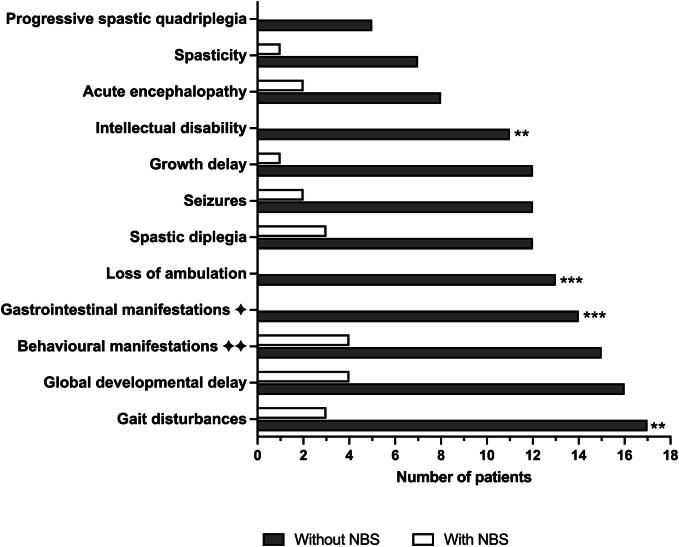
Arginase deficiency (ARG1d) is an inborn error of metabolism caused by pathogenic variants in gene, which causes a defective hydrolysis of arginine (Arg) to urea and ornithine. The molecular landscape of ARG1d in Mexico is poorly known. In this study, we present for the first time the clinical and genotypic overview of the largest cohort of ARG1d in Mexico. A retrospective analysis of the medical records of 24 ARG1d patients from a historical cohort of individuals with inborn errors of intermediary metabolism (1994-2024) from the National Institute of Pediatrics in Mexico City, was performed. Clinical, demographical, biochemical, anthropometric and molecular data were investigated in two moments, at diagnosis and at the last follow-up evaluation. It was found that only 7/24 patients were diagnosed by newborn screening (NBS). Additionally, we highlight the presence of the Portuguese NM_000045.4(ARG1):c.61C>T or p.(Arg21*) variant as the most frequent cause of ARG1d in Mexico, carried by 27.7 % of the patients. Our findings emphasize the debilitating and progressive nature of ARG1d, the prolonged diagnostic odyssey experienced by the patients (6.7 years), and the importance of training healthcare professionals to recognize the clinical features suggestive of the disease. We also underscore the critical need to advance early detection through expanded NBS in our country, as the early-diagnosed patients exhibited less severe outcomes and improved nutritional status compared to late-diagnosed ones. It was also noted that Mexican ARG1d patients have significant difficulties adhering to current nutritional treatment, and access to ammonium scavengers, thus other therapeutic options could be desirable.
精氨酸酶缺乏症(ARG1d)是一种先天性代谢缺陷病,由基因中的致病变异引起,导致精氨酸(Arg)水解为尿素和鸟氨酸的过程出现缺陷。墨西哥精氨酸酶缺乏症的分子情况鲜为人知。在本研究中,我们首次展示了墨西哥最大的精氨酸酶缺乏症队列的临床和基因型概况。对墨西哥城国家儿科研究所1994年至2024年期间患有中间代谢先天性缺陷的历史队列中的24例精氨酸酶缺乏症患者的病历进行了回顾性分析。在诊断时和最后一次随访评估这两个时间点,对临床、人口统计学、生化、人体测量和分子数据进行了调查。结果发现,24例患者中只有7例通过新生儿筛查(NBS)确诊。此外,我们强调葡萄牙NM_000045.4(ARG1):c.61C>T或p.(Arg21*)变体是墨西哥精氨酸酶缺乏症最常见的病因,27.7%的患者携带该变体。我们的研究结果强调了精氨酸酶缺乏症的衰弱性和进行性、患者经历的漫长诊断过程(6.7年),以及培训医疗保健专业人员识别该疾病提示性临床特征的重要性。我们还强调了在我国通过扩大新生儿筛查推进早期检测的迫切需求,因为与晚诊断患者相比,早诊断患者的病情较轻,营养状况有所改善。还注意到墨西哥精氨酸酶缺乏症患者在坚持目前的营养治疗以及获取铵清除剂方面存在重大困难,因此可能需要其他治疗选择。


 Zotero 插件