
用于肝细胞癌的中药单体:与自噬相关的新思路
Chinese medicine monomers for hepatocellular carcinoma: New ideas related to autophagy.
作者信息
Zheng Shi-Hao, Xue Tian-Yu, Wang Qiu-Yue, Ye Yong-An, Zhang Peng
机构信息
Department of Spleen and Gastroenterology, Dongzhimen Hospital of Beijing University of Chinese Medicine, Beijing 100700, China.
Department of Spleen and Gastroenterology, Hebei Provincial Hospital of Traditional Chinese Medicine, Shijiazhuang 050000, Hebei Province, China.
出版信息
World J Gastroenterol. 2025 Jul 14;31(26):106113. doi: 10.3748/wjg.v31.i26.106113.
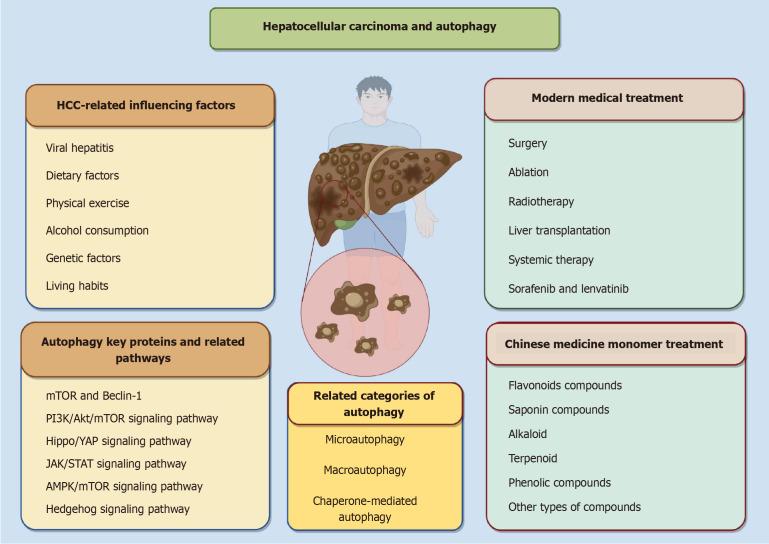
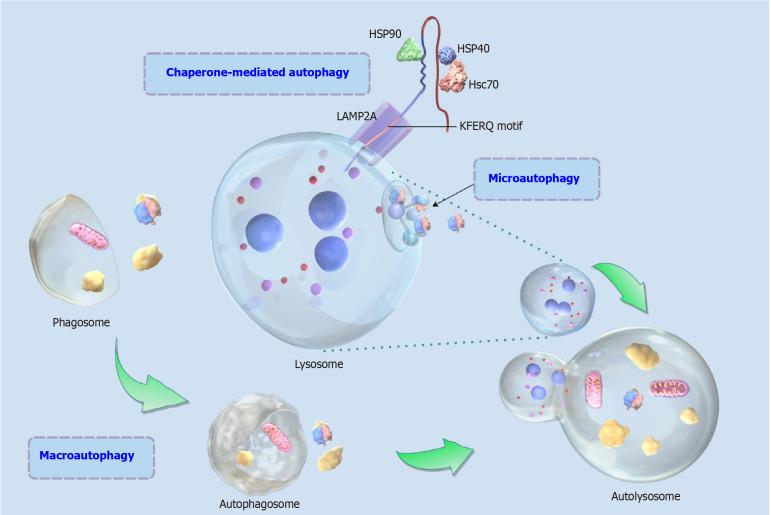
Hepatocellular carcinoma (HCC) represents the most prevalent form of primary liver cancer, characterized by high mortality rates, frequent recurrence and metastasis, poor clinical prognosis, and a complex pathogenesis with limited therapeutic options. Autophagy plays a pivotal role in the immune response and functions as a lysosome-mediated degradation mechanism essential for recycling cellular components and eliminating aggregated proteins, damaged organelles, and invasive pathogens, thereby maintaining cellular function and dynamic homeostasis. Additionally, autophagy regulates several critical proteins and signaling pathways, including mammalian target of the rapamycin (mTOR), Beclin-1, the phosphatidylinositol 3-kinase/protein kinase B/mTOR signaling pathway, the Hippo/yes-associated protein signaling pathway, and the Janus kinase/signal transducer of activation signaling pathway. This regulatory capacity of autophagy can potentially prevent or delay the progression of HCC. Nowadays, many studies have shown that different types of herbal monomers such as the more common quercetin, baicalein, berberine and emodin can further regulate autophagy and exert preventive and therapeutic effects on HCC through the modulation of mTOR and other related signaling pathways and so on. In this paper, we examine the mechanisms of autophagy, key proteins and signaling pathways involved, and the modulation of autophagy by Chinese medicine monomers in the prevention and treatment of HCC. This review aims to provide valuable insights for the development of Chinese medicine strategies against HCC and to inform the rational use of these therapies in clinical practice.
肝细胞癌(HCC)是原发性肝癌最常见的形式,其特征是死亡率高、频繁复发和转移、临床预后差以及发病机制复杂且治疗选择有限。自噬在免疫反应中起关键作用,作为一种溶酶体介导的降解机制,对于回收细胞成分、清除聚集蛋白、受损细胞器和入侵病原体至关重要,从而维持细胞功能和动态平衡。此外,自噬调节几种关键蛋白和信号通路,包括雷帕霉素哺乳动物靶点(mTOR)、Beclin-1、磷脂酰肌醇3激酶/蛋白激酶B/mTOR信号通路、Hippo/Yes相关蛋白信号通路以及Janus激酶/信号转导激活信号通路。自噬的这种调节能力可能会预防或延缓HCC的进展。如今,许多研究表明,不同类型的草药单体,如更常见的槲皮素、黄芩素、黄连素和大黄素,可以通过调节mTOR等相关信号通路等进一步调节自噬,并对HCC发挥预防和治疗作用。在本文中,我们研究了自噬的机制、涉及的关键蛋白和信号通路,以及中药单体在HCC预防和治疗中对自噬的调节作用。本综述旨在为开发抗HCC的中药策略提供有价值的见解,并为这些疗法在临床实践中的合理应用提供参考。


 Zotero 插件