
津巴布韦家禽中产超广谱β-内酰胺酶细菌的传播情况。
Dissemination of extended-spectrum beta-lactamase-producing in poultry in Zimbabwe.
作者信息
Katsande Peter, Davies Alistair R, Chisnall Tom, Vhoko-Tapesana Kudzaishe, Willcocks Sam, Majuru Chenai S, Mubau Tendayi, Stabler Richard A, Card Roderick M
机构信息
Department of Veterinary Technical Services, 18A Bevan Building, Liberation Legacy Way, Harare, Zimbabwe.
Animal and Plant Health Agency, Woodham Lane, New Haw, Addlestone, UK.
出版信息
Microb Genom. 2025 Jul;11(7). doi: 10.1099/mgen.0.001454.
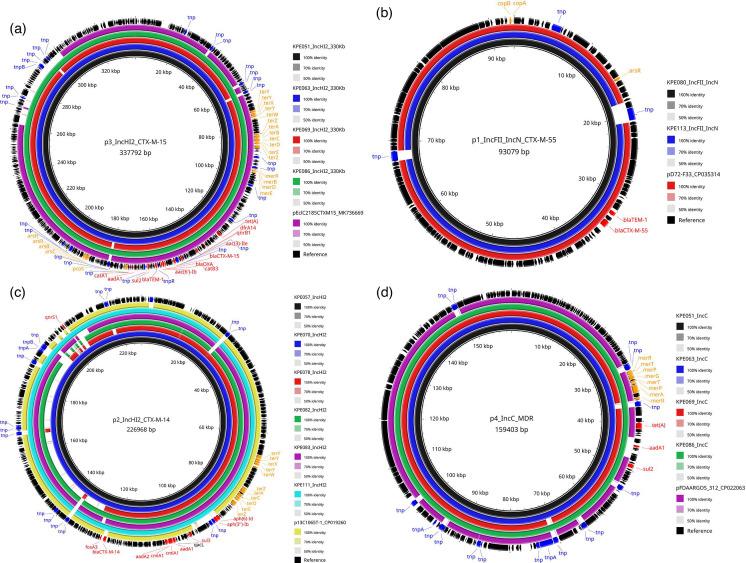
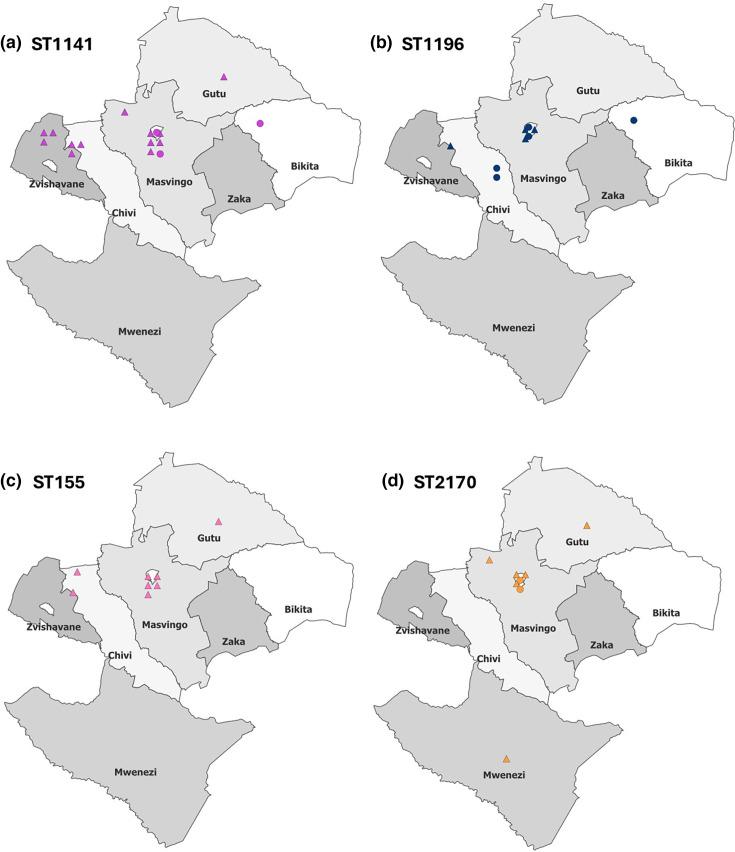
Extended-spectrum beta-lactamase (ESBL)-producing are resistant to the critically important third- and fourth-generation cephalosporin antibiotics and present a risk to animal and human health. In Zimbabwe, there is an evidence gap concerning the prevalence and diversity of ESBL-producing in poultry. In this study, we screened for ESBL- at farms (=50) and markets (=10) using MacConkey agar supplemented with 4 µg ml ceftriaxone. ESBL- were detected at every market and at 21 farms, giving a farm-level prevalence of 42%. Seventy isolates were obtained and tested for antimicrobial susceptibility, whilst 69 of these were further analysed by whole-genome sequencing. A total of eight distinct variants were identified, and 69 out of 70 isolates were multidrug-resistant. Genomic analysis revealed evidence for clonal expansion of an ESBL-producing clone and horizontal gene transfer via plasmids being responsible for the dissemination of ESBL-. Geographic Information System mapping was used to visualize the distribution of the ESBL-producing clones. For example, ST1141 isolates were clonal, having a highly conserved core genome, and harboured and 11 additional antimicrobial resistance genes on a ~338 kbp IncHI2 plasmid which was not present in other isolates. This clone was present at nine farms. In contrast, a conserved ~93 kbp IncFII plasmid harbouring was present in isolates from three different multilocus sequence types obtained from six farms. This study provides insight into the burden and distribution of ESBL- at poultry farms in Zimbabwe and provides molecular genetic evidence for clonal expansion and plasmid transfer as being important mechanisms for the dissemination of ESBL- in this setting. This study underscores the importance of adopting measures, such as prudent antimicrobial use and farm biosecurity, that can limit the development and dissemination of ESBL-producing .
产超广谱β-内酰胺酶(ESBL)的细菌对极为重要的第三代和第四代头孢菌素类抗生素具有耐药性,对动物和人类健康构成威胁。在津巴布韦,关于家禽中产ESBL细菌的流行情况和多样性存在证据空白。在本研究中,我们在50个农场和10个市场使用添加了4 µg/ml头孢曲松的麦康凯琼脂筛选产ESBL细菌。在每个市场和21个农场检测到了产ESBL细菌,农场层面的流行率为42%。获得了70株分离株并检测其抗菌药敏性,其中69株进一步通过全基因组测序进行分析。共鉴定出8个不同的细菌变体,70株分离株中有69株对多种药物耐药。基因组分析揭示了一个产ESBL克隆的克隆扩增证据以及通过质粒进行水平基因转移导致ESBL细菌传播的证据。使用地理信息系统绘图来可视化产ESBL克隆的分布。例如,ST1141分离株具有克隆性,核心基因组高度保守,在一个约338 kbp的IncHI2质粒上携带ESBL和另外11个抗菌耐药基因,该质粒在其他分离株中不存在。这个克隆存在于9个农场。相比之下,一个携带ESBL的约93 kbp的保守IncFII质粒存在于从6个农场获得的3种不同多位点序列类型的分离株中。本研究深入了解了津巴布韦家禽农场中产ESBL细菌的负担和分布情况,并提供了分子遗传学证据,证明克隆扩增和质粒转移是这种环境下ESBL细菌传播的重要机制。本研究强调了采取如谨慎使用抗菌药物和农场生物安全等措施的重要性,这些措施可以限制产ESBL细菌的产生和传播。

 Zotero 插件