
饮食风险对癌症的全球影响:1990年至2021年各地区负担及到2035年的预测
Global impact of dietary risks on cancers: burdens across regions from 1990 to 2021 and the projection to 2035.
作者信息
Liu Xiangrong, Zhang Xinsheng, Wei Yulu, Yu Zhimeng, Liu Lu, Qin Xin, Liu Yinghua
机构信息
Department of Nutrition, The First Medical Center of the Chinese People's Liberation Army General Hospital, Beijing, China.
People's Liberation Army Postgraduate Medical School, Beijing, China.
出版信息
Front Nutr. 2025 Jul 4;12:1585305. doi: 10.3389/fnut.2025.1585305. eCollection 2025.
BACKGROUND
The burden of cancer has been progressively increasing, with diet playing a key role in its development and progression. Previous studies on diet-related cancer burden mainly focused on individual factors or single cancer types. Therefore, this study aimed to analyze global trends in deaths and disability-adjusted life years (DALYs) associated with diet-related cancers from 1990 to 2021, predicting the burden up to 2035.
METHODS
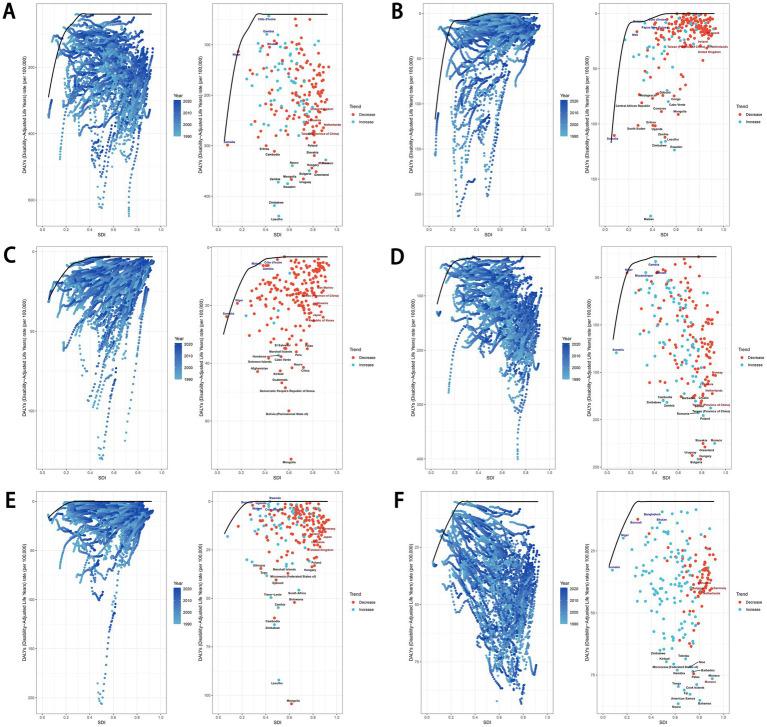
Using bibliometric analysis and Global Burden of Disease (GBD) 2021 data, it examined mortality and DALY rates stratified by age, sex, cancer type, and region. Decomposition analysis assessed contributions of population growth, aging, and epidemiological transitions, while health inequalities were evaluated using inequality indices. Frontier analysis quantified gaps between current and minimum achievable burdens. Future trends for multiple tumors were projected using Bayesian Age-Period-Cohort (BAPC) modeling.
RESULTS
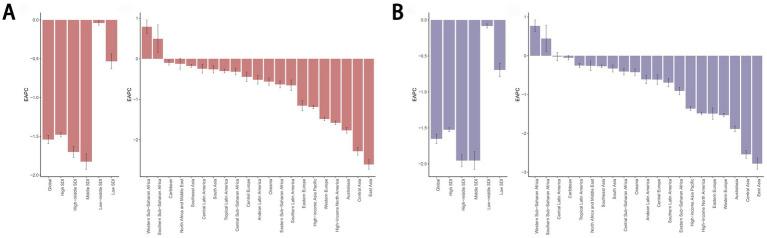
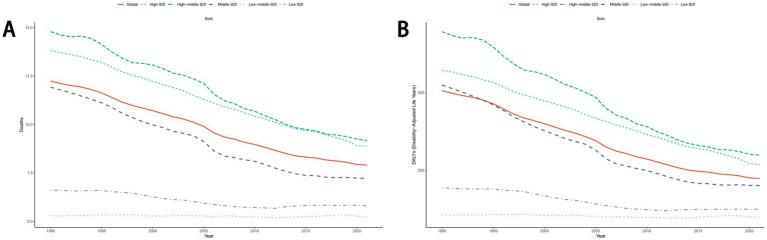
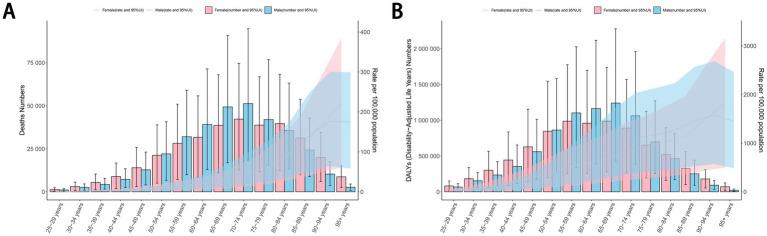
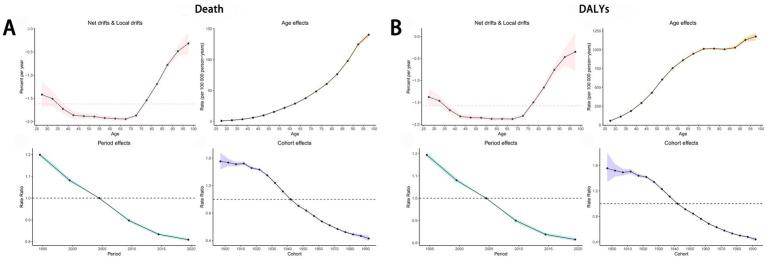
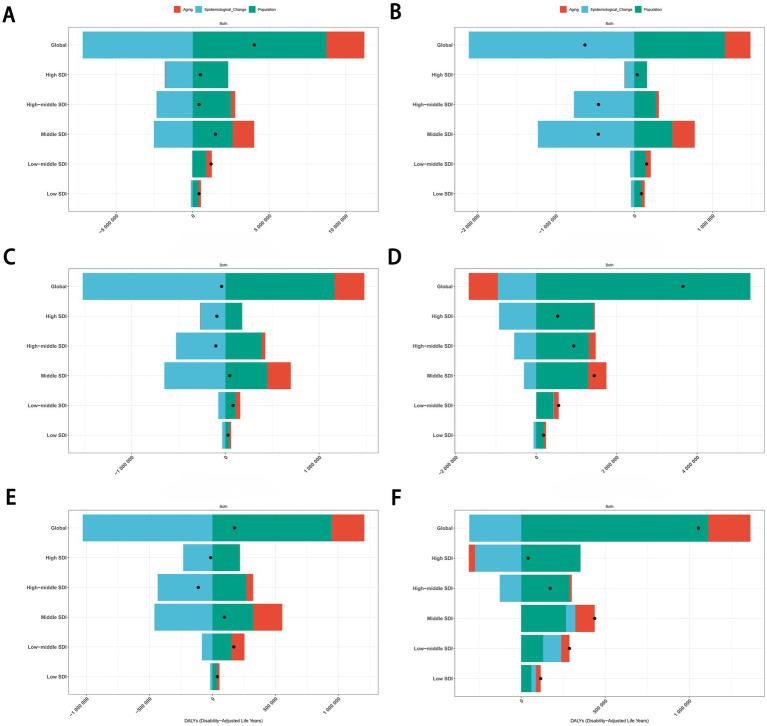
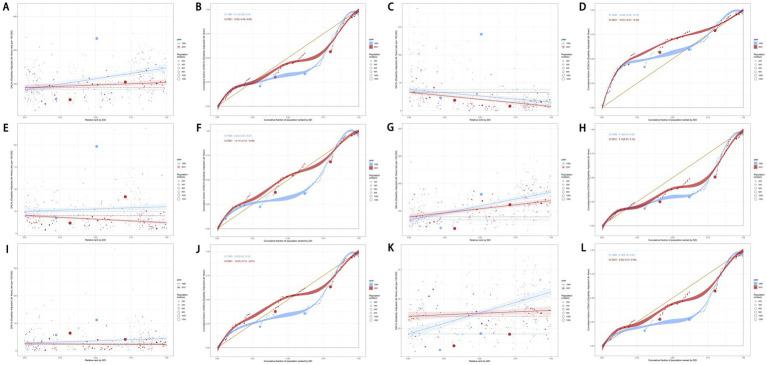
The age-standardized death rate (ASDR) for diet-related cancers declined from 12.24 (95% UI: 3.32 to 22.78) per 100,000 in 1990 to 7.90 (95% UI: 2.45 to 13.85) in 2021, and the age-standardized DALYs rate decreased from 302.48 (95% UI: 80.53 to 565.63) to 189.62 (95% UI: 57.13 to 335.37) per 100,000. In 2021, the highest ASDR were recorded in Central Europe, and the largest age-standardized DALYs rate were documented in Southern Sub-Saharan Africa. The greatest disease burden was identified in high-middle sociodemographic index (SDI) regions. Colon and rectum cancers were most prominent, with high red meat intake as the leading dietary risk. We also found that a higher disease burden was observed in males compared to females, and the burden increased progressively with age. Decomposition analysis revealed population growth as the main driver of increasing burdens, partly offset by epidemiological changes. Health inequality driven by economic factors has decreased. BAPC modeling predicted a continued decline in the future burden of multiple cancers, except for breast cancer.
CONCLUSION
While the burden of diet-related cancers is declining, challenges remain, particularly in older populations and higher SDI regions. Persistent health inequalities affect esophageal and stomach cancers. These findings can guide targeted strategies for prevention and control.
背景
癌症负担一直在逐步增加,饮食在其发生和发展中起着关键作用。以往关于饮食相关癌症负担的研究主要集中在个体因素或单一癌症类型上。因此,本研究旨在分析1990年至2021年与饮食相关癌症相关的死亡和伤残调整生命年(DALYs)的全球趋势,并预测到2035年的负担。
方法
利用文献计量分析和全球疾病负担(GBD)2021数据,研究按年龄、性别、癌症类型和地区分层的死亡率和DALY率。分解分析评估了人口增长、老龄化和流行病学转变的贡献,同时使用不平等指数评估了健康不平等。前沿分析量化了当前负担与最低可实现负担之间的差距。使用贝叶斯年龄-时期-队列(BAPC)模型预测多种肿瘤的未来趋势。
结果
饮食相关癌症的年龄标准化死亡率(ASDR)从1990年的每10万人12.24(95%UI:3.32至22.78)降至2021年的7.90(95%UI:2.45至13.85),年龄标准化DALY率从每10万人302.48(95%UI:80.53至565.63)降至189.62(95%UI:57.13至335.37)。2021年,中欧的ASDR最高,撒哈拉以南非洲南部的年龄标准化DALY率最高。在高中社会人口指数(SDI)地区发现了最大的疾病负担。结肠癌和直肠癌最为突出,红肉摄入量高是主要的饮食风险因素。我们还发现,男性的疾病负担高于女性,且负担随年龄增长而逐渐增加。分解分析表明,人口增长是负担增加的主要驱动因素,部分被流行病学变化所抵消。经济因素导致的健康不平等有所下降。BAPC模型预测,除乳腺癌外,多种癌症的未来负担将持续下降。
结论
虽然饮食相关癌症的负担正在下降,但挑战依然存在,尤其是在老年人群和高SDI地区。持续的健康不平等影响食管癌和胃癌。这些发现可为有针对性的预防和控制策略提供指导。





 Zotero 插件