
靶向线粒体损伤和内质网应激以抑制镉诱导的肾毒性中的铁死亡
Targeting mitochondrial damage and ER stress to inhibit ferroptosis in cadmium-induced nephrotoxicity.
作者信息
Yousaf Saba, Arshad Muhammad, Raza Muhammad, Fatima Anmol, Mammadova Khayala
机构信息
Enzyme Biotechnology Laboratory, Department of Biochemistry, University of Agriculture Faisalabad, 38000, Pakistan.
Biochemistry Section, Jhang Campus, University of Veterinary and Animal Sciences, Lahore, Pakistan.
出版信息
Toxicol Rep. 2025 Jul 3;15:102082. doi: 10.1016/j.toxrep.2025.102082. eCollection 2025 Dec.
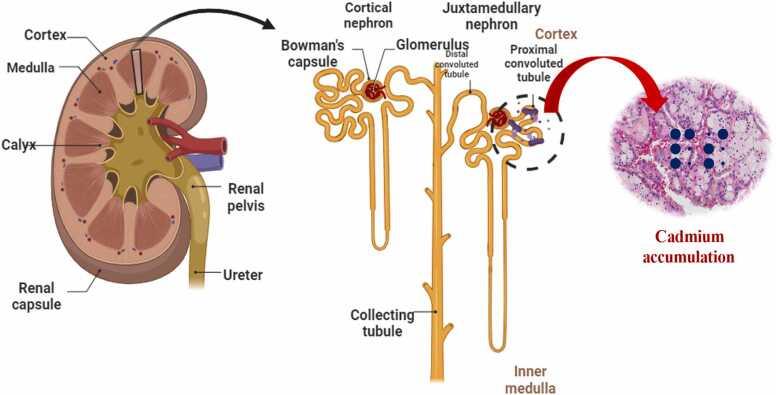
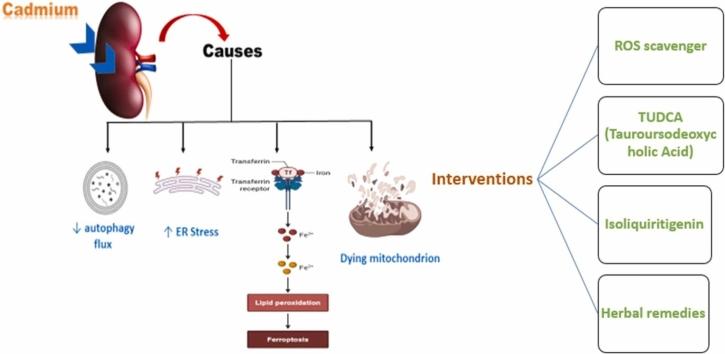
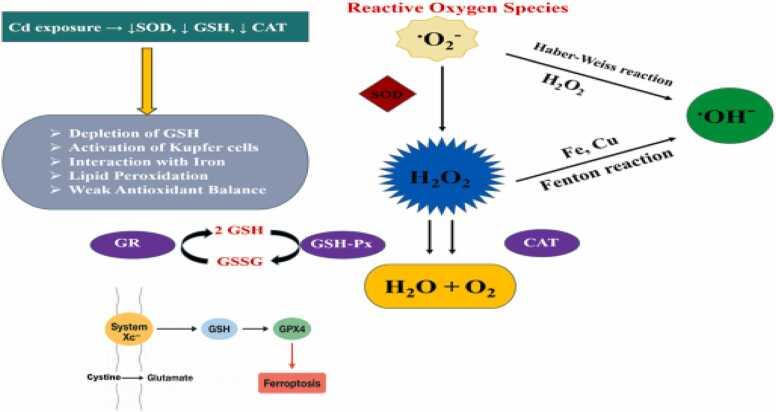
This review highlights the pivotal roles of autophagy, ferroptosis, and endoplasmic reticulum (ER) stress in mediating cadmium (Cd)-induced nephrotoxicity. Cadmium exposure results in ER stress, which in turn activates major UPR pathways such as IRE1, ATF6, and PERK. By encouraging lipid peroxidation and suppressing cellular antioxidant defence, these mechanisms worsen ferroptosis and produce a feedback mechanism that increases cellular damage. There are two roles of autophagy in Cd-induced ferroptosis, which include its action in reducing cadmium-induced cytotoxicity by breaking down damaged components, and excessive autophagy, namely ferritinophagy, which promotes ferroptosis by iron dysregulation. The rise of mitochondrial ROS (MitoROS) caused by Cd-induced mitochondrial malfunction aids ferroptosis. This, in turn, causes ER stress and autophagy. This implies that focusing on mitochondrial health could be a useful treatment strategy. Effective treatment approaches include autophagy inhibitors like chloroquine, which have been shown to effectively reduce Cd-induced ferroptosis, and promising medicines that suppress ER stress, such as TUDCA. Desferrioxamine and other iron chelators effectively lower lipid peroxidation and iron dysregulation, therefore preventing ferroptotic cell death. Additionally, a multi-targeted treatment plan is suggested that targets iron metabolism, ER stress, and autophagy. In order to create tailored treatments for Cd-induced nephrotoxicity, this review emphasizes the need for additional study into the molecular pathways of Cd-induced ferroptosis, namely the ER stress-autophagy axis. The goal of future research should be to apply these mechanistic insights to clinical settings to enhance public health outcomes and create efficient therapies for renal failure brought on by cadmium toxicity.
本综述强调了自噬、铁死亡和内质网(ER)应激在介导镉(Cd)诱导的肾毒性中的关键作用。镉暴露会导致内质网应激,进而激活主要的未折叠蛋白反应(UPR)途径,如肌醇需求酶1(IRE1)、活化转录因子6(ATF6)和蛋白激酶R样内质网激酶(PERK)。通过促进脂质过氧化和抑制细胞抗氧化防御,这些机制会加剧铁死亡,并产生增加细胞损伤的反馈机制。自噬在镉诱导的铁死亡中有两个作用,包括通过分解受损成分来降低镉诱导的细胞毒性,以及过度自噬,即铁蛋白自噬,它通过铁调节异常促进铁死亡。镉诱导的线粒体功能障碍导致的线粒体活性氧(MitoROS)升高有助于铁死亡。这反过来又会导致内质网应激和自噬。这意味着关注线粒体健康可能是一种有用的治疗策略。有效的治疗方法包括自噬抑制剂,如氯喹,已证明其能有效降低镉诱导的铁死亡,以及有前景的抑制内质网应激的药物,如牛磺熊去氧胆酸(TUDCA)。去铁胺和其他铁螯合剂可有效降低脂质过氧化和铁调节异常,从而防止铁死亡细胞死亡。此外,建议制定一个针对铁代谢、内质网应激和自噬的多靶点治疗方案。为了制定针对镉诱导的肾毒性的个性化治疗方案,本综述强调需要对镉诱导的铁死亡的分子途径,即内质网应激 - 自噬轴进行更多研究。未来研究的目标应该是将这些机制性见解应用于临床环境,以改善公共卫生结果,并为镉毒性导致的肾衰竭创造有效的治疗方法。

 Zotero 插件