
用于伤口愈合的刺激响应性纳米酶:从设计策略到治疗进展
Stimuli-responsive nanozymes for wound healing: From design strategies to therapeutic advances.
作者信息
Wei Yu, You Wanchun, Li Haiqing, Chen Jiawen, Tang Ziyi, Luo Yawen, Xiao Wantong, Yang Qianwen, Feng Meixin, Li Li, Wang Menglei
机构信息
Department of Dermatology, Nanfang Hospital, Southern Medical University, Guangzhou, 510515, Guangdong, China.
出版信息
Mater Today Bio. 2025 Jul 2;33:102046. doi: 10.1016/j.mtbio.2025.102046. eCollection 2025 Aug.
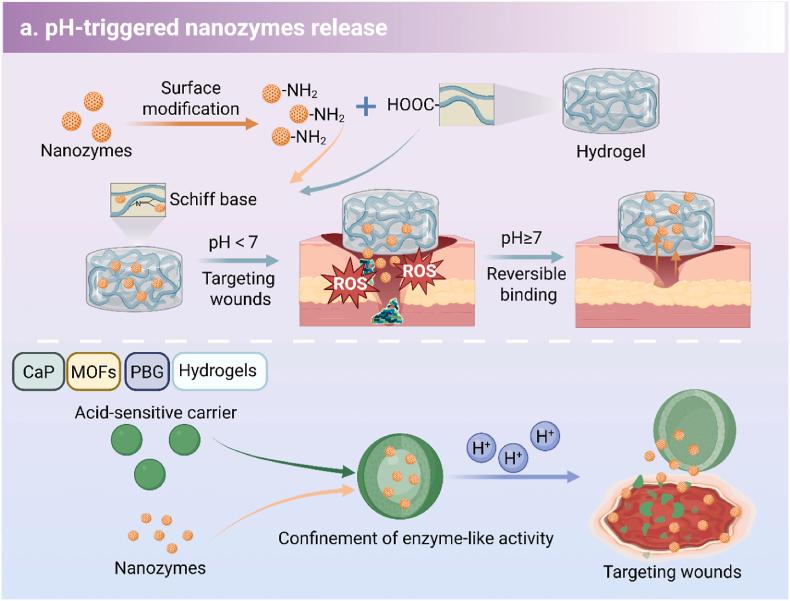
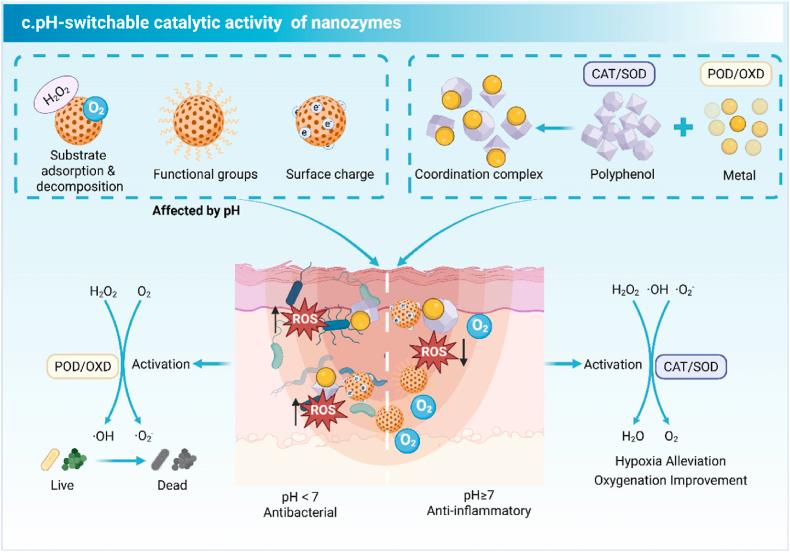
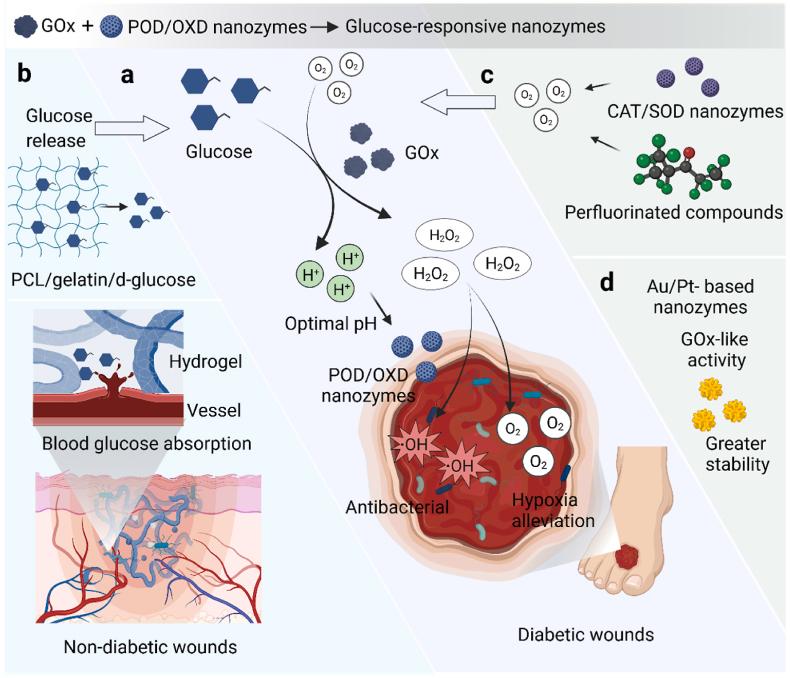
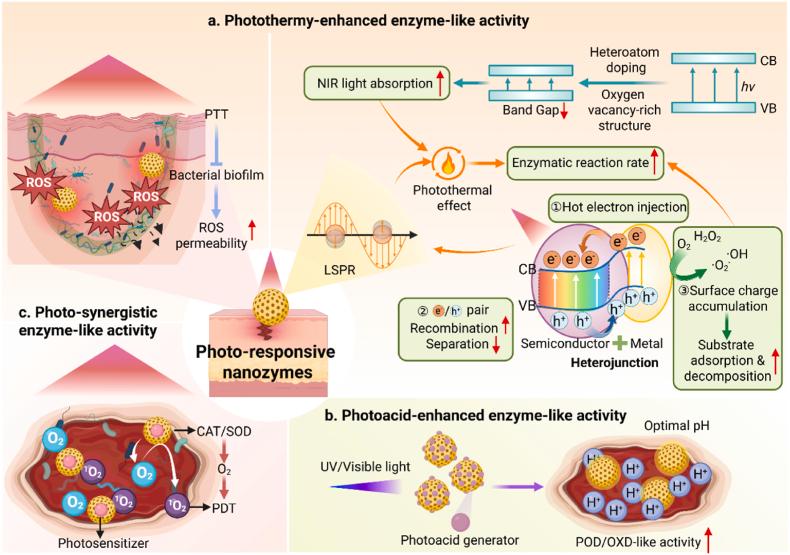
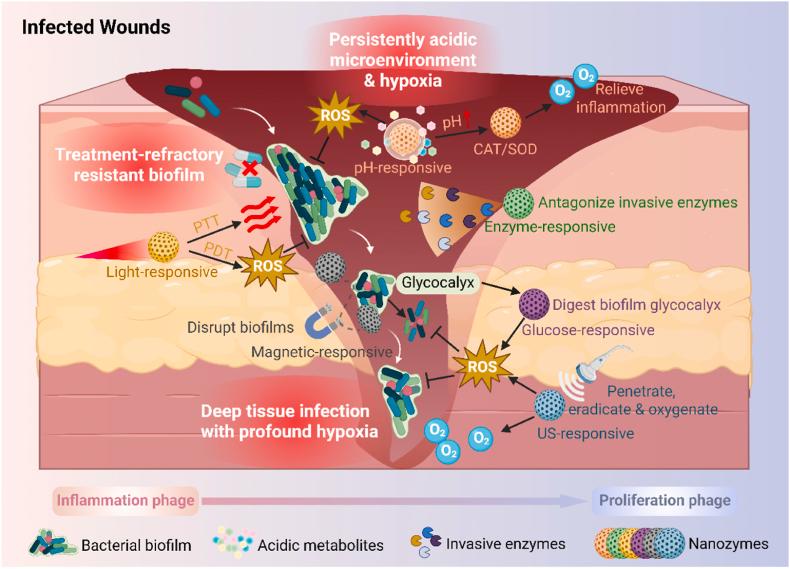
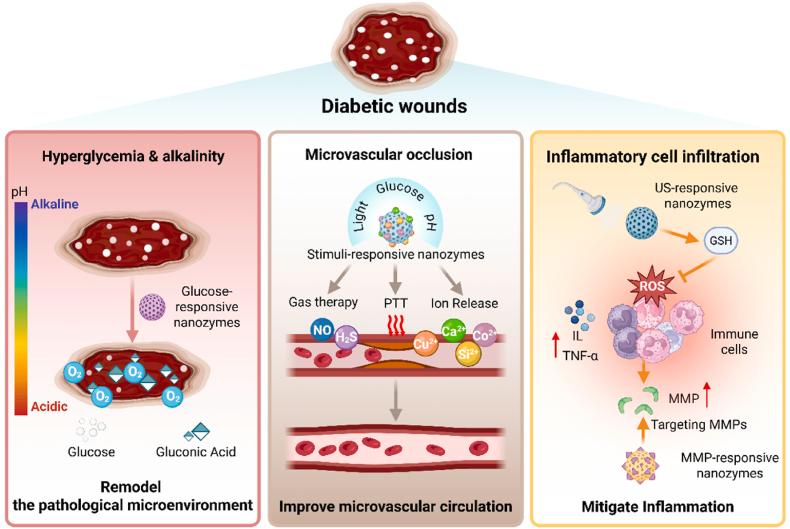
Nanozymes, which mimic the activity of natural enzymes, have demonstrated significant advantages in wound healing. Stimuli-responsive nanozymes, a novel design type developed recently, are capable of on-demand targeted release, catalytic activity modulation, and facilitating synergistic therapeutic strategies. Such advancements further enhance the safety and efficacy of nanozyme-based treatments. Although numerous studies have reported their high efficiency in promoting wound healing, there remains a lack of updated review literature on this topic. This paper starts by exploring the design strategies of advanced stimuli-responsive nanozymes (including types responsive to pH, glucose, enzyme, light, ultrasound, and magnetic fields), providing a comprehensive analysis of their underlying mechanisms, while highlighting their application progress across diverse wound types. Furthermore, this paper provides a forward-looking perspective on the future development of stimuli-responsive nanozymes.
纳米酶能够模拟天然酶的活性,在伤口愈合方面已展现出显著优势。刺激响应型纳米酶是最近开发的一种新型设计类型,能够按需靶向释放、调节催化活性并促进协同治疗策略。这些进展进一步提高了基于纳米酶的治疗的安全性和有效性。尽管众多研究报道了它们在促进伤口愈合方面的高效率,但关于这一主题仍缺乏最新的综述文献。本文首先探讨先进的刺激响应型纳米酶的设计策略(包括对pH、葡萄糖、酶、光、超声和磁场响应的类型),全面分析其潜在机制,同时突出它们在不同伤口类型中的应用进展。此外,本文还对刺激响应型纳米酶的未来发展提供了前瞻性观点。



 Zotero 插件