
肝细胞核因子4α免疫细胞化学:酒精固定涂片检测宫颈管腺性病变的有用标志物。
Hepatocyte nuclear factor 4 alpha immunocytochemistry: A useful marker for detecting endocervical glandular lesions in alcohol-fixed smears.
作者信息
Noda Yuri, Sando Kaori, Kita Masato, Tsuta Koji
机构信息
Department of Pathology, Kansai Medical University, Osaka, Japan.
Department of Pathology and Laboratory Medicine, Kansai Medical University Hospital, Osaka, Japan.
出版信息
Cancer Cytopathol. 2025 Aug;133(8):e70034. doi: 10.1002/cncy.70034.
BACKGROUND
Hepatocyte nuclear factor 4 alpha (HNF4α) contributes to tumorigenesis and cancer progression. This study evaluated the diagnostic potential of HNF4α for detecting endocervical glandular lesions (EGLs), including endocervical adenocarcinomas (ECAs), adenocarcinomas in situ (AIS), and lobular endocervical glandular hyperplasias (LEGH) using alcohol-fixed cytological smears.
METHODS
HNF4α expression was immunocytochemically assessed in alcohol-fixed smears and paired formalin-fixed paraffin-embedded tissue specimens obtained from 14 patients with histologically confirmed EGLs: eight papillomavirus-associated (HPVA) ECAs, one non-NHPVA ECA, two HPVA AIS, and three patients with LEGHs. Three cases of squamous cell carcinomas (SCCs) and two cases of non-neoplastic lesions were also analyzed as non-EGL controls. HNF4α positivity was defined as nuclear staining in one or more cell(s)/slide, regardless of intensity.
RESULTS
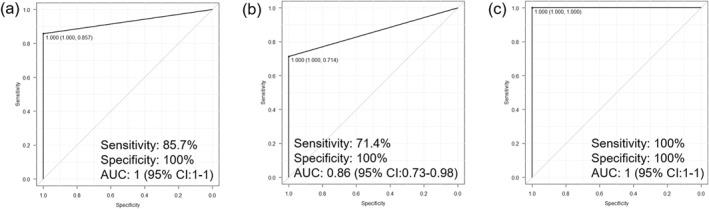
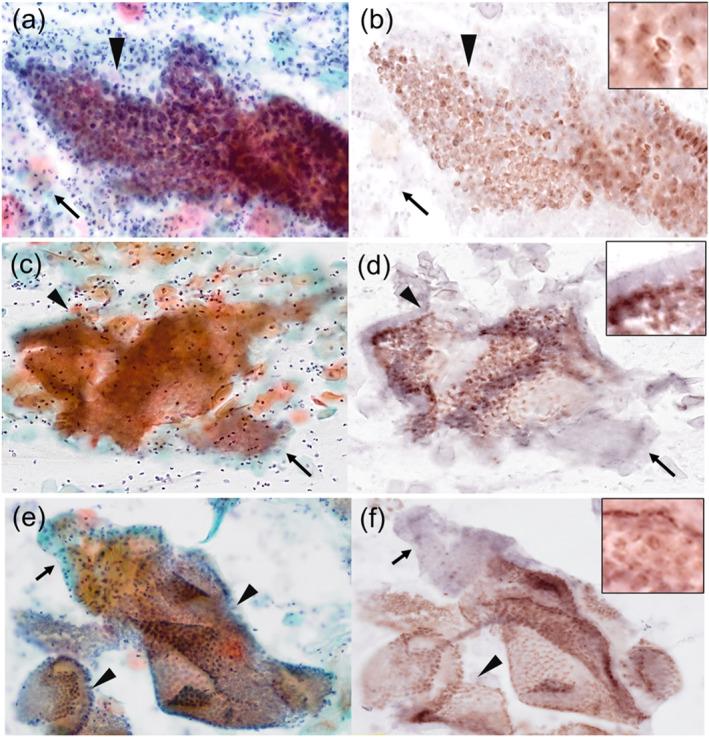
Histologically confirmed EGL cases were cytologically diagnosed as four adenocarcinomas, eight atypical glandular cells, one misclassified atypical squamous cells of undetermined significance, and one misclassified SCC, with a sensitivity of 85.7% and specificity of 100%. Strong and diffuse nuclear HNF4α expression was observed in atypical glands in both smears and tissue specimens, whereas non-neoplastic glands and non-neoplastic/neoplastic squamous epithelium were HNF4α-negative. HNF4α expression showed 73.7% concordance between tissue and smear samples. Notably, HNF4α immunocytochemistry demonstrated 100% sensitivity and specificity for detecting EGLs, outperforming cytomorphological or immunohistochemical diagnosis (sensitivity, 71.4%; specificity, 100%).
CONCLUSIONS
HNF4α is a reliable diagnostic marker when using alcohol-fixed smears, showing enhanced accuracy for EGLs detection regardless of human papillomavirus status. Immunocytochemical analysis of HNF4α in cervical smears can be used for EGL detection and early diagnosis of cervical cancer.
背景
肝细胞核因子4α(HNF4α)与肿瘤发生和癌症进展有关。本研究评估了HNF4α在利用酒精固定的细胞学涂片检测宫颈管腺性病变(EGL)中的诊断潜力,这些病变包括宫颈管腺癌(ECA)、原位腺癌(AIS)和宫颈管小叶状腺性增生(LEGH)。
方法
对14例经组织学确诊为EGL的患者的酒精固定涂片及配对的福尔马林固定石蜡包埋组织标本进行HNF4α表达的免疫细胞化学评估:8例人乳头瘤病毒相关(HPVA)ECA、1例非HPVA ECA、2例HPVA AIS和3例LEGH患者。3例鳞状细胞癌(SCC)和2例非肿瘤性病变也作为非EGL对照进行分析。HNF4α阳性定义为一个或多个细胞/载玻片出现核染色,不考虑染色强度。
结果
经组织学确诊的EGL病例在细胞学上诊断为4例腺癌、8例非典型腺细胞、1例误诊为意义不明确的非典型鳞状细胞和1例误诊为SCC,敏感性为85.7%,特异性为100%。在涂片和组织标本的非典型腺细胞中均观察到强且弥漫的核HNF4α表达,而非肿瘤性腺细胞以及非肿瘤性/肿瘤性鳞状上皮HNF4α呈阴性。HNF4α表达在组织和涂片样本之间的一致性为73.7%。值得注意的是,HNF4α免疫细胞化学检测EGL的敏感性和特异性均为100%,优于细胞形态学或免疫组织化学诊断(敏感性71.4%;特异性100%)。
结论
使用酒精固定涂片时,HNF4α是一种可靠的诊断标志物,无论人乳头瘤病毒状态如何,对EGL检测的准确性均有所提高。宫颈涂片HNF4α的免疫细胞化学分析可用于EGL检测和宫颈癌的早期诊断。


 Zotero 插件