
65岁及以上和65岁以下成年人的全球疫苗信心趋势。
Global vaccine confidence trends among adults above and below age 65.
作者信息
Liu Bei, Zhang Xiyu, Lai Yongqiang, Sun Tao, Wang Chao, Zhao Tianshuo, Zhang Sihui, Shi Baoguo, Li Ye, Cui Fuqiang
机构信息
Vaccine Research Center, School of Public Health, Peking University, Beijing, China.
Beijing Key Laboratory of Toxicological Research and Risk Assessment for Food Safety, Beijing, China.
出版信息
NPJ Vaccines. 2025 Jul 21;10(1):160. doi: 10.1038/s41541-025-01217-7.
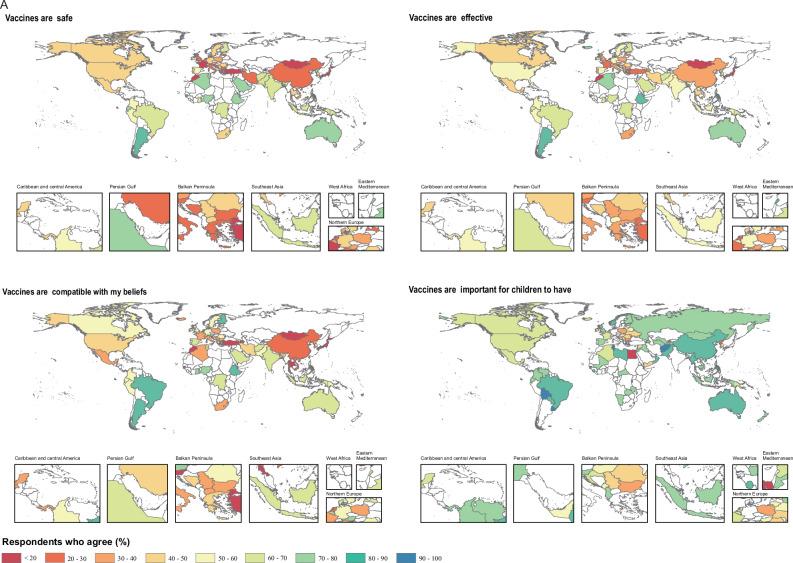
This study is interested in global vaccine confidence because it directly impacts vaccination rates and public health outcomes, especially during the COVID-19 pandemic. Furthermore, due to the unique vulnerabilities to vaccine-preventable diseases, misinformation, and access to health information among adults aged 65 and older, understanding vaccine confidence in this population is crucial for developing targeted interventions and improving vaccination rates. The current research is limited by single-country surveys and cross-sectional designs, providing limited insights into these issues. We compared the vaccine confidence between the population over 65 and under 65 in terms of vaccine safety, effectiveness, compatibility with religious beliefs, and importance to children. We employed a hierarchical logistic model, and compared human development index (HDI) values to investigate determinants of vaccine confidence. Vaccine confidence increased between 2015 and 2019, but decreased between 2019 and 2022 across most global regions, exhibiting an inverted U-shaped trend. Population over 65 in high-income countries was more likely to agree on the safety, effectiveness, importance to children, and compatibility of vaccines with religious beliefs than those under 65, with agreement levels exceeding 80% for most aspects. Gender, education, income, and religion influenced vaccine attitudes among adults aged 65 and older. Countries with an HDI exceeding 0.9 consistently demonstrated positive trends in vaccine confidence. This relationship between HDI and vaccine confidence underscores the importance of comprehensive societal development in shaping attitudes toward vaccination. These findings can help develop targeted interventions and policies to improve vaccination rates among older adults.
本研究关注全球疫苗信心,因为它直接影响疫苗接种率和公共卫生结果,尤其是在新冠疫情期间。此外,由于65岁及以上成年人在预防疫苗可预防疾病、错误信息以及获取健康信息方面存在独特的脆弱性,了解这一人群的疫苗信心对于制定有针对性的干预措施和提高疫苗接种率至关重要。当前的研究受到单国调查和横断面设计的限制,对这些问题的见解有限。我们比较了65岁及以上人群和65岁以下人群在疫苗安全性、有效性、与宗教信仰的兼容性以及对儿童的重要性方面的疫苗信心。我们采用了分层逻辑模型,并比较人类发展指数(HDI)值以调查疫苗信心的决定因素。2015年至2019年期间疫苗信心有所增加,但2019年至2022年期间,全球大多数地区的疫苗信心有所下降,呈现出倒U形趋势。高收入国家65岁及以上人群比65岁以下人群更有可能认同疫苗的安全性、有效性、对儿童的重要性以及与宗教信仰的兼容性,大多数方面的认同水平超过80%。性别、教育、收入和宗教影响65岁及以上成年人的疫苗态度。人类发展指数超过0.9的国家在疫苗信心方面始终呈现积极趋势。人类发展指数与疫苗信心之间的这种关系凸显了全面社会发展在塑造疫苗接种态度方面的重要性。这些发现有助于制定有针对性的干预措施和政策,以提高老年人的疫苗接种率。




 Zotero 插件