
蛋白质错误折叠与聚集作为慢性疼痛和神经退行性疾病之间的机制联系。
Protein Misfolding and Aggregation as a Mechanistic Link Between Chronic Pain and Neurodegenerative Diseases.
作者信息
Brezic Nebojsa, Gligorevic Strahinja, Sic Aleksandar, Knezevic Nebojsa Nick
机构信息
Department of Anesthesiology, Advocate Illinois Masonic Medical Center, Chicago, IL 60657, USA.
Faculty of Medicine, University of Belgrade, 11000 Belgrade, Serbia.
出版信息
Curr Issues Mol Biol. 2025 Apr 8;47(4):259. doi: 10.3390/cimb47040259.
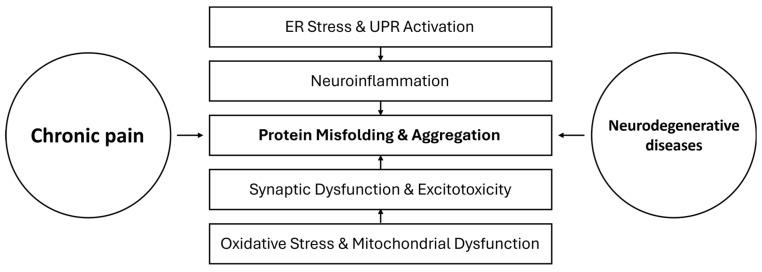
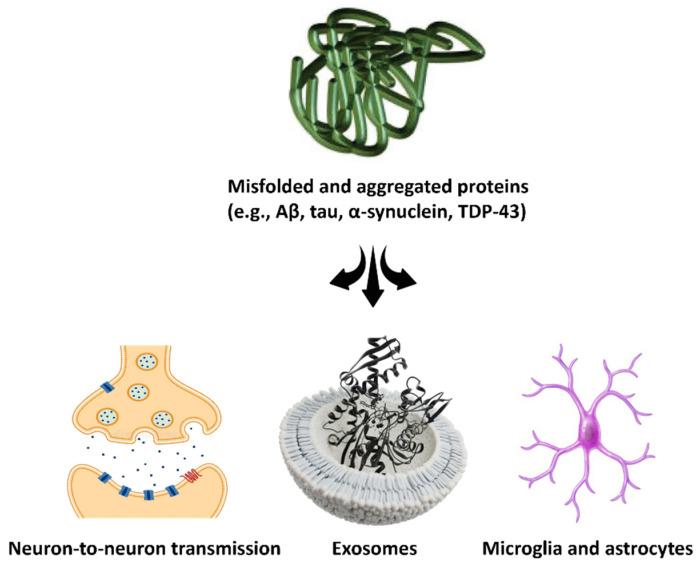
Chronic pain, defined by persistent pain beyond normal healing time, is a pervasive and debilitating condition affecting up to 30-50% of adults globally. In parallel, neurodegenerative diseases (NDs) such as Alzheimer's disease (AD), Parkinson's disease (PD), and amyotrophic lateral sclerosis (ALS) are characterized by progressive neuronal loss and cognitive or motor decline, often underpinned by pathological protein misfolding and aggregation. Emerging evidence suggests a potential mechanistic link between chronic pain and NDs, with persistent pain contributing to neuroinflammatory states and protein homeostasis disturbances that mirror processes in neurodegeneration. This review explores the hypothesis that protein misfolding and aggregation serve as a mechanistic bridge between chronic pain and neurodegeneration. We systematically examine molecular pathways of protein misfolding, proteostasis dysfunction in chronic pain, and shared neuroimmune mechanisms, highlighting prion-like propagation of misfolded proteins, chronic neuroinflammation, and oxidative stress as common denominators. We further discuss evidence from experimental models and clinical studies linking chronic pain to accelerated neurodegenerative pathology-including tau accumulation, amyloid dysregulation, and microglial activation-and consider how these insights open avenues for novel therapeutics. Targeting protein aggregation, enhancing chaperone function, modulating the unfolded protein response (UPR), and attenuating glial activation are explored as potential strategies to mitigate chronic pain and possibly slow neurodegeneration. Understanding this intersection not only elucidates chronic pain's role in cognitive decline but also suggests that interventions addressing proteostasis and inflammation could yield dual benefits in pain management and neurodegenerative disease modification.
慢性疼痛被定义为超出正常愈合时间的持续性疼痛,是一种普遍存在且使人衰弱的病症,全球多达30%-50%的成年人受其影响。与此同时,神经退行性疾病(NDs),如阿尔茨海默病(AD)、帕金森病(PD)和肌萎缩侧索硬化症(ALS),其特征是神经元进行性丧失以及认知或运动功能衰退,通常由病理性蛋白质错误折叠和聚集所导致。新出现的证据表明慢性疼痛与神经退行性疾病之间存在潜在的机制联系,持续性疼痛会导致神经炎症状态和蛋白质稳态紊乱,这与神经退行性变过程相似。本综述探讨了蛋白质错误折叠和聚集作为慢性疼痛与神经退行性变之间的机制桥梁这一假说。我们系统地研究了蛋白质错误折叠的分子途径、慢性疼痛中的蛋白质稳态功能障碍以及共同的神经免疫机制,强调错误折叠蛋白质的朊病毒样传播、慢性神经炎症和氧化应激是共同特征。我们还讨论了来自实验模型和临床研究的证据,这些证据将慢性疼痛与加速的神经退行性病理联系起来,包括tau蛋白积累、淀粉样蛋白失调和小胶质细胞激活,并考虑这些见解如何为新型治疗方法开辟道路。针对蛋白质聚集、增强伴侣蛋白功能、调节未折叠蛋白反应(UPR)以及减弱胶质细胞激活等策略被探讨为减轻慢性疼痛并可能减缓神经退行性变的潜在方法。理解这一交叉领域不仅阐明了慢性疼痛在认知衰退中的作用,还表明针对蛋白质稳态和炎症的干预措施可能在疼痛管理和神经退行性疾病改善方面产生双重益处。
 Zotero 插件