
表达臂旁核的神经元对于在寒冷环境中维持核心体温是必需的。
Parabrachial -expressing neurons are necessary for sustaining core body temperature in the cold.
作者信息
Grady Fillan S, Graff Shantelle A, Warnock McKenna M, Gasparini Silvia, Tish Margaret M, Li Yuxi, Buchanan Gordon F, Resch Jon M, Geerling Joel C
机构信息
Department of Neurology, University of Iowa, Iowa City, IA 52242, USA.
Iowa Neuroscience Institute, University of Iowa, Iowa City, IA 52242, USA.
出版信息
iScience. 2025 Jun 28;28(8):112764. doi: 10.1016/j.isci.2025.112764. eCollection 2025 Aug 15.
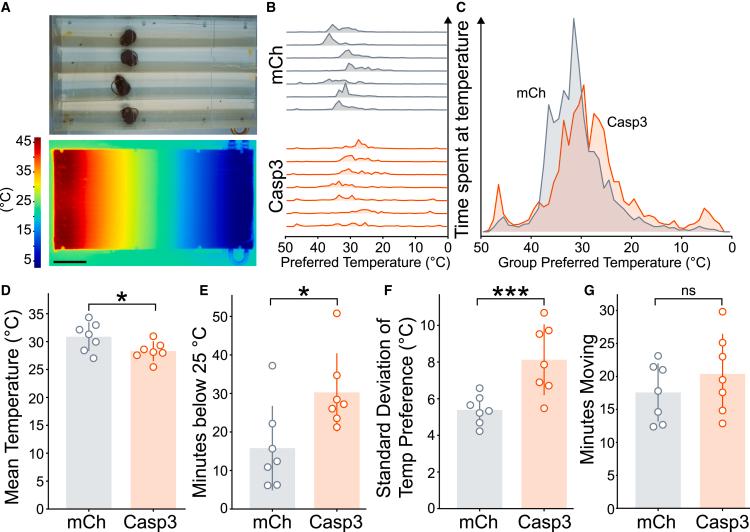
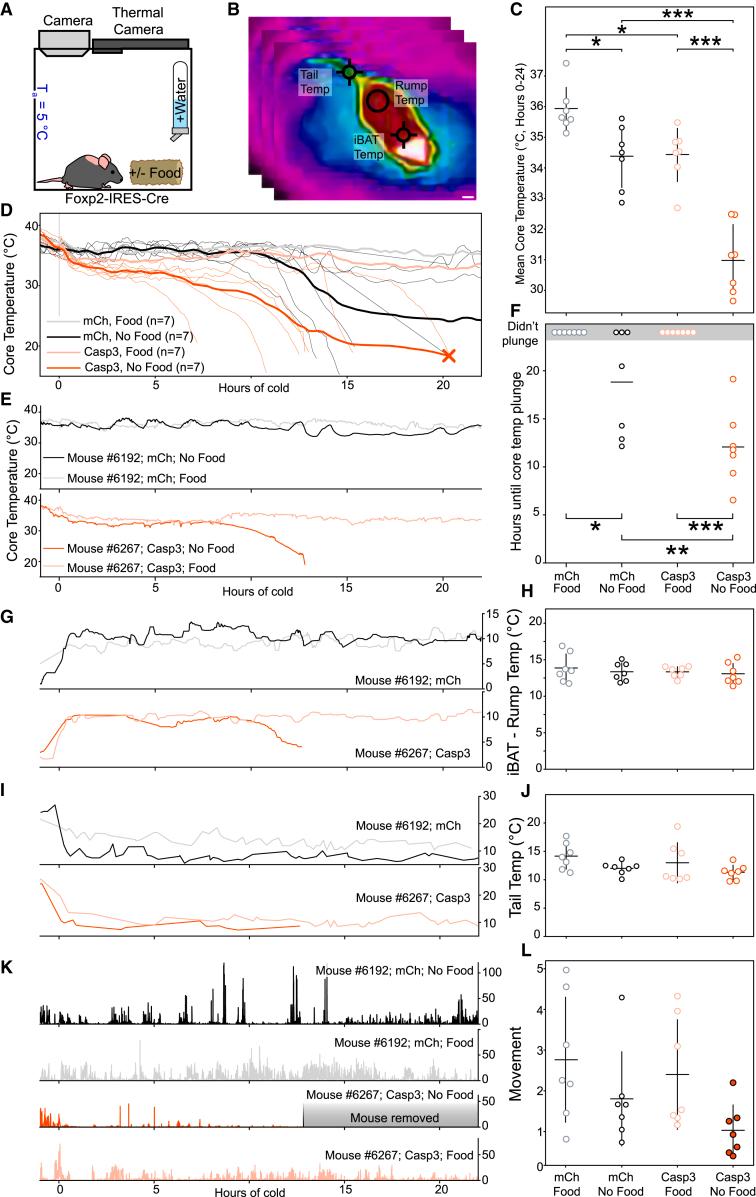
Cold environmental temperature is a threat to survival. Sustaining core body temperature in the cold requires a dynamic set of adaptive responses known as "cold defense," but the neural circuitry orchestrating these responses remains unclear. We identified a cluster of -derived, -expressing glutamatergic neurons in the lateral parabrachial nucleus (PB) that are activated by exposing mice to cold environmental temperature. Eliminating expressing PB neurons caused body temperature to plummet in the cold. Mice lacking these neurons had normal wakefulness, movement and appetite at room temperature, and their autonomic cold-defense responses remained intact. However, these mice had reduced metabolism and locomotor activity in the cold, and thermal discrimination was impaired. Our results indicate that thermosensory information relayed through -expressing PB neurons is essential for sensing and surviving a cold environment.
寒冷的环境温度对生存构成威胁。在寒冷环境中维持核心体温需要一系列动态的适应性反应,即“防寒反应”,但协调这些反应的神经回路仍不清楚。我们在外侧臂旁核(PB)中鉴定出一群源自、表达谷氨酸能的神经元,当将小鼠暴露于寒冷环境温度时,这些神经元会被激活。消除表达的PB神经元会导致小鼠在寒冷环境中体温骤降。缺乏这些神经元的小鼠在室温下具有正常的清醒、运动和食欲,并且它们的自主防寒反应保持完整。然而,这些小鼠在寒冷环境中的新陈代谢和运动活动减少,热辨别能力受损。我们的结果表明,通过表达的PB神经元传递的热感觉信息对于感知寒冷环境并在其中生存至关重要。



 Zotero 插件