
一氧化氮疗法:更有效治疗结核病的新希望与靶向及可控纳米技术相结合。
Nitric Oxide Therapeutics: New Hopes for More Effective Tuberculosis Treatment Combine with Targeted and Controlled Nanotechnology.
作者信息
Jin Xiaoying, Wang Jiajun, Ruan Yongdui, Li Jiaxiang, Kong Xinen, Xia Jiaojiao, Yang Jiayi, Zhang Qiao, Liu Juan, Pi Jiang
机构信息
Research Center of Nanotechnology and Application Engineering, School of Medical Technology, The First Dongguan Affiliated Hospital, Guangdong Medical University, Dongguan, People's Republic of China.
Dongguan Key Laboratory for Pathogenesis and Experimental Diagnosis of Infectious Diseases, The First Dongguan Affiliated Hospital, School of Medical Technology, Guangdong Medical University, Dongguan, People's Republic of China.
出版信息
Int J Nanomedicine. 2025 Jul 19;20:9195-9218. doi: 10.2147/IJN.S531255. eCollection 2025.
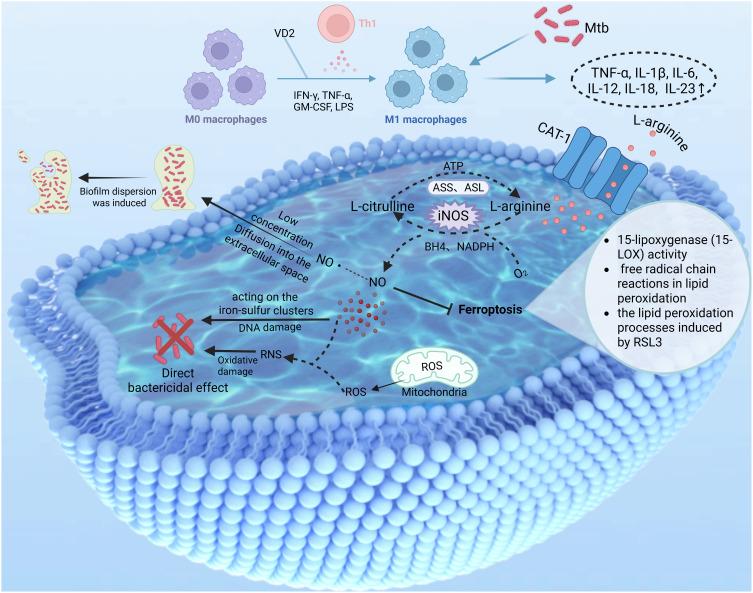
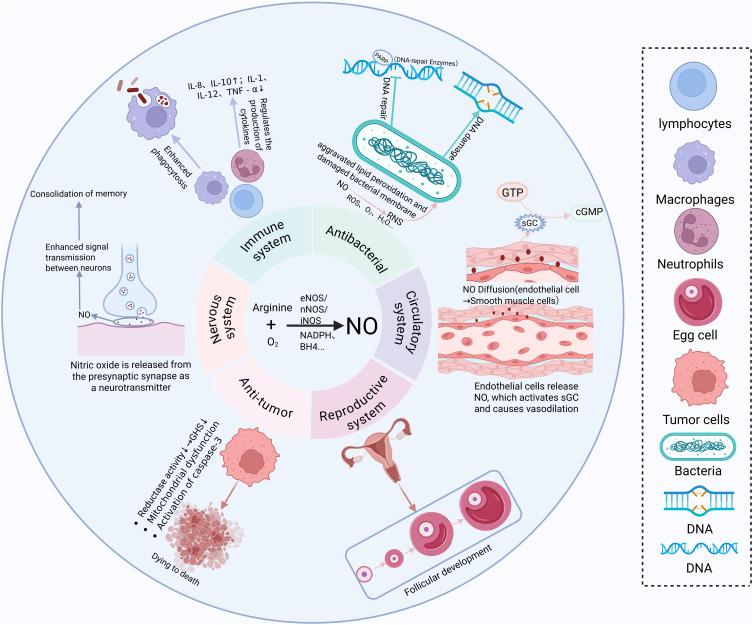
Tuberculosis (TB) caused by Mycobacterium tuberculosis (Mtb) is one of the most prevalent infectious diseases worldwide. Nitric oxide (NO) is produced by the reaction of arginine and oxygen catalyzed by nitric oxide synthase (NOS) in mammals. Several studies have highlighted the potential therapeutic use of NO for the treatment of various diseases, including infectious diseases. NO plays a direct bactericidal role by damaging the bacterial DNA, proteins, and enzymes. Additionally, it plays a role in modulating immune cell function, contributing to their anti-tuberculosis (anti-TB) effects by regulating macrophage activity. NO has also been shown to eliminate bacterial biofilms, thereby increasing drug sensitivity of drug-resistant bacteria. Therefore, combining NO with antibiotics may be a strategy for treating drug-resistant tuberculosis (DR-TB). However, owing to the limitations of NO, including their short half-life, instability, and cytotoxicity, exogenous supplementation with NO donors has emerged as a promising alternative therapy. Rapid advancements in nanotechnology have led to the development of nanoparticles (NPs) as drug delivery platforms, at the same time, using strategies such as introducing selective organ targeting (SORT) molecules into nanocarrier systems or preparing nanodrugs in inhalable or dry powder inhalation forms can increase the accumulation of nanodrugs in the lungs. Combined with host-directed therapy strategies, this can improve the therapeutic effect on tuberculosis and shorten the treatment time. This review summarizes the biological activities of NO and introduces their applications in the treatment of several major infectious diseases, followed by a systemic analysis of the role and mechanism of action of NO in TB treatment. Moreover, nanotechnology-assisted NO therapeutics are also summarized to explore the potential for more effective Mtb killing based on the advantages of targeted NO release at the infected site and host cells, thus benefiting the development of more effective therapeutics against TB and drug-resistant TB.
由结核分枝杆菌(Mtb)引起的结核病(TB)是全球最普遍的传染病之一。一氧化氮(NO)是哺乳动物体内由一氧化氮合酶(NOS)催化精氨酸与氧气反应产生的。多项研究强调了NO在治疗包括传染病在内的各种疾病方面的潜在治疗用途。NO通过破坏细菌的DNA、蛋白质和酶发挥直接杀菌作用。此外,它在调节免疫细胞功能方面发挥作用,通过调节巨噬细胞活性促进其抗结核(抗TB)作用。NO还被证明可以消除细菌生物膜,从而增加耐药菌的药物敏感性。因此,将NO与抗生素联合使用可能是治疗耐多药结核病(DR-TB)的一种策略。然而,由于NO存在半衰期短、不稳定和细胞毒性等局限性,外源性补充NO供体已成为一种有前景的替代疗法。纳米技术的快速发展导致了纳米颗粒(NPs)作为药物递送平台的开发,同时,通过将选择性器官靶向(SORT)分子引入纳米载体系统或以可吸入或干粉吸入形式制备纳米药物等策略,可以增加纳米药物在肺部的蓄积。结合宿主导向治疗策略,这可以提高对结核病的治疗效果并缩短治疗时间。本综述总结了NO的生物学活性,并介绍了其在治疗几种主要传染病中的应用,随后系统分析了NO在结核病治疗中的作用和作用机制。此外,还总结了纳米技术辅助的NO治疗方法,以探索基于在感染部位和宿主细胞靶向释放NO的优势更有效地杀死Mtb的潜力,从而有利于开发更有效的抗结核病和耐多药结核病治疗方法。


 Zotero 插件