
慢性胰腺炎疼痛的应对:病理生理学与治疗概述
Navigating chronic pancreatitis pain: a pathophysiological and therapeutic overview.
作者信息
Lin Zijin, Pandol Stephen, Apte Minoti, Jiang Yi
机构信息
College of osteopathic medicine, Michigan State University, East Lansing, MI, United States.
Karsh Division of Gastroenterology and Hepatology, Cedars-Sinai Medical Center, Los Angeles, CA, United States.
出版信息
Front Physiol. 2025 Jul 10;16:1622845. doi: 10.3389/fphys.2025.1622845. eCollection 2025.
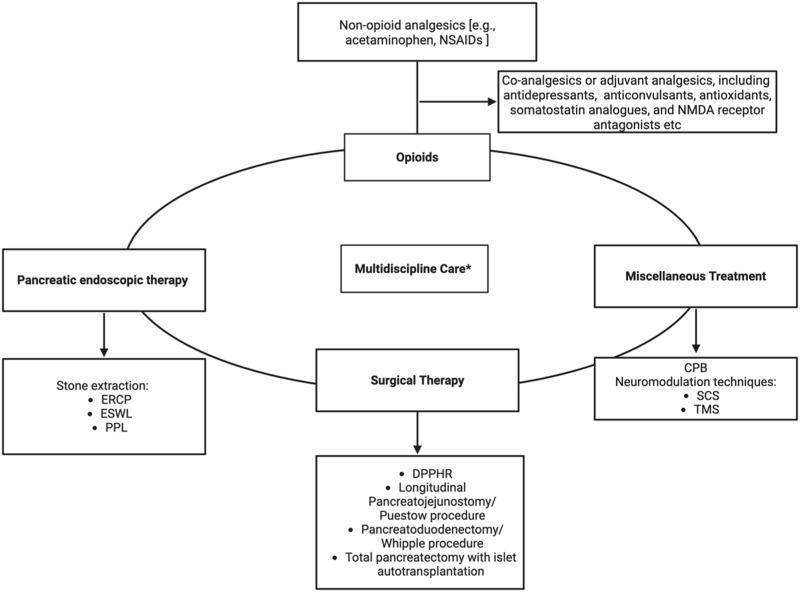
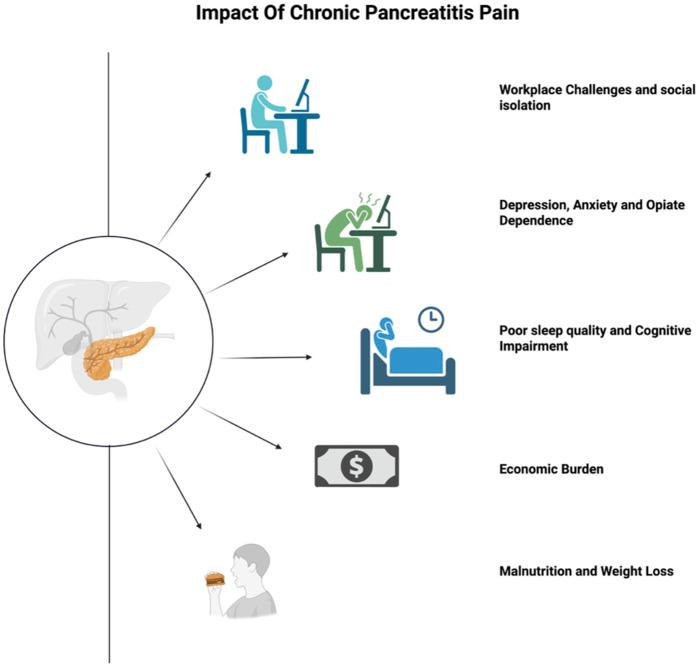
Pain management in chronic pancreatitis (CP) patients remains a major challenge, largely due to complex and refractory pain. Such pain detrimentally impacts patients by reducing quality of life, limiting daily activities, increasing psychological distress, necessitating frequent hospitalizations, and contributing to opioid dependence and socioeconomic burden. This review delineates the multifaceted nature of CP-related pain, highlighting the roles of neurogenic inflammation, maladaptive neuroplasticity, and disrupted pain modulation pathways. Current management strategies are multidisciplinary, encompassing lifestyle modification, pharmacologic therapies, endoscopic and surgical interventions, and nerve-targeted procedures (e.g., celiac plexus blocks and neurolysis). Advances in genetics, bioinformatics and biomarker research have further enhanced our understanding of CP-related pain pathogenesis, paving the way for precision medicine approaches. This review highlights current evidence and emerging innovations in the evolving landscape of CP-related pain management, emphasizing the importance of tailored and interdisciplinary care to address the intricate mechanism of CP-related pain and improve patient outcomes.
慢性胰腺炎(CP)患者的疼痛管理仍然是一项重大挑战,这主要是由于疼痛复杂且难以治疗。这种疼痛会降低生活质量、限制日常活动、增加心理困扰、导致频繁住院,并造成阿片类药物依赖和社会经济负担,从而对患者产生不利影响。本综述阐述了CP相关疼痛的多方面性质,强调了神经源性炎症、适应性不良的神经可塑性以及疼痛调节通路紊乱所起的作用。目前的管理策略是多学科的,包括生活方式改变、药物治疗、内镜和手术干预以及针对神经的手术(如腹腔神经丛阻滞和神经松解术)。遗传学、生物信息学和生物标志物研究的进展进一步加深了我们对CP相关疼痛发病机制的理解,为精准医学方法铺平了道路。本综述强调了CP相关疼痛管理不断发展的领域中的当前证据和新出现的创新,强调了定制化和跨学科护理对于解决CP相关疼痛的复杂机制以及改善患者预后的重要性。


 Zotero 插件