
环境中的微塑料和纳米塑料:研究现状、来源、健康风险及法规——全面综述
Micro- and Nanoplastics in the Environment: Current State of Research, Sources of Origin, Health Risks, and Regulations-A Comprehensive Review.
作者信息
Kochanek Anna, Grąz Katarzyna, Potok Halina, Gronba-Chyła Anna, Kwaśny Justyna, Wiewiórska Iwona, Ciuła Józef, Basta Emilia, Łapiński Jacek
机构信息
Faculty of Engineering Sciences, University of Applied Sciences in Nowy Sącz, 33-300 Nowy Sącz, Poland.
Faculty of Natural and Technical Sciences, John Paul II Catholic University of Lublin, Konstantynów 1 H, 20-708 Lublin, Poland.
出版信息
Toxics. 2025 Jul 2;13(7):564. doi: 10.3390/toxics13070564.
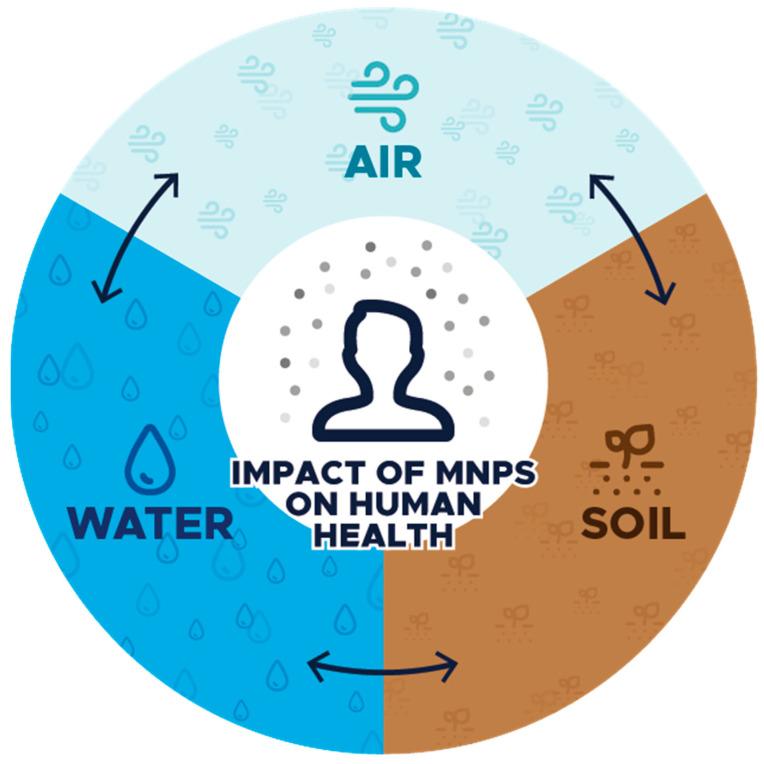
Small-particle-produced goods, such as those used in industry, medicine, cosmetics, paints, abrasives, and plastic pellets or powders, are the main sources of microplastics. It is also possible to mention tire recycling granules here. Larger components break down in the environment to generate secondary microplastics. Microplastics, or particles smaller than 5 mm, and nanoplastics, or particles smaller than 1 μm, are the products of degradation and, in particular, disintegration processes that occur in nature as a result of several physical, chemical, and biological variables. Polypropylene, polyethylene, polyvinyl chloride (PVC), polystyrene, polyurethane, and polyethylene terephthalate (PET) are among the chemicals included in this contamination in decreasing order of quantity. Micro- and nanoplastics have been detected in the air, water, and soil, confirming their ubiquitous presence in natural environments. Their widespread distribution poses significant threats to human health, including oxidative stress, inflammation, cellular damage, and potential carcinogenic effects. The aim of this article is to review the current literature on the occurrence of micro- and nanoplastics in various environmental compartments and to analyze the associated health consequences. The article also discusses existing legal regulations and highlights the urgent need for intensified research into the toxicological mechanisms of microplastics and the development of more effective strategies for their mitigation.
小颗粒生产的产品,如工业、医药、化妆品、涂料、磨料以及塑料颗粒或粉末中使用的那些产品,是微塑料的主要来源。这里还可以提及轮胎回收颗粒。较大的部件在环境中分解会产生次生微塑料。微塑料是指小于5毫米的颗粒,纳米塑料是指小于1微米的颗粒,它们是降解的产物,尤其是由于多种物理、化学和生物变量在自然界中发生的分解过程的产物。聚丙烯、聚乙烯、聚氯乙烯(PVC)、聚苯乙烯、聚氨酯和聚对苯二甲酸乙二酯(PET)是这种污染物中所含化学物质,按含量递减顺序排列。在空气、水和土壤中都检测到了微塑料和纳米塑料,证实了它们在自然环境中无处不在。它们的广泛分布对人类健康构成了重大威胁,包括氧化应激、炎症、细胞损伤以及潜在的致癌作用。本文的目的是综述当前关于微塑料和纳米塑料在各种环境介质中存在情况的文献,并分析相关的健康后果。本文还讨论了现有法律法规,并强调迫切需要加强对微塑料毒理学机制的研究以及制定更有效的缓解策略。
 Zotero 插件