
中毒性休克综合征毒素-1(TSST-1):流行情况、分子机制及对公共卫生的影响
Toxic Shock Syndrome Toxin-1 (TSST-1) in : Prevalence, Molecular Mechanisms, and Public Health Implications.
作者信息
Touaitia Rahima, Ibrahim Nasir Adam, Abdullah Almuqri Eman, Basher Nosiba S, Idres Takfarinas, Touati Abdelaziz
机构信息
Department of Natural and Life Sciences, Faculty of Exact Sciences and Natural and Life Sciences, University of Tebessa, Tebessa 12000, Algeria.
Department of Biology, College of Science, Imam Mohammad Ibn Saud Islamic University (IMSIU), Riyadh 13318, Saudi Arabia.
出版信息
Toxins (Basel). 2025 Jun 24;17(7):323. doi: 10.3390/toxins17070323.
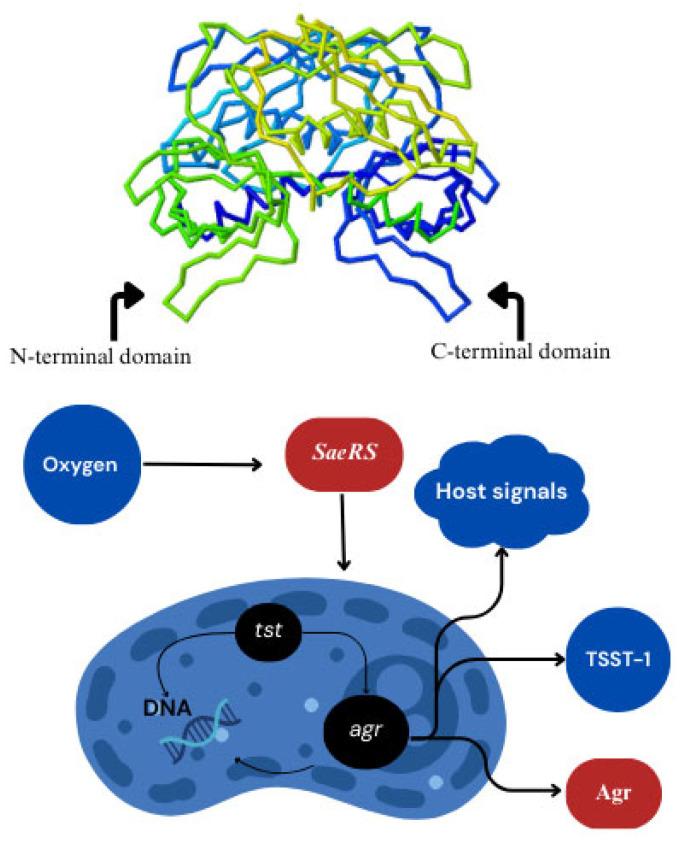
is a significant pathogen responsible for various infections, with its production of toxic shock syndrome toxin-1 (TSST-1) being a central factor in the pathogenesis of toxic shock syndrome (TSS). This study investigates the prevalence, molecular mechanisms, and public health implications of TSST-1-producing . This study reviews methods for detecting TSST-1, focusing on PCR-based molecular techniques and immunological methods like ELISA, as well as the challenges in accurately diagnosing TSST-1 due to antibiotic resistance and strain variability. The findings reveal that TSST-1 is widely distributed across clinical, foodborne, and zoonotic sources, with significant prevalence in both healthcare and agricultural settings. This study also discusses the regulatory networks controlling TSST-1 production, including the system and other environmental cues like glucose, iron, and pH levels, which influence toxin expression. The results underline the need for improved surveillance and diagnostic approaches, as well as the development of targeted therapies to mitigate the impact of TSST-1 in both hospital and community settings. The conclusions highlight the importance of understanding TSST-1's molecular mechanisms for developing effective public health strategies to control its spread.
是一种导致各种感染的重要病原体,其产生的毒性休克综合征毒素-1(TSST-1)是毒性休克综合征(TSS)发病机制的核心因素。本研究调查了产TSST-1的患病率、分子机制及对公共卫生的影响。本研究综述了检测TSST-1的方法,重点关注基于PCR的分子技术和ELISA等免疫学方法,以及由于抗生素耐药性和菌株变异性而在准确诊断TSST-1方面面临的挑战。研究结果表明,TSST-1广泛分布于临床、食源性和人畜共患病源中,在医疗保健和农业环境中均有较高的患病率。本研究还讨论了控制TSST-1产生的调控网络,包括 系统以及葡萄糖、铁和pH值水平等其他环境信号,这些都会影响毒素表达。结果强调需要改进监测和诊断方法,以及开发靶向治疗方法,以减轻TSST-1在医院和社区环境中的影响。结论强调了了解TSST-1分子机制对于制定有效的公共卫生策略以控制其传播的重要性。
 Zotero 插件