
用于神经母细胞瘤分子分类的DNA甲基化分析
DNA methylation profiling for molecular classification of neuroblastoma.
作者信息
Löfgren Maja, Djos Anna, Rezaei Shiva, Suman Medha, Kogner Per, Martinsson Tommy, Fransson Susanne, Carén Helena
机构信息
Department of Medical Biochemistry and Cell Biology, Sahlgrenska Center for Cancer Research, Institute of Biomedicine, Sahlgrenska Academy, University of Gothenburg, Gothenburg, Sweden.
Department of Laboratory Medicine, Institute of Biomedicine, Sahlgrenska Academy, University of Gothenburg, Gothenburg, Sweden.
出版信息
Clin Epigenetics. 2025 Jul 27;17(1):131. doi: 10.1186/s13148-025-01936-7.
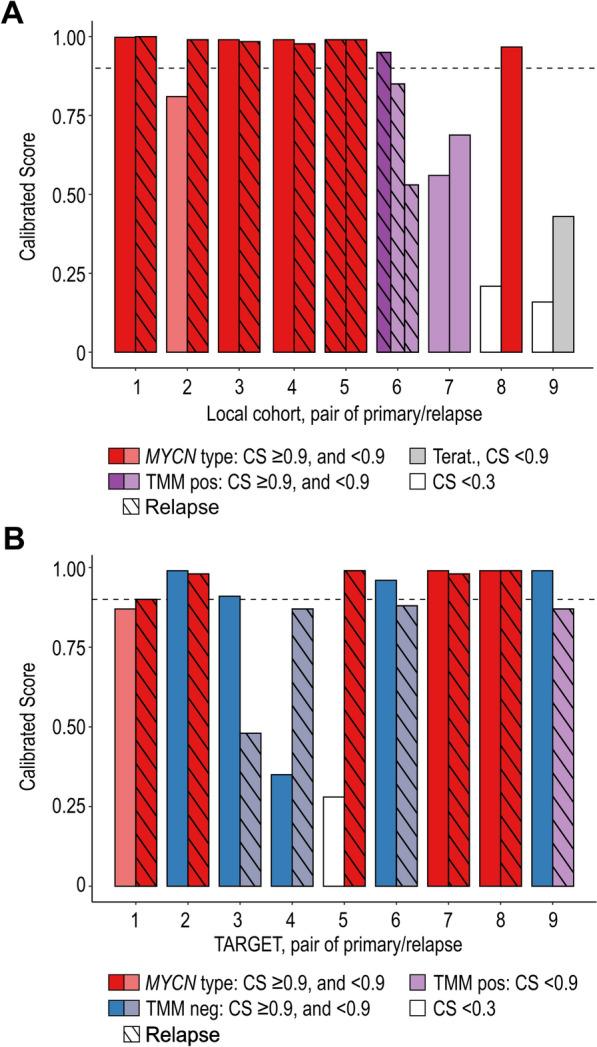
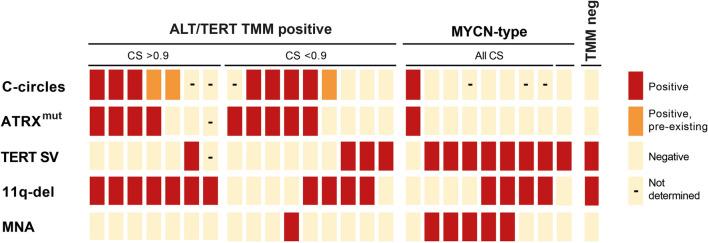
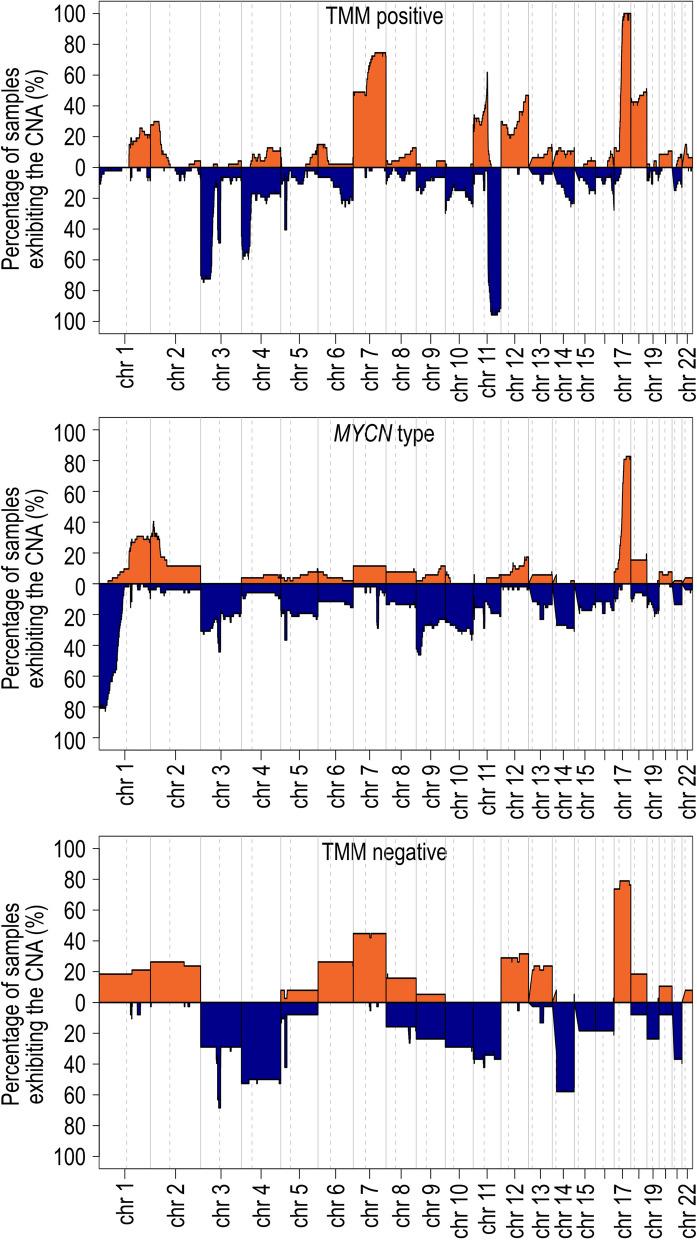
Neuroblastoma is a heterogeneous disease where patient stratification is critical for prognosis and treatment decisions and where it recently has been suggested that the presence of telomere maintenance mechanisms (TMM) should be considered in risk stratification. We investigated the utility of DNA methylation-based classification for neuroblastoma diagnostics by analysing 303 tumours samples from two cohorts. We show that of the total number of cases, an average of 90% of the samples classified as neuroblastoma, while 66% also achieved confident classification into the three NB subclasses: "MYCN-type", "ALT/TERT TMM positive" and "TMM negative". The tumours classified as MYCN-type showed genomic amplification of MYCN (MNA); however, some MYCN-type cases lacked evident MNA, suggesting that epigenetic states might be influenced by other factors such as activating ALK mutations. Survival analysis indicated similar poor survival probabilities for patients classified as TMM positive or MYCN type, distinct from the inferior survival of TMM-negative cases. All cases, with complementary genomic data available, associated with TMM positivity also presented features associated with telomere lengthening mechanisms, including TERT or ATRX alteration. However, some tumours positive for these features, especially TERT rearrangement, classified as MYCN type rather than TMM positive, indicating that MNA and other mechanisms introduce a methylation pattern that supersede or overlap with pattern imposed by TERT. Chromosomal copy number alterations (CNAs) characteristic of methylation subclasses were identified, including 1p deletion and 17q gain in MYCN type and combinations of 11q loss, 3p loss, 7q gain, and 17q gain in TMM-positive cases, highlighting the potential of the methylation arrays to replace SNP arrays for prognostic genomic assessments. Our study demonstrates that DNA methylation-based classification stratifies neuroblastoma into clinically relevant subgroups, aiding diagnostic and prognostic decisions, although discrepancy between genomic features and methylation classification does occur. The interplay between genomic alterations and methylation patterns could give clues into the discrepancy and underscores the complexity of neuroblastoma biology and the need for further research and validation of clinical outcomes of the patients in the respective subclasses.
神经母细胞瘤是一种异质性疾病,患者分层对于预后和治疗决策至关重要,并且最近有人提出在风险分层中应考虑端粒维持机制(TMM)的存在。我们通过分析来自两个队列的303个肿瘤样本,研究了基于DNA甲基化的分类在神经母细胞瘤诊断中的实用性。我们发现,在所有病例中,平均90%的样本被分类为神经母细胞瘤,而66%的样本还被可靠地分类为三个神经母细胞瘤亚类:“MYCN型”、“ALT/TERT TMM阳性”和“TMM阴性”。被分类为MYCN型的肿瘤显示出MYCN的基因组扩增(MNA);然而,一些MYCN型病例缺乏明显的MNA,这表明表观遗传状态可能受其他因素影响,如ALK激活突变。生存分析表明,被分类为TMM阳性或MYCN型的患者生存概率相似,这与TMM阴性病例较差的生存率不同。所有可获得补充基因组数据且与TMM阳性相关的病例,也呈现出与端粒延长机制相关的特征,包括TERT或ATRX改变。然而,一些具有这些特征(尤其是TERT重排)阳性的肿瘤被分类为MYCN型而非TMM阳性,这表明MNA和其他机制引入了一种甲基化模式,该模式取代或与TERT所施加的模式重叠。鉴定出了甲基化亚类特有的染色体拷贝数改变(CNA),包括MYCN型中的1p缺失和17q增益,以及TMM阳性病例中的11q缺失、3p缺失、7q增益和17q增益的组合,这突出了甲基化阵列在预后基因组评估中替代SNP阵列的潜力。我们的研究表明,基于DNA甲基化的分类可将神经母细胞瘤分层为临床相关亚组,有助于诊断和预后决策,尽管基因组特征与甲基化分类之间确实存在差异。基因组改变与甲基化模式之间的相互作用可能为这种差异提供线索,并强调了神经母细胞瘤生物学的复杂性以及对各亚组患者临床结局进行进一步研究和验证的必要性。



 Zotero 插件