
黏液小体作为用于治疗驻留于黏液中的细菌感染和生物膜的下一代药物载体。
Mucosomes as next-generation drug carriers for treating mucus-resident bacterial infections and biofilms.
作者信息
Guagliano Giuseppe, Peluso Emanuela, Butnarasu Cosmin Stefan, Restivo Elisa, Sardelli Lorenzo, Frasca Enrica, Petrini Paola, Tirelli Nicola, Sganga Stefania, Visai Livia, Visentin Sonja
机构信息
Department of Molecular Biotechnology and Health Sciences, University of Torino, via Nizza 44bis, Turin, 10126, Italy.
Molecular Medicine Department (DMM), Operative Unit (OU) Interuniversity Center for the Promotion of the 3Rs Principles in Teaching and Research (Centro 3R), Centre for Health Technologies (CHT), Unità di Ricerca (UdR) INSTM, University of Pavia, Pavia, 27100, Italy.
出版信息
Sci Rep. 2025 Jul 25;15(1):27071. doi: 10.1038/s41598-025-10496-y.
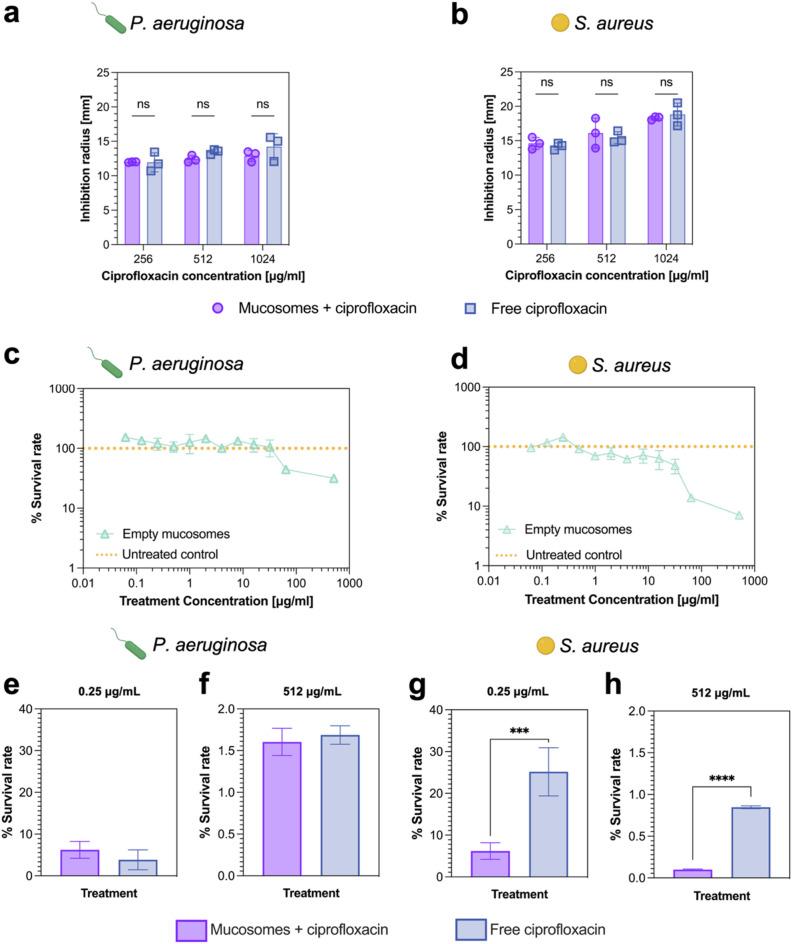
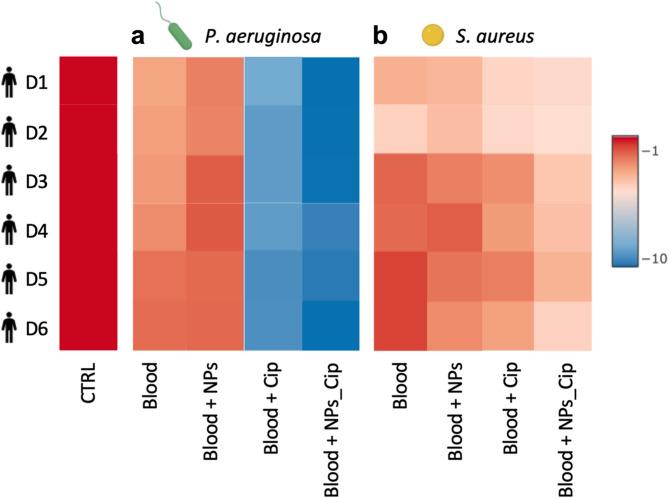
Deaths connected to bacterial infections are expected to outnumber those caused by cancer by 2050. Multiple advantages, including enhanced efficacy of the treatment, characterize the use of nanocarriers to deliver antibiotics. This work explores the use of mucosomes - intrinsically glycosylated mucin nanoparticles - to deliver ciprofloxacin to fight Pseudomonas aeruginosa and Staphylococcus aureus infections. Mucins are a family of glycoproteins representing the major non-aqueous component of human mucus and are known for actively interacting with bacteria, reducing their virulence, and limiting their aggregations. This study shows that these critical properties of mucin are preserved in mucosomes, enabling a strong synergy with the loaded antimicrobial drug. Empty mucosomes exert a bacteriostatic activity, inhibiting bacterial growth up to 70%. Ciprofloxacin-loaded mucosomes were able to decrease the minimum inhibitory concentration of ciprofloxacin against S. aureus by up to 50%. Mucosomes could prevent biofilm formation and disassemble well-established biofilms by reducing the biomass by up to 98%. Mucosomes further facilitated the transmucosal delivery of ciprofloxacin in a 3D mucus-mimicking model. These results, together with the possibility of freeze-drying and storing drug-loaded mucosomes without impairing their efficacy, suggest the suitability of this approach to tackle mucosal bacterial infections. Interestingly, this nanosystem has been shown to enhance the phagocytic action of blood in eradicating bacterial biofilms.
预计到2050年,与细菌感染相关的死亡人数将超过癌症所致死亡人数。纳米载体用于递送抗生素具有多种优势,包括提高治疗效果。这项研究探索了使用粘脂质体(本质上是糖基化的粘蛋白纳米颗粒)来递送环丙沙星,以对抗铜绿假单胞菌和金黄色葡萄球菌感染。粘蛋白是一类糖蛋白,是人类黏液的主要非水成分,以与细菌积极相互作用、降低其毒力并限制其聚集而闻名。本研究表明,粘蛋白的这些关键特性在粘脂质体中得以保留,从而能够与负载的抗菌药物产生强大的协同作用。空的粘脂质体具有抑菌活性,可将细菌生长抑制高达70%。负载环丙沙星的粘脂质体能够将环丙沙星对金黄色葡萄球菌的最低抑菌浓度降低高达50%。粘脂质体可以通过将生物膜的生物量减少高达98%来防止生物膜形成并分解已形成的生物膜。在三维模拟黏液模型中,粘脂质体还促进了环丙沙星的经黏膜递送。这些结果,连同冻干和储存负载药物的粘脂质体而不损害其功效的可能性,表明这种方法适用于解决黏膜细菌感染。有趣的是,这种纳米系统已被证明能增强血液在消除细菌生物膜方面的吞噬作用。




 Zotero 插件