
超越炎症:靶向1型糖尿病中CXCL8-CXCR1/2轴的多方面治疗潜力
Beyond inflammation: the multifaceted therapeutic potential of targeting the CXCL8-CXCR1/2 axis in type 1 diabetes.
作者信息
Fousteri Georgia, Jones Meghan, Novelli Rubina, Boccella Serena, Brandolini Laura, Aramini Andrea, Pozzilli Paolo, Allegretti Marcello
机构信息
Research & Development, Dompé Farmaceutici S.p.A, Milan, Italy.
Research & Development, Dompé US, San Mateo, CA, United States.
出版信息
Front Immunol. 2025 Jul 11;16:1576371. doi: 10.3389/fimmu.2025.1576371. eCollection 2025.
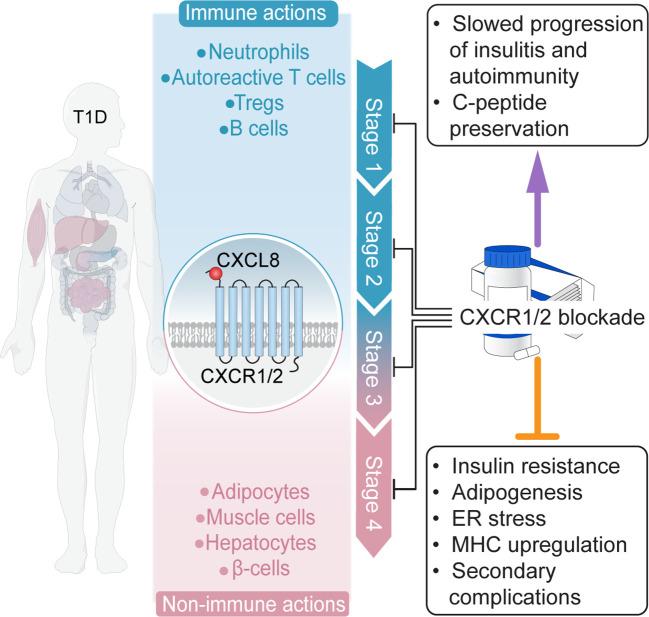
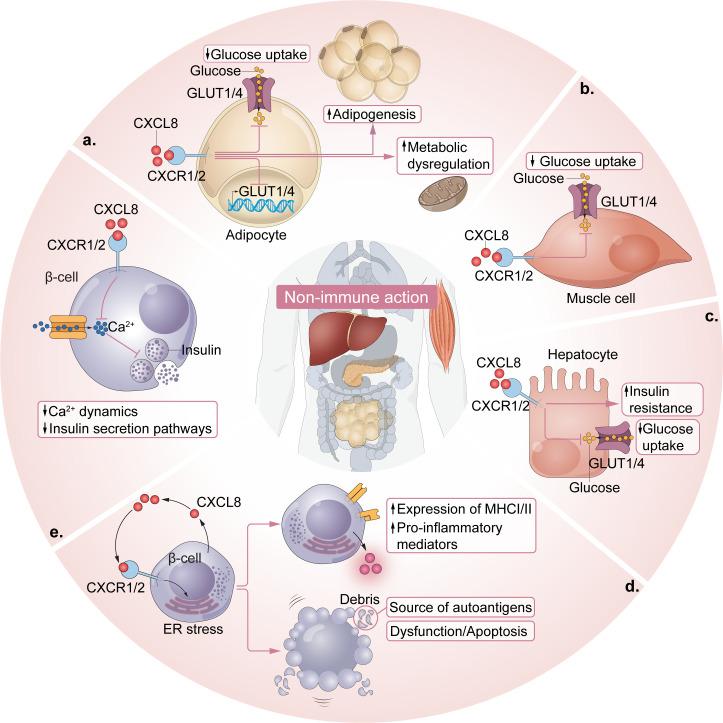
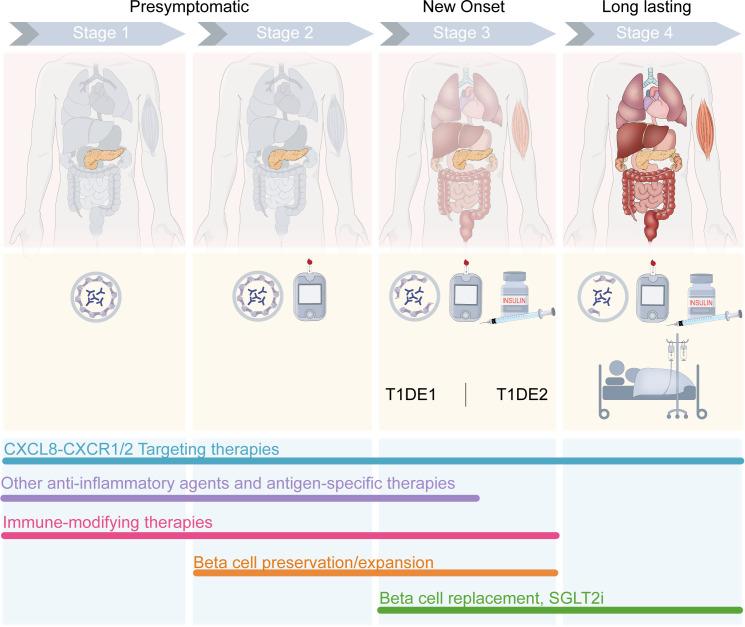
Identifying novel therapeutic targets involved in the multiple mechanisms underlying the complex pathophysiology of type 1 diabetes (T1D) could change the natural history of this disease. The CXCL8-CXCR1/2 axis is emerging as a therapeutic target with a crucial, multifaceted role in T1D pathophysiology. CXCL8-dependent neutrophil chemotaxis to the pancreas precedes autoimmunity, and CXCR1/2 blockade mitigates insulitis and T1D development in preclinical models. In parallel, CXCL8 can act in a β cell-autonomous manner, and exert non-immune actions on adipocytes, hepatocytes, podocytes, and muscle cells that contribute to insulin resistance and diabetic complications. In this review, we delineate compelling evidence of immune and non-immune actions of the axis in the onset and progression of T1D. We show that the CXCL8-CXCR1/2 axis represents a promising therapeutic target for the prevention/reversal of T1D, with a meaningful potential clinical advantage conveyed by its role in multiple components of the pathology and diabetic complications.
识别参与1型糖尿病(T1D)复杂病理生理学多种机制的新型治疗靶点,可能会改变这种疾病的自然病程。CXCL8-CXCR1/2轴正成为一个治疗靶点,在T1D病理生理学中具有关键的多方面作用。在自身免疫之前,CXCL8依赖的中性粒细胞向胰腺趋化,并且在临床前模型中,CXCR1/2阻断可减轻胰岛炎和T1D的发展。同时,CXCL8可以以β细胞自主的方式发挥作用,并对脂肪细胞、肝细胞、足细胞和肌肉细胞产生非免疫作用,这些作用会导致胰岛素抵抗和糖尿病并发症。在这篇综述中,我们阐述了该轴在T1D发病和进展中的免疫和非免疫作用的有力证据。我们表明,CXCL8-CXCR1/2轴是预防/逆转T1D的一个有前景的治疗靶点,其在病理和糖尿病并发症的多个组成部分中的作用具有显著的潜在临床优势。

 Zotero 插件