
一种针对复发或难治性B淋巴细胞白血病中CD19和CD22的双特异性嵌合抗原受体T细胞疗法。
A bi-specific CAR-T cell therapy targeting CD19 and CD22 in relapsed or refractory B-ALL.
作者信息
Ma Qiuling, Wei Runhong, Wang Qingming, Jiang Songfu, Wu Yi, Min Chao, Guo Shufang, Zhang Yu, Sun Xiaohong, Wu Haigang, Sun Xuedong, Xiang Fang, Xiao Mingxing, Cheng Zhi
机构信息
The Second School of Clinical Medicine, Henan University of Chinese Medicine, Zhengzhou, 450046, Henan Province, China.
Department of Hematology, Henan Province Hospital of Traditional Chinese Medicine (the Second Affiliated Hospital, Henan University of Chinese Medicine), Institute of Hematology, Henan University of Chinese Medicine, Zhengzhou, 450002, Henan Province, China.
出版信息
Clin Exp Med. 2025 Jul 28;25(1):264. doi: 10.1007/s10238-025-01637-8.
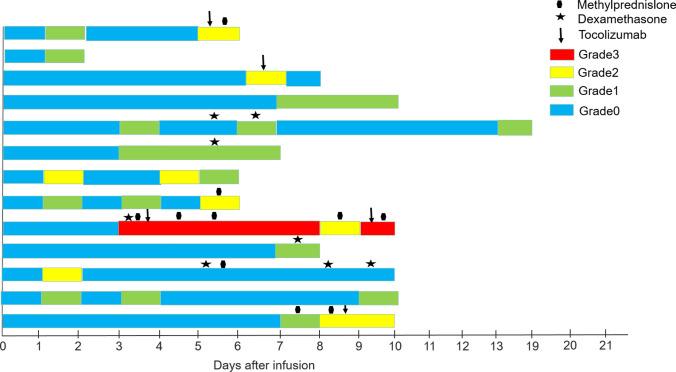
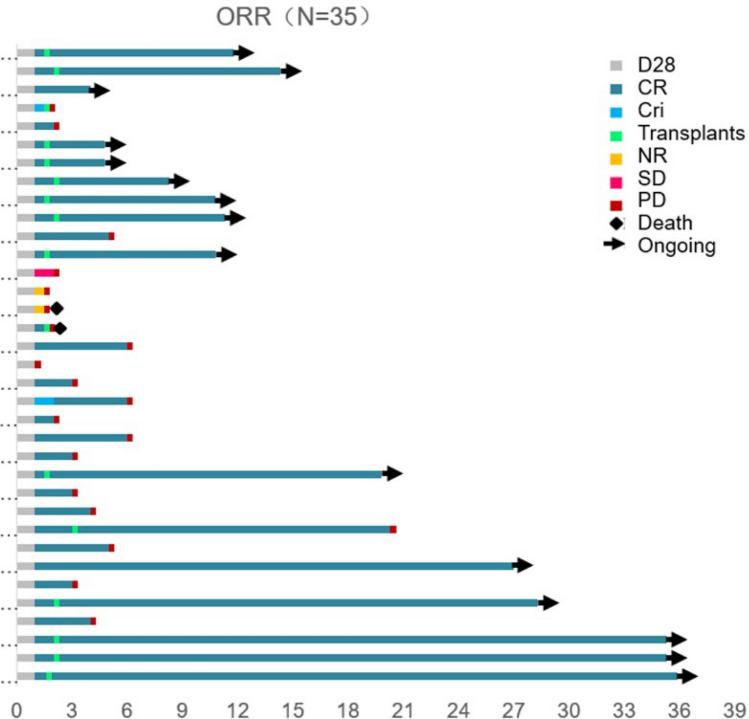
CAR-T therapies targeting either CD19 or CD22 have shown significant promise for treating relapsed or refractory B-lineage acute lymphoblastic leukemia (r/r B-ALL). However, a common limitation is the high frequency of antigen loss, which leads to r/r B-ALL progression. To overcome progression caused by antigen loss, bi-specific CAR-T immunotherapies targeting both CD19 and CD22 may offer enhanced efficacy in eliminating r/r B-ALL and preventing relapse by hindering leukemia cell proliferation. In this study, we present both pre-clinical and clinical findings from an ongoing trial (NCT04303520) assessing the therapeutic efficacy of the CD19-CD22 bi-specific CAR-T therapy for r/r B-ALL patients. Pre-clinical data from animal models reveal that CD19-CD22 CAR-T cells effectively induce cytotoxicity, thus suppressing B-ALL cell proliferation. Notably, this dual-targeted approach outperforms single-target CAR-T treatments. From the Phase I trial encompassing 35 participants, 37.1% (13 out of 35 patients) experienced cytokine release syndrome, with only a single case of Grade III severity. Importantly, no neurotoxicity episodes were recorded post CD19-CD22 CAR-T administration. Common adverse events included hematological, gastrointestinal, and nutrition-related disturbances. B-ALL patients undergoing stem cell transplantation in tandem with CAR-T therapy exhibited a pronounced improvement in overall survival compared to those treated solely with CAR-T. The median overall survival duration was 21.49 ± 4.4 months (95% CI: 14.31-31.40 months), meanwhile one-year PFS and OS are 0.37 (95% CI, 0.21-0.49) and 0.62 (95% CI: 0.52-0.71), respectively. Clinical monitoring did not identify significant side effects associated with the CD19-CD22 regimen. To monitor the inflammation-associated factors accompanying CAR-T therapy, the peak value of CAR DNA copies was reached around Day 10, accompanied by a similar trend in the levels of inflammatory factors, including IFN-γ, Granzyme B, IL-6, and CRP. Collectively, our data advocate for the potential role of bi-specific CD19-CD22 CAR-T therapy in addressing r/r B-ALL. Trial registration number ClinicalTrials.gov (No. NCT04303520).
靶向CD19或CD22的嵌合抗原受体T细胞(CAR-T)疗法在治疗复发或难治性B系急性淋巴细胞白血病(r/r B-ALL)方面显示出巨大潜力。然而,一个常见的局限性是抗原丢失频率高,这会导致r/r B-ALL进展。为了克服抗原丢失引起的进展,同时靶向CD19和CD22的双特异性CAR-T免疫疗法可能通过阻碍白血病细胞增殖,在消除r/r B-ALL和预防复发方面提供更高的疗效。在本研究中,我们展示了一项正在进行的试验(NCT04303520)的临床前和临床研究结果,该试验评估了CD19-CD22双特异性CAR-T疗法对r/r B-ALL患者的治疗效果。动物模型的临床前数据显示,CD19-CD22 CAR-T细胞可有效诱导细胞毒性,从而抑制B-ALL细胞增殖。值得注意的是,这种双靶点方法优于单靶点CAR-T治疗。在纳入35名参与者的I期试验中,37.1%(35名患者中的13名)出现细胞因子释放综合征,只有1例为III级严重程度。重要的是,在给予CD19-CD22 CAR-T后未记录到神经毒性事件。常见的不良事件包括血液学、胃肠道和营养相关紊乱。与仅接受CAR-T治疗的患者相比,接受CAR-T治疗并同时进行干细胞移植的B-ALL患者的总生存期有显著改善。中位总生存期为21.49±4.4个月(95%CI:14.31-31.40个月),同时一年无进展生存期(PFS)和总生存期(OS)分别为0.37(95%CI,0.21-0.49)和0.62(95%CI:0.52-0.71)。临床监测未发现与CD19-CD22方案相关的显著副作用。为了监测CAR-T治疗伴随的炎症相关因子,CAR DNA拷贝数的峰值在第10天左右达到,同时炎症因子水平,包括干扰素-γ(IFN-γ)、颗粒酶B、白细胞介素-6(IL-6)和C反应蛋白(CRP)也呈现类似趋势。总体而言,我们的数据支持双特异性CD19-CD22 CAR-T疗法在治疗r/r B-ALL方面的潜在作用。试验注册号:ClinicalTrials.gov(编号NCT04303520)。




 Zotero 插件