
甲基橙染料在水环境中经环境老化的聚乙烯、聚对苯二甲酸乙二酯和聚苯乙烯微塑料上的吸附与解吸
Adsorption and desorption of methyl orange dye on environmentally aged polyethylene, polyethylene terephthalate and polystyrene microplastics in aquatic environment.
作者信息
Habib Ahsan, Nishi Sayedunnesa, Haque Md Muhaiminul, Tauhiduzzaman Md, Khatun Kobita, Akter Mst Shamima, Sultana Esrat, Chakraborty Tapos Kumar, Zaman Samina, Ghosh Gopal Chandra
机构信息
Department of Environmental Science and Technology, Jashore University of Science and Technology, Jashore, Bangladesh.
出版信息
PLoS One. 2025 Jul 28;20(7):e0323516. doi: 10.1371/journal.pone.0323516. eCollection 2025.
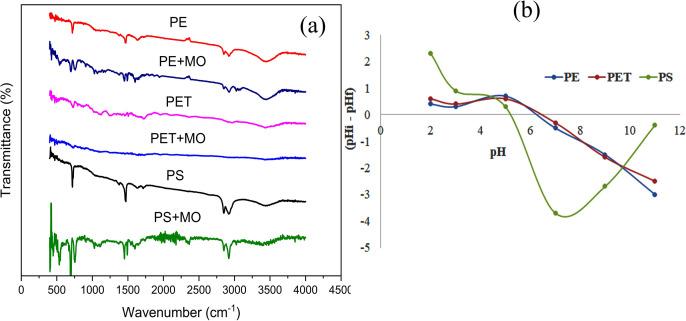
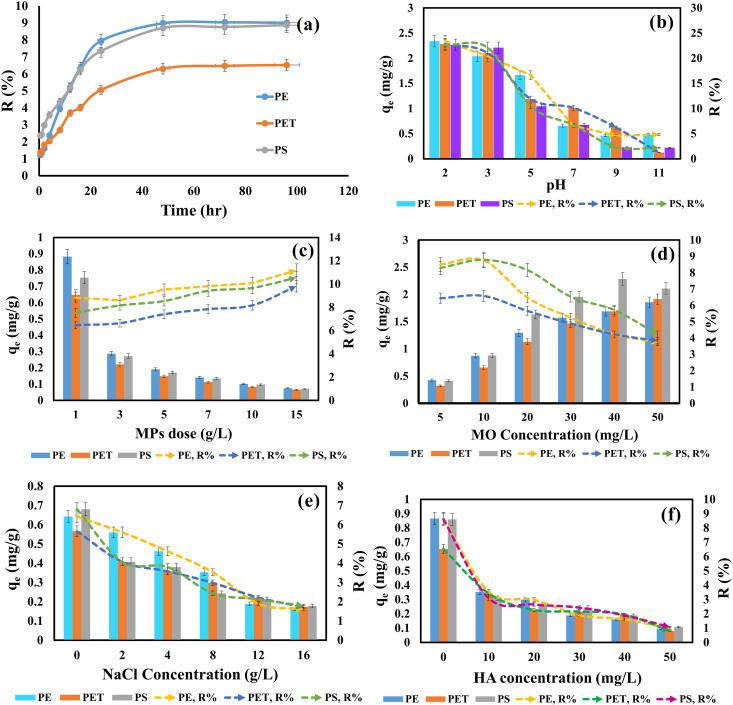
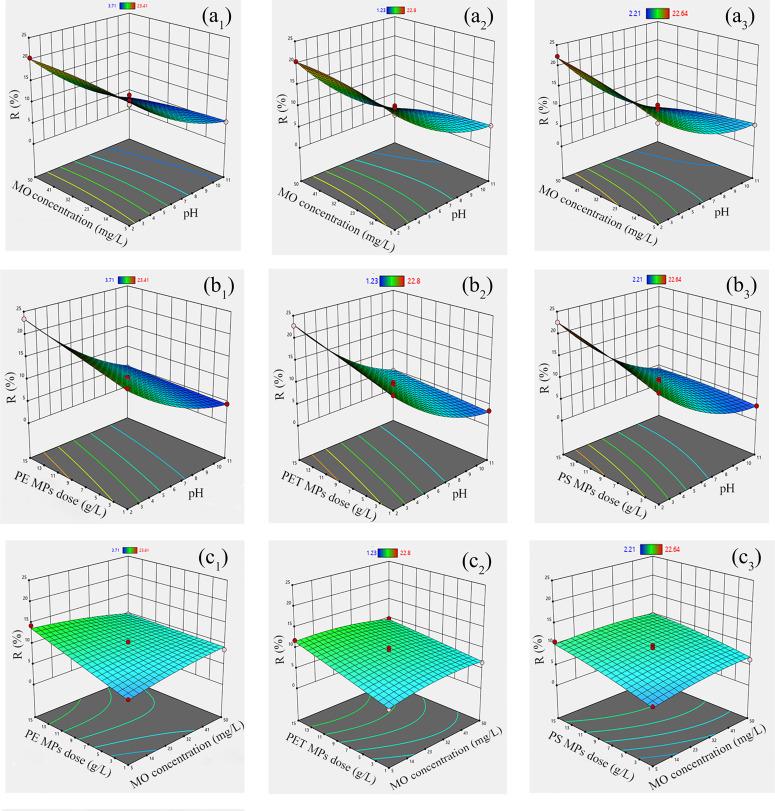
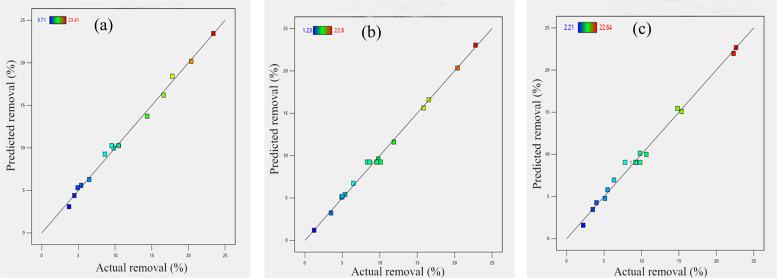
This study investigated the adsorption of methyl orange (MO), an anionic dye, on environmentally aged polyethylene (PE), polyethylene terephthalate (PET), and polystyrene (PS) microplastics (MPs) to understand their interactions in aquatic environments. The MPs were characterized using Fourier transform infrared spectroscopy (FTIR) and scanning electron microscopy (SEM). The adsorption experiment data followed pseudo-second-order kinetics and fit well with the Langmuir and Freundlich isotherm models. The adsorption capacities of MO onto the MPs were 2.86 mg/g, 3.64 mg/g, and 3.81 mg/g for PE, PET, and PS, respectively, at a neutral pH of 7.0. The MPs combined with MO mainly through chemisorption, hydrogen bonding, and hydrophilic interaction. The optimum conditions for MO (23.41% for PE, 22.8% for PET, and 22.64% for PS) removal by the MPs were: pH 2, MO concentration of 27.5 mg/L, and MPs dose of 15.0 g/L, as determined using response surface methodology (RSM). Additionally, the presence of salt (NaCl) and humic acid (HA) competed with MO for adsorption sites on the MPs. The desorption of MO from the MPs was relatively higher in freshwater (16-30%) than in simulated seawater (12-19%). This study elucidates the interaction of MO with environmentally aged PE, PET, and PS MPs in aquatic environments, and demonstrates the transport capacity of MO dye from wastewater to freshwater, and eventually to the ocean.
本研究调查了阴离子染料甲基橙(MO)在环境老化的聚乙烯(PE)、聚对苯二甲酸乙二酯(PET)和聚苯乙烯(PS)微塑料(MPs)上的吸附情况,以了解它们在水生环境中的相互作用。使用傅里叶变换红外光谱(FTIR)和扫描电子显微镜(SEM)对微塑料进行了表征。吸附实验数据符合伪二级动力学,并且与朗缪尔和弗伦德里希等温线模型拟合良好。在中性pH值7.0条件下,MO在PE、PET和PS上的吸附容量分别为2.86 mg/g、3.64 mg/g和3.81 mg/g。微塑料与MO的结合主要通过化学吸附、氢键和亲水相互作用。使用响应面法(RSM)确定,微塑料去除MO的最佳条件为:pH值2、MO浓度27.5 mg/L、微塑料剂量15.0 g/L(PE为23.41%,PET为22.8%,PS为22.64%)。此外,盐(NaCl)和腐殖酸(HA)的存在与MO竞争微塑料上的吸附位点。MO从微塑料上的解吸在淡水中(16 - 30%)相对高于模拟海水中(12 - 19%)。本研究阐明了MO与环境老化的PE、PET和PS微塑料在水生环境中的相互作用,并证明了MO染料从废水到淡水,最终到海洋的迁移能力。


 Zotero 插件