
恶性疟原虫中血浆蛋白酶-哌喹矛盾现象仍然存在。
The plasmepsin-piperaquine paradox persists in Plasmodium falciparum.
作者信息
Walsh Breanna, Summers Robert L, Rangel Gabriel W, Hagenah Laura M, Mok Sachel, Llinás Manuel, Fidock David A, Wirth Dyann F, Bopp Selina
机构信息
Department of Immunology and Infectious Diseases, Harvard T.H. Chan School of Public Health, Boston, Massachusetts, United States of America.
Department of Biochemistry and Molecular Biology and The Huck Center for Malaria Research, The Pennsylvania State University, University Park, Pennsylvania, United States of America.
出版信息
PLoS Pathog. 2025 Jul 28;21(7):e1012779. doi: 10.1371/journal.ppat.1012779. eCollection 2025 Jul.
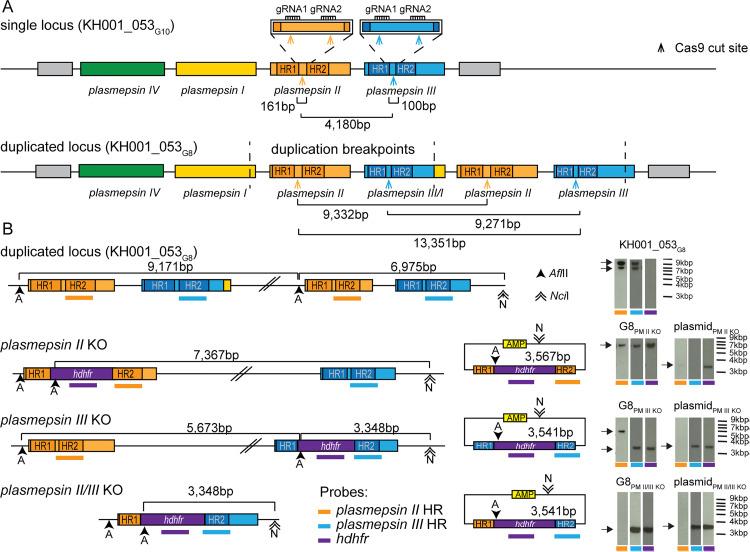
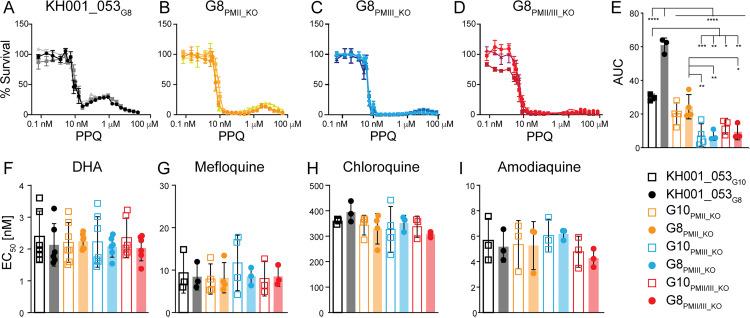
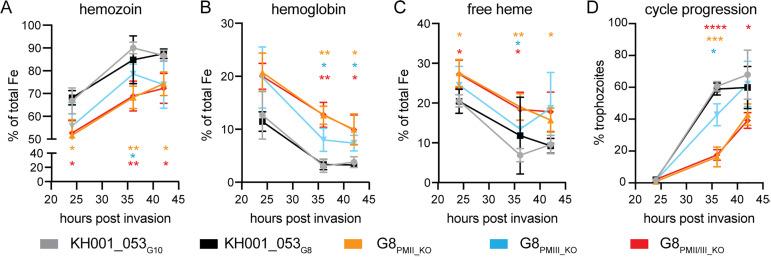
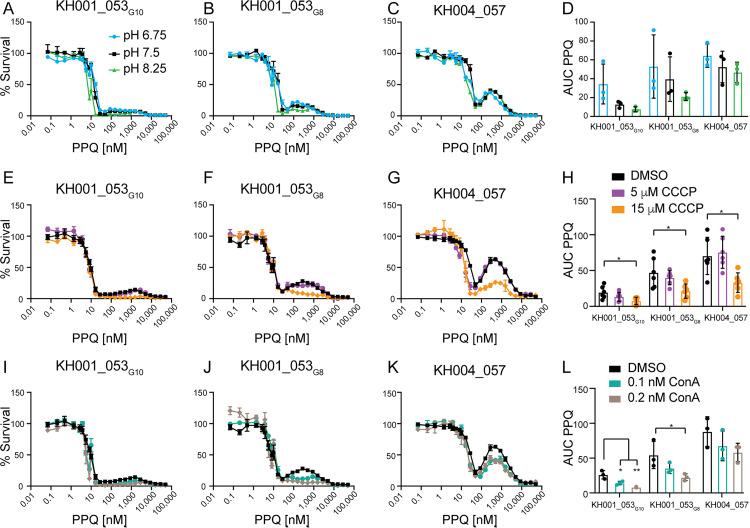
Malaria remains a pressing global health challenge, with rising drug resistance threatening current treatment strategies. Partial resistance to dihydroartemisinin-piperaquine (DHA-PPQ) has emerged in Southeast Asia, particularly in Plasmodium falciparum strains from Cambodia. While artemisinin partial resistance is associated with mutations in kelch13, reduced PPQ sensitivity has been linked to increased copy numbers of the aspartic protease genes plasmepsin II and III and mutations in the chloroquine resistance transporter. In this study, we demonstrate the effective use of CRISPR-Cas9 technology to generate single knockouts (KO) of plasmepsin II and plasmepsin III, as well as a double KO of both genes, in two isogenic Cambodian parasites with varying numbers of plasmepsin gene copies. The deletion of plasmepsin II and/or III increased parasite sensitivity to PPQ. We explored several hypotheses to understand how an increased plasmepsin gene copy number might influence parasite survival under high PPQ pressure. Our findings indicate that protease inhibitors have a minimal impact on parasite susceptibility to PPQ. Additionally, parasites with higher plasmepsin gene copy numbers did not exhibit significantly increased hemoglobin digestion, differences in peptide composition, nor did they produce different amounts of free heme following PPQ treatment compared to wildtype (single copy) parasites. Interestingly, hemoglobin digestion was slowed in parasites with plasmepsin II deletions. We also found that culturing parasites with different plasmepsin II and III copies in amino acid-limited media had little impact on parasite sensitivity to high-dose PPQ. By treating parasites with modulators of digestive vacuole (DV) homeostasis, we found that changes in DV pH potentially affect their response to PPQ. Our research highlights the crucial role of increased plasmepsin II and III gene copy numbers in modulating response to PPQ and begins to uncover the molecular and physiological mechanisms underlying the contribution of plasmepsin II and III amplification to PPQ resistance in Cambodian parasites.
疟疾仍然是一个紧迫的全球健康挑战,耐药性不断上升威胁着当前的治疗策略。东南亚已出现对双氢青蒿素-哌喹(DHA-PPQ)的部分耐药性,尤其是在柬埔寨的恶性疟原虫菌株中。虽然青蒿素部分耐药性与kelch13突变有关,但哌喹敏感性降低与天冬氨酸蛋白酶基因胃蛋白酶II和III的拷贝数增加以及氯喹抗性转运蛋白的突变有关。在本研究中,我们证明了有效利用CRISPR-Cas9技术在具有不同胃蛋白酶基因拷贝数的两个同基因柬埔寨寄生虫中生成胃蛋白酶II和胃蛋白酶III的单基因敲除(KO)以及这两个基因的双基因敲除。胃蛋白酶II和/或III的缺失增加了寄生虫对哌喹的敏感性。我们探讨了几个假设,以了解胃蛋白酶基因拷贝数增加如何在高哌喹压力下影响寄生虫的存活。我们的研究结果表明,蛋白酶抑制剂对寄生虫对哌喹的易感性影响最小。此外,与野生型(单拷贝)寄生虫相比,胃蛋白酶基因拷贝数较高的寄生虫在血红蛋白消化、肽组成差异方面没有显著增加,在哌喹处理后也没有产生不同量的游离血红素。有趣的是,胃蛋白酶II缺失的寄生虫中血红蛋白消化减慢。我们还发现,在氨基酸限制培养基中培养具有不同胃蛋白酶II和III拷贝数的寄生虫对寄生虫对高剂量哌喹的敏感性影响很小。通过用消化液泡(DV)稳态调节剂处理寄生虫,我们发现DV pH值的变化可能会影响它们对哌喹的反应。我们的研究强调了胃蛋白酶II和III基因拷贝数增加在调节对哌喹反应中的关键作用,并开始揭示胃蛋白酶II和III扩增对柬埔寨寄生虫哌喹抗性贡献的分子和生理机制。



 Zotero 插件