
微生物与治疗的相互作用:急性髓系白血病中的药物微生物组学——向个性化医疗迈进了一步
Microbial Crosstalk with Therapy: Pharmacomicrobiomics in AML-One Step Closer to Personalized Medicine.
作者信息
Nowicka Aneta, Tomczak Hanna, Szałek Edyta, Karbownik Agnieszka, Gil Lidia
机构信息
Department of Hematology and Bone Marrow Transplantation, Poznan University of Medical Sciences, 60-569 Poznan, Poland.
Faculty of Medicine and Health Sciences, Calisia University, 62-800 Kalisz, Poland.
出版信息
Biomedicines. 2025 Jul 18;13(7):1761. doi: 10.3390/biomedicines13071761.
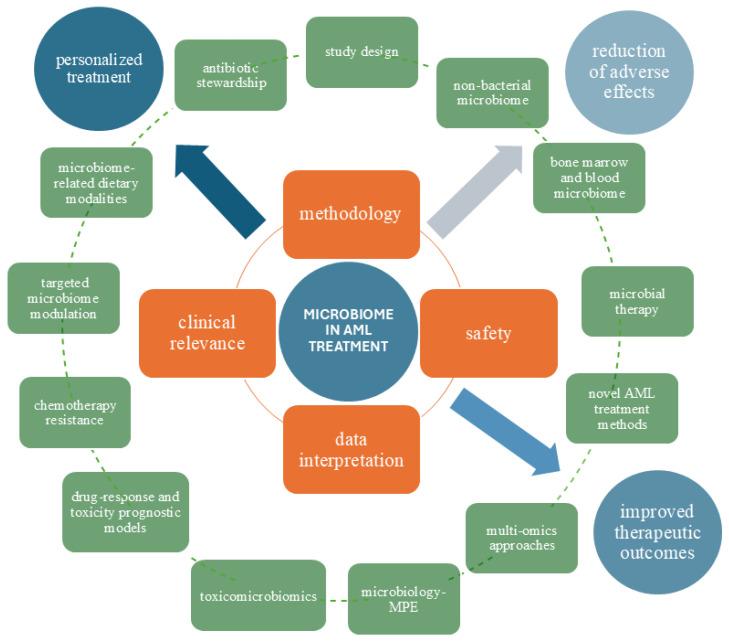
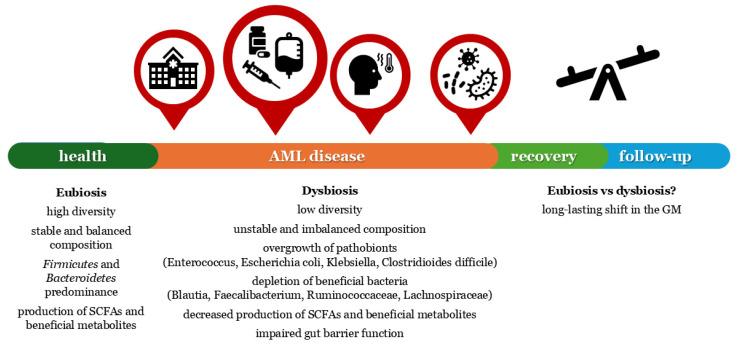
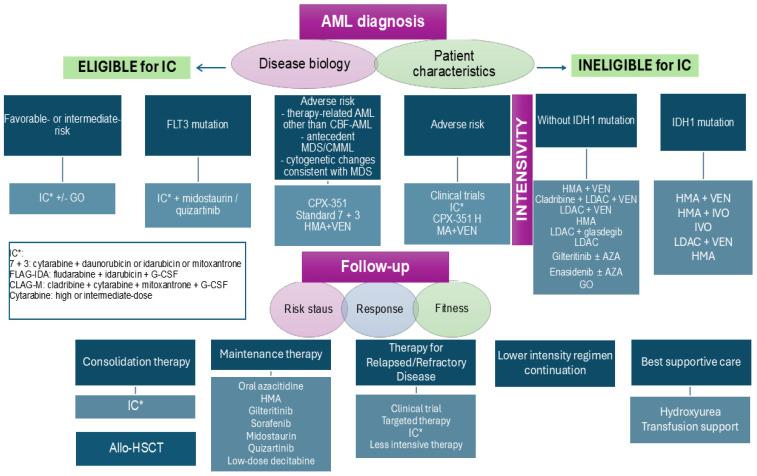
Increasing evidence demonstrates the mutualistic connection between the microbiome and acute myeloid leukemia (AML) treatment. Drugs disrupt the microbial balance and, conversely, changes in the microbiome influence therapy. A new field, pharmacomicrobiomics, examines the role of the microbiome in pharmacokinetics, pharmacodynamics, and drug toxicity. The multimodal therapeutic management of AML, along with disease-related immunosuppression, infection, and malnutrition, creates the unique microbial profile of AML patients, in which every delicate modification plays a crucial role in pharmacotherapy. While both preclinical and real-world data have confirmed a bilateral connection between standard chemotherapy and the microbiome, the impact of novel targeted therapies and immunotherapy remains unknown. Multi-omics technologies have provided qualitative and mechanistic insights into specific compositional and functional microbial signatures associated with the outcomes of AML therapy, but require a large-scale investigation to draw reliable conclusions. In this review, we outline the role of the microbiome within the therapeutic landscape of AML, focusing on the determinants of post-treatment dysbiosis and its effects on the therapeutic response and toxicity. We explore emerging strategies for microbiota modulation, highlighting their safety and efficacy. Advances in microbiome-based approaches are an inevitable step toward precision medicine in AML. However, clinical research in a well-defined group of immunocompromised patients is needed to study their variable effects on human health and determine safety issues.
越来越多的证据表明微生物群与急性髓系白血病(AML)治疗之间存在互利关系。药物会破坏微生物平衡,反之,微生物群的变化也会影响治疗。一个新的领域——药物微生物组学,研究微生物群在药代动力学、药效学和药物毒性中的作用。AML的多模式治疗管理,连同疾病相关的免疫抑制、感染和营养不良,塑造了AML患者独特的微生物特征,其中每一个细微的改变在药物治疗中都起着至关重要的作用。虽然临床前和实际数据都证实了标准化疗与微生物群之间的双向联系,但新型靶向治疗和免疫治疗的影响仍不清楚。多组学技术已经对与AML治疗结果相关的特定组成和功能微生物特征提供了定性和机制方面的见解,但需要大规模调查才能得出可靠结论。在这篇综述中,我们概述了微生物群在AML治疗格局中的作用,重点关注治疗后生态失调的决定因素及其对治疗反应和毒性的影响。我们探索微生物群调节的新兴策略,强调其安全性和有效性。基于微生物群的方法的进展是AML精准医学不可避免的一步。然而,需要在一组明确的免疫受损患者中进行临床研究,以研究它们对人类健康的不同影响并确定安全问题。

 Zotero 插件