
肝细胞癌中的血小板——从发病机制到靶向治疗
Platelets in Hepatocellular Carcinoma-From Pathogenesis to Targeted Therapy.
作者信息
Kluz Natalia, Grabowska Hanna, Chmiel Paulina, Rynkiewicz Kornelia, Skrobucha Alicja, Wysokińska Ewa, Szymański Łukasz, Wysocki Piotr Tomasz, Semeniuk-Wojtaś Aleksandra, Kraj Leszek
机构信息
Medical Faculty, Medical University of Warsaw, 02-091 Warsaw, Poland.
Faculty of Medicine, Cardinal Stefan Wyszynski University, 5, 01-815 Warsaw, Poland.
出版信息
Cancers (Basel). 2025 Jul 18;17(14):2391. doi: 10.3390/cancers17142391.
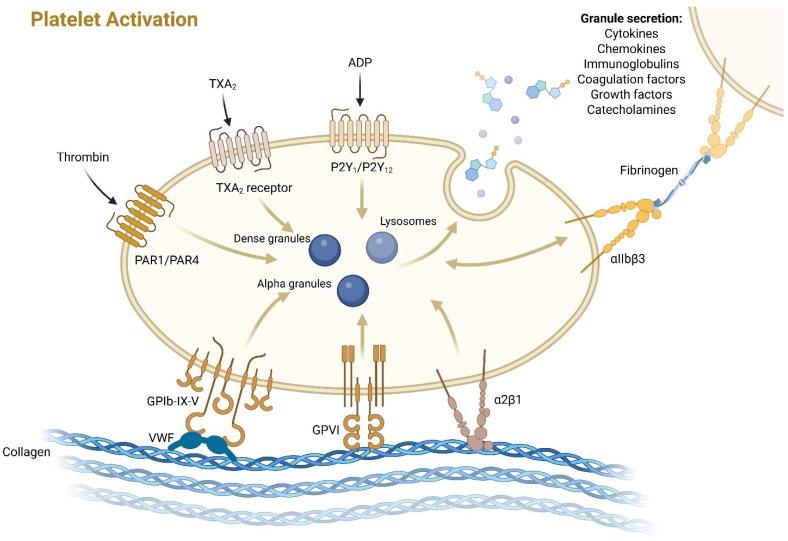
Hepatocellular carcinoma (HCC) is a malignancy with a complex pathogenesis, course, and prognosis with increasing incidence. The most significant contributing factor to the development of HCC is the chronic process of inflammation and remodeling of the cirrhotic liver, in which the interaction between the tumor microenvironment (TME) and cancer cells plays a pivotal role. In recent years, increasing focus has been directed toward the role of platelets (PLTs) in mediating interactions between tumor cells and the TME and in the progression and spread of HCC, as well as other cancers. Due to their abundance in the bloodstream and intracellular granules rich in mediators facilitating their ability to modulate the immune system, PLTs play a significant role in carcinogenesis. In the context of HCC, the role of PLTs in the healing and regeneration processes of the liver has been recognized for some time. In recent years, there has been an increasing utilization of PLTs in prognostic models for patients with HCC. Given their role and the availability of clinical options that block PLTs' action, clinical trials of platelet blockers in the adjunctive treatment of HCC are becoming increasingly common. However, further research, both preclinical and clinical, is necessary to fully elucidate the role of PLTs in HCC and their potential use as a therapeutic target. In this literature review, we summarize the current knowledge on PLTs in HCC and focus on their potential use in everyday clinical practice.
肝细胞癌(HCC)是一种发病机制、病程和预后复杂且发病率不断上升的恶性肿瘤。导致HCC发生的最重要因素是肝硬化肝脏的慢性炎症和重塑过程,其中肿瘤微环境(TME)与癌细胞之间的相互作用起着关键作用。近年来,越来越多的关注集中在血小板(PLT)在介导肿瘤细胞与TME之间的相互作用以及HCC和其他癌症的进展与扩散中所起的作用。由于血小板在血液中含量丰富且其细胞内颗粒富含促进其调节免疫系统能力的介质,血小板在致癌过程中发挥着重要作用。在HCC的背景下,血小板在肝脏愈合和再生过程中的作用已经被认识了一段时间。近年来,血小板在HCC患者预后模型中的应用越来越多。鉴于其作用以及存在阻断血小板作用的临床选择,血小板阻滞剂在HCC辅助治疗中的临床试验越来越普遍。然而,需要进一步的临床前和临床研究来充分阐明血小板在HCC中的作用及其作为治疗靶点的潜在用途。在这篇文献综述中,我们总结了目前关于HCC中血小板的知识,并关注它们在日常临床实践中的潜在用途。

 Zotero 插件