
通过神经炎症对微生物群-肠-脑轴作用的全面综述:缺血性中风的研究进展及治疗意义
A Comprehensive Review of the Role of the Microbiota-Gut-Brain Axis via Neuroinflammation: Advances and Therapeutic Implications for Ischemic Stroke.
作者信息
Guo Hui, Tang Xiang, He Xinyi, Weng Yizhen, Zhang Quanquan, Fang Qi, Zhang Lulu
机构信息
Department of Neurology, First Affiliated Hospital of Soochow University, No. 899 Pinghai Road, Suzhou 215006, China.
Department of Neurology, Dushu Lake Hospital, Suzhou 215006, China.
出版信息
Biomolecules. 2025 Jun 23;15(7):920. doi: 10.3390/biom15070920.
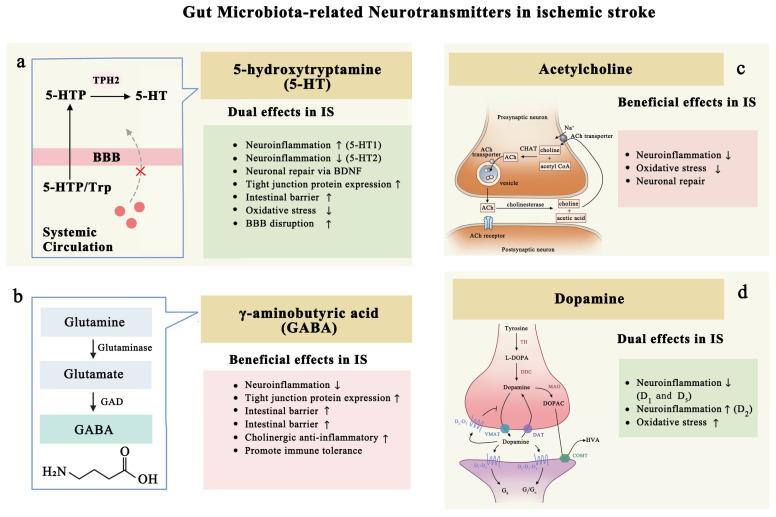
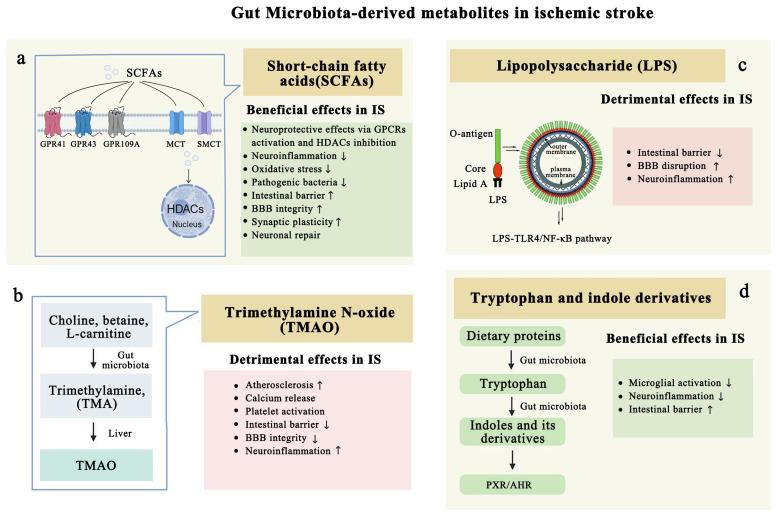
The human gastrointestinal tract harbors a complex and diverse microbial community. Emerging evidence has revealed bidirectional communication between the gut microbiome and the central nervous system, termed the "microbiota-gut-brain axis". This axis serves as a critical regulator of glial cell function, positioning it as an essential target for ameliorating the onset and progression of ischemic stroke. In this review, we discuss the developments in the relationship between ischemic stroke and neuroinflammation via MGBA. The gut microbiome plays a critical role in signaling to microglia, astrocytes, and other immune components within this axis. We also summarize the interactions between the gut microbiota and glial cells under both healthy and ischemic stroke conditions. Additionally, we also focus on the role of microbiota-derived metabolites and neurotransmitters in ischemic stroke. Furthermore, we investigate the potential of targeting the intestinal and blood-brain barriers to improve MGBA. Finally, we evaluate the preclinical and clinical evidence for dietary interventions, probiotics, prebiotics, and fecal microbiota transplantation in ischemic stroke. A comprehensive understanding of the MGBA is essential for developing MGBA-based treatment for ischemic stroke.
人类胃肠道中栖息着一个复杂多样的微生物群落。新出现的证据揭示了肠道微生物群与中枢神经系统之间的双向交流,即“微生物群-肠道-脑轴”。该轴作为神经胶质细胞功能的关键调节因子,使其成为改善缺血性中风发病和进展的重要靶点。在这篇综述中,我们讨论了通过微生物群-肠道-脑轴,缺血性中风与神经炎症之间关系的进展。肠道微生物群在向该轴内的小胶质细胞、星形胶质细胞和其他免疫成分发出信号方面起着关键作用。我们还总结了健康和缺血性中风条件下肠道微生物群与神经胶质细胞之间的相互作用。此外,我们还关注微生物群衍生的代谢物和神经递质在缺血性中风中的作用。此外,我们研究了靶向肠道和血脑屏障以改善微生物群-肠道-脑轴的潜力。最后,我们评估了饮食干预、益生菌、益生元以及粪便微生物群移植在缺血性中风中的临床前和临床证据。全面了解微生物群-肠道-脑轴对于开发基于该轴的缺血性中风治疗方法至关重要。


 Zotero 插件