
CD226的免疫调节功能及其在免疫介导疾病中的意义。
The Immune Regulatory Functions of CD226 and Its Implications in Immune-Mediated Diseases.
作者信息
Liu Keyan, Liu Yuanzhen, Xiong Huabao, Ning Zhaochen
机构信息
Department of Public Health, Jining Medical University, Jining 272067, China.
Jining Key Laboratory of Immunology, Jining Medical University, Jining 272067, China.
出版信息
Biomolecules. 2025 Jul 14;15(7):1007. doi: 10.3390/biom15071007.
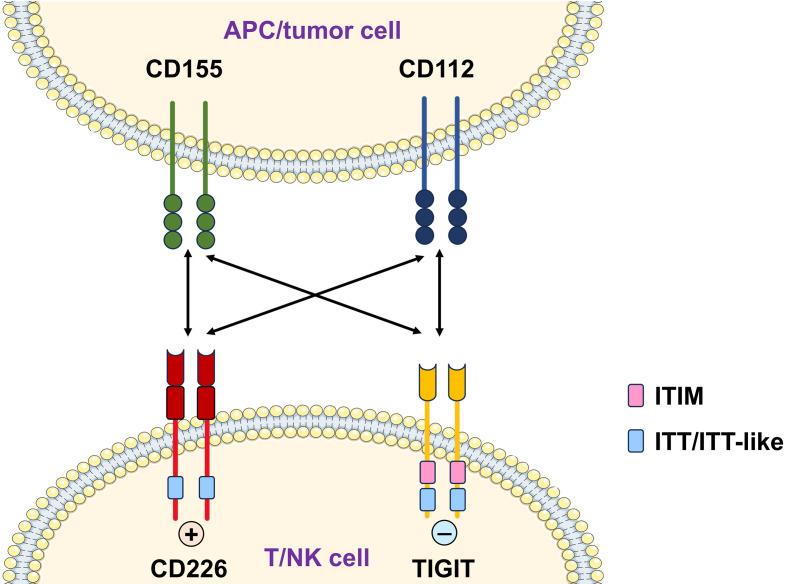
CD226, a member of the immunoglobulin superfamily, serves as a critical regulator in various immunological processes. CD226 is expressed across immune and non-immune cells, with predominant expression being observed in natural killer (NK) cells and T cells. By engaging ligands CD155 and CD112, it orchestrates diverse signaling pathways that modulate T cell differentiation and effector functions while enhancing NK cell activation and cytotoxicity. Genetic polymorphisms and the dysregulated expression of CD226 are closely associated with susceptibility to autoimmune diseases, infectious diseases, allergic diseases, and cancer progression. Growing evidence highlight CD226's emerging promise as a therapeutic target for immune-mediated diseases. The present work aims to review the current understanding of CD226's role in immune responses and to comprehensively outline its multifaceted involvement in different immunological diseases, providing insights for future research to advance our mechanistic understanding of its roles in disease pathogenesis.
CD226是免疫球蛋白超家族的成员,在各种免疫过程中起着关键调节作用。CD226在免疫细胞和非免疫细胞中均有表达,在自然杀伤(NK)细胞和T细胞中表达尤为显著。通过与配体CD155和CD112结合,它协调多种信号通路,调节T细胞分化和效应功能,同时增强NK细胞的活化和细胞毒性。CD226的基因多态性和表达失调与自身免疫性疾病、感染性疾病、过敏性疾病及癌症进展的易感性密切相关。越来越多的证据表明,CD226作为免疫介导疾病的治疗靶点具有新的前景。本研究旨在综述目前对CD226在免疫反应中作用的认识,并全面概述其在不同免疫性疾病中的多方面参与情况,为未来研究提供见解,以加深我们对其在疾病发病机制中作用的机制性理解。
 Zotero 插件