
海参中转化生长因子-β蛋白及受体的表征与表达:通过分子对接预测洞察潜在应用
Characterization and Expression of TGF-β Proteins and Receptor in Sea Cucumber (): Insights into Potential Applications via Molecular Docking Predictions.
作者信息
Nonkhwao Siriporn, Charoenrit Jarupa, Ratanamungklanon Chanachon, Sojikul Lanlalin, Duangprom Supawadee, Songkoomkrong Sineenart, Saetan Jirawat, Nuemket Nipawan, Amonruttanapun Prateep, Sobhon Prasert, Kornthong Napamanee
机构信息
Chulabhorn International College of Medicine, Rangsit Campus, Thammasat University, Pathumthani 12120, Bangkok, Thailand.
Division of Health and Applied Sciences, Faculty of Science, Prince of Songkla University, Hat Yai 90110, Songkhla, Thailand.
出版信息
Int J Mol Sci. 2025 Jul 21;26(14):6998. doi: 10.3390/ijms26146998.
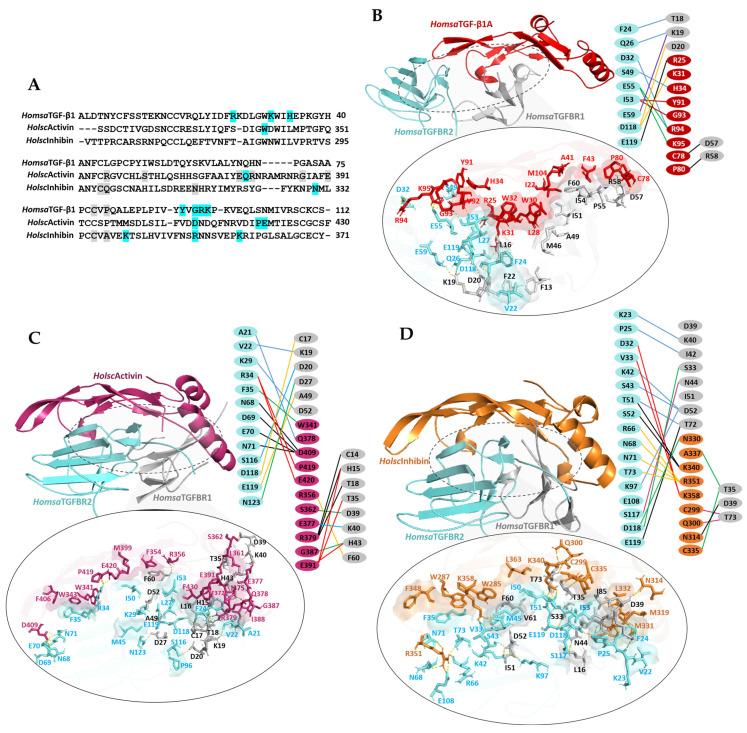
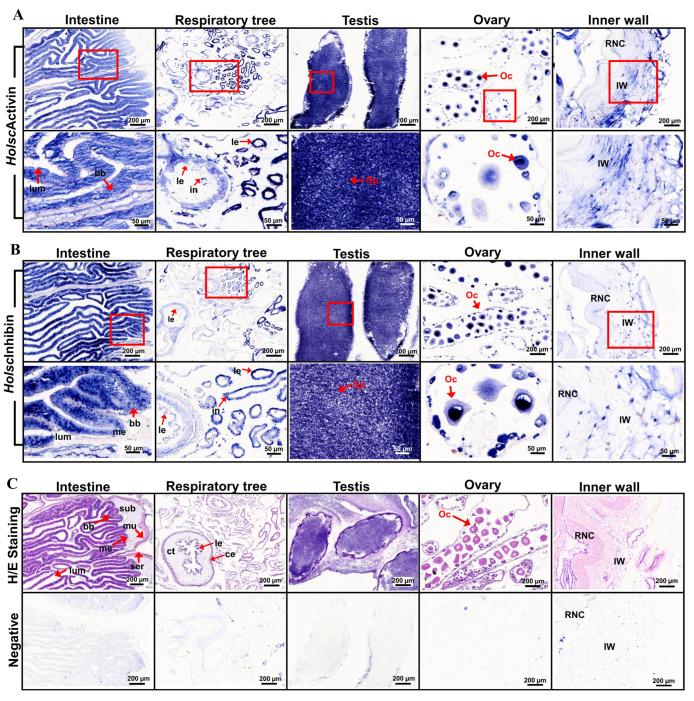
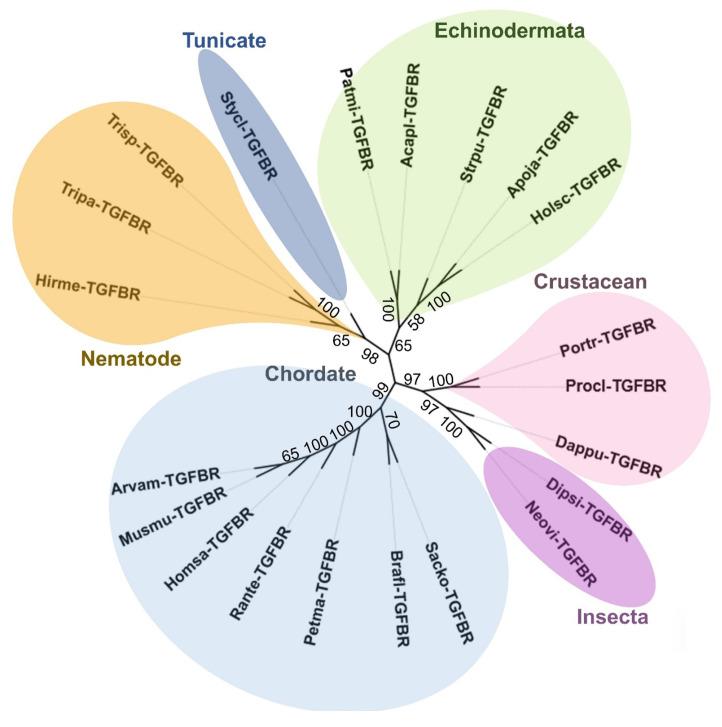
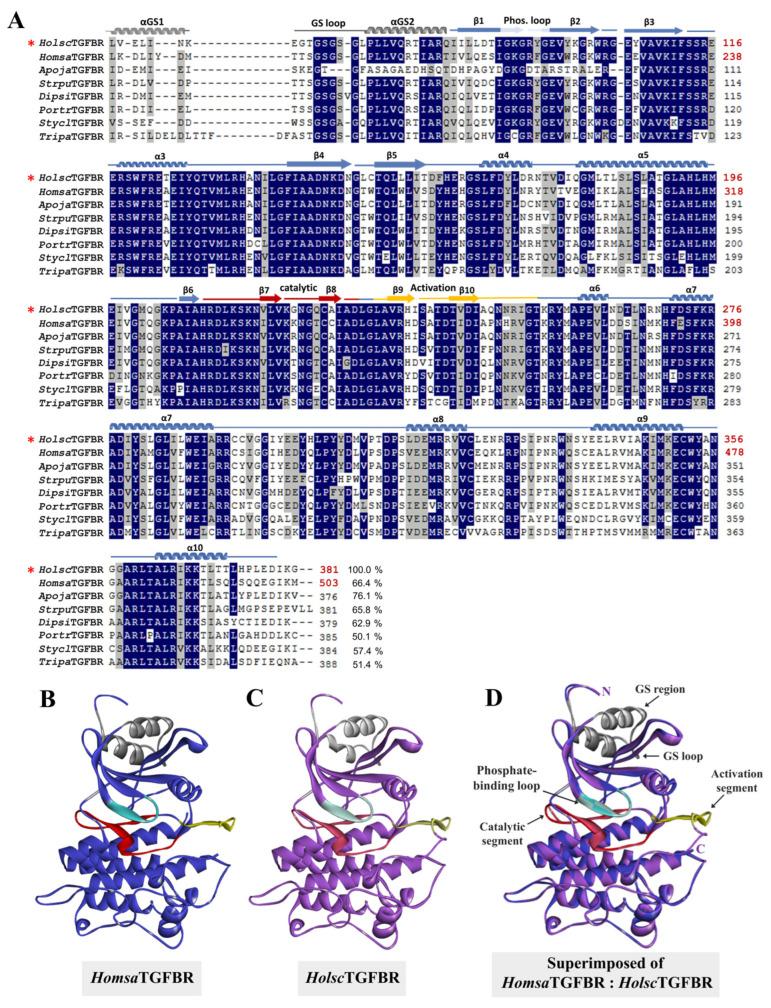
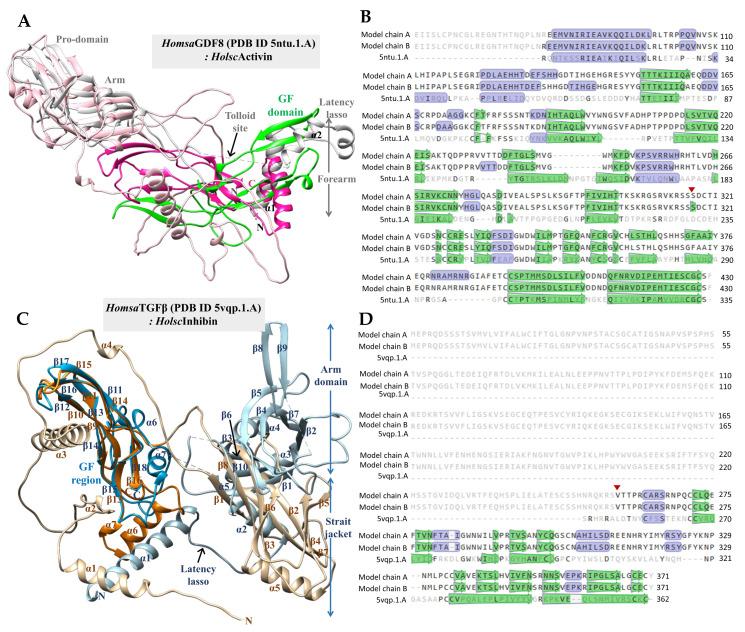
has long been acknowledged in traditional medicine for its therapeutic properties. The transforming growth factor-beta (TGF-β) superfamily is crucial in regulating cellular processes, including differentiation, proliferation, and immune responses. This study marks the first exploration of the gene expression localization, sequence conservation, and functional roles of TGF-β proteins, specifically activin (Activin), inhibin (Inhibin), and the TGF-β receptor (TGFBR), across various organs. In situ hybridization indicated that Activin and Inhibin are expressed in the intestine, respiratory tree, ovary, testis, and inner body wall. This suggests their roles in nutrient absorption, gas exchange, reproduction, and extracellular matrix remodeling. Notably, TGFBR demonstrated a similar tissue-specific expression pattern, except for its absence in the respiratory tree. Bioinformatics analysis reveals that TGFBR shares significant sequence similarity with TGFBR, especially in regions essential for signal transduction and inhibition. Molecular docking results indicate that Activin may promote receptor activation, while Inhibin functions as a natural antagonist, reflecting the signaling mechanisms of human TGF-β proteins. Interestingly, cross-species ternary complex docking with human TGF-β receptors further supports these findings, showing that Activin moderately engages the receptors, whereas Inhibin exhibits strong binding, suggestive of competitive inhibition. These results indicate that TGF-β proteins retain the structural and functional features of vertebrate TGF-β ligands, supporting their potential applications as natural modulators in therapeutic and functional food development.
其治疗特性在传统医学中早已得到认可。转化生长因子-β(TGF-β)超家族在调节细胞过程中至关重要,包括分化、增殖和免疫反应。本研究首次探索了TGF-β蛋白,特别是激活素(Activin)、抑制素(Inhibin)和TGF-β受体(TGFBR)在各个器官中的基因表达定位、序列保守性和功能作用。原位杂交表明,激活素和抑制素在肠道、呼吸道、卵巢、睾丸和体内壁中表达。这表明它们在营养吸收、气体交换、生殖和细胞外基质重塑中发挥作用。值得注意的是,TGFBR表现出类似的组织特异性表达模式,但在呼吸道中不存在。生物信息学分析表明,TGFBR与TGFBR具有显著的序列相似性,特别是在信号转导和抑制至关重要的区域。分子对接结果表明,激活素可能促进受体激活,而抑制素作为天然拮抗剂发挥作用,反映了人类TGF-β蛋白的信号传导机制。有趣的是,与人类TGF-β受体的跨物种三元复合物对接进一步支持了这些发现,表明激活素适度结合受体,而抑制素表现出强烈结合,提示竞争性抑制。这些结果表明,TGF-β蛋白保留了脊椎动物TGF-β配体的结构和功能特征,支持它们作为天然调节剂在治疗和功能性食品开发中的潜在应用。



 Zotero 插件