
在新冠病毒感染后的长期变化背景下,对重复恢复期血浆捐献者肾素-血管紧张素-醛固酮系统的选定生化参数进行评估。
Assessment of Selected Biochemical Parameters of the Renin-Angiotensin-Aldosterone System in Repeat Convalescent Plasma Donors in the Context of Long-Term Changes Following SARS-CoV-2 Infection.
作者信息
Stanek Marta, Diakowska Dorota, Kaliszewski Krzysztof, Leśków Anna
机构信息
Regional Center of Transfusion Medicine and Blood Bank, 50-345 Wrocław, Poland.
Division of Medical Biology, Faculty of Nursing and Midwifery, Wroclaw Medical University, 50-368 Wrocław, Poland.
出版信息
J Clin Med. 2025 Jul 10;14(14):4910. doi: 10.3390/jcm14144910.
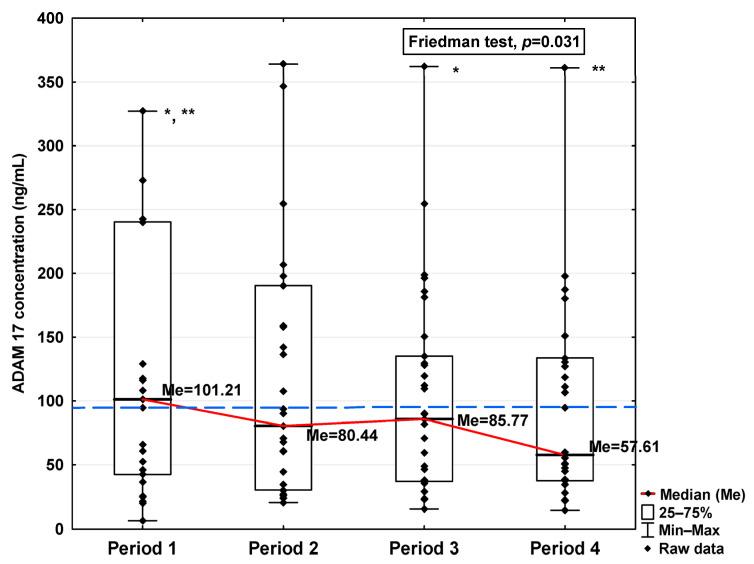
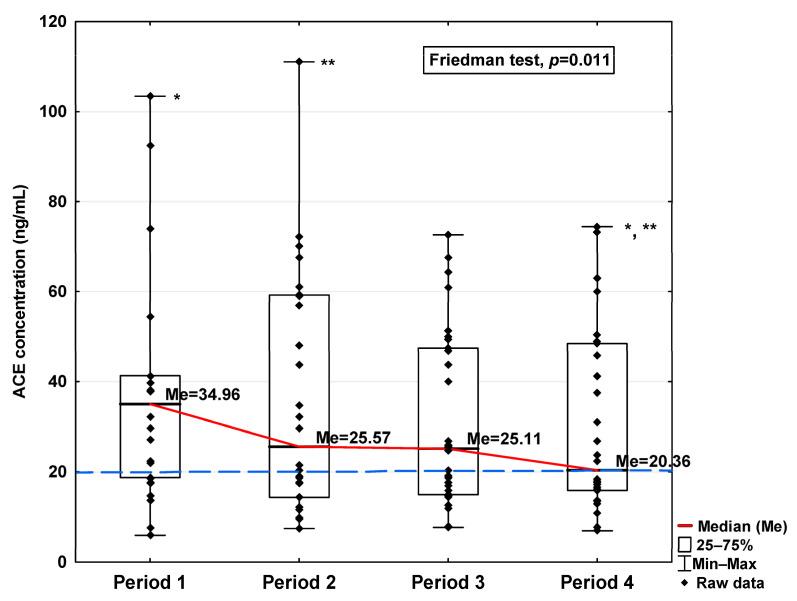
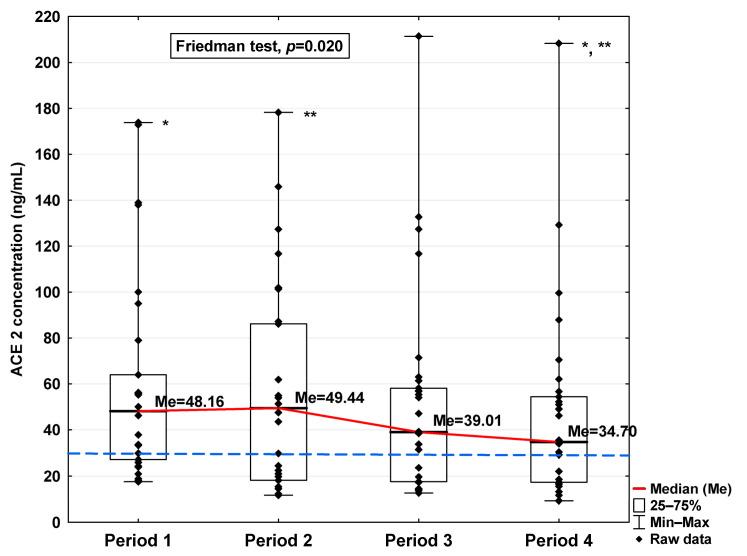
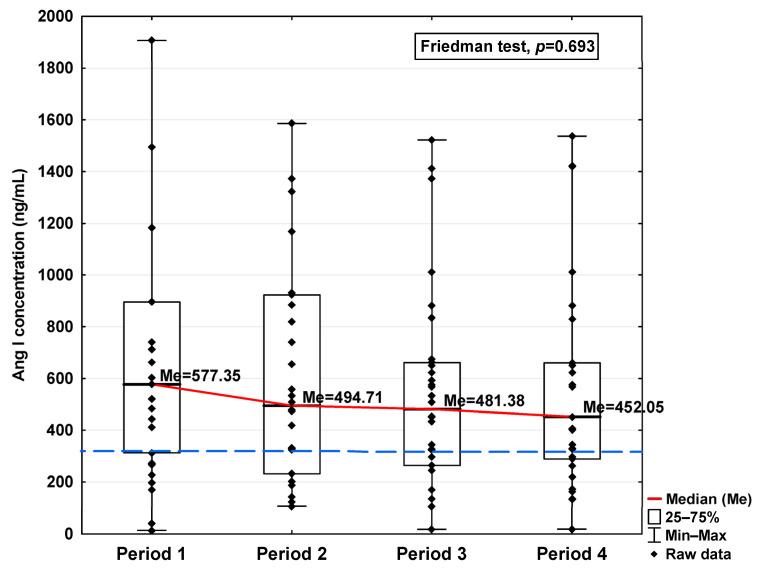
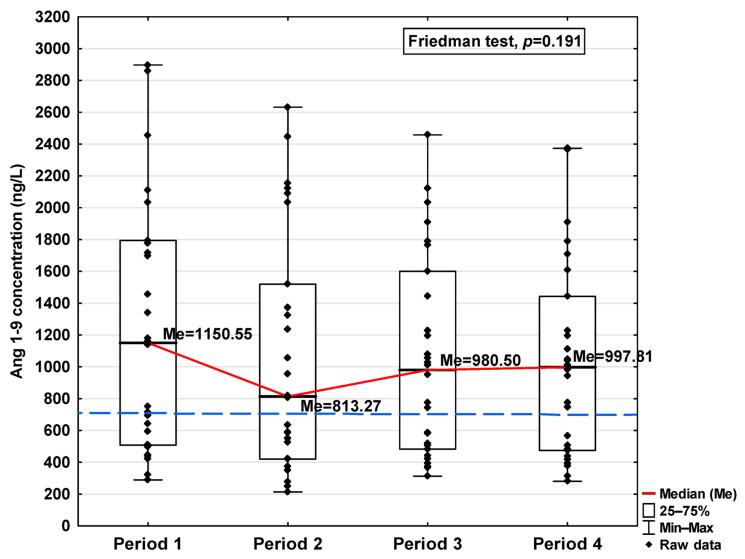
SARS-CoV-2 infection has been associated with long-term health consequences, including dysregulation of the renin-angiotensin-aldosterone system (RAAS). This study aimed to evaluate long-term changes in selected RAAS-related biochemical parameters in repeat convalescent plasma donors, focusing on enzymes and peptides involved in vascular regulation and inflammation. Thirty repeat convalescent plasma donors were enrolled, each providing four serum samples at defined time points post-infection. Samples were collected during Period 1 (≤60 days), Period 2 (61-90 days), Period 3 (91-120 days), and Period 4 (>120 days) after confirmed SARS-CoV-2 infection. The analyzed parameters included angiotensin I (Ang I), angiotensin II (Ang II), angiotensin 1-7 (Ang 1-7), angiotensin 1-9 (Ang 1-9), ACE, ACE2, ADAM10, and ADAM17. Concentrations were determined using ELISA assays. The control group consisted of pre-pandemic serum samples from healthy individuals. An initial post-infection increase was observed in most parameters, particularly in Period 1. Over time, levels of several markers declined, yet Ang 1-7 and Ang 1-9 remained elevated compared to controls even beyond 120 days. Significant correlations ( < 0.05) were found between ADAM10, ADAM17, and angiotensin peptides, suggesting prolonged RAAS modulation. Metalloproteinases were notably elevated early after infection, potentially contributing to inflammatory and cardiovascular responses. The findings indicate a transient but measurable biochemical response of the RAAS following SARS-CoV-2 infection, with most parameters normalizing after 120 days. However, the sustained elevation of certain markers suggests a potential long-term impact on vascular homeostasis, warranting further investigation.
新型冠状病毒2型(SARS-CoV-2)感染与长期健康后果相关,包括肾素-血管紧张素-醛固酮系统(RAAS)失调。本研究旨在评估重复恢复期血浆捐献者中选定的与RAAS相关的生化参数的长期变化,重点关注参与血管调节和炎症的酶和肽。招募了30名重复恢复期血浆捐献者,每人在感染后特定时间点提供四份血清样本。样本在确诊SARS-CoV-2感染后的第1阶段(≤60天)、第2阶段(61-90天)、第3阶段(91-120天)和第4阶段(>120天)采集。分析的参数包括血管紧张素I(Ang I)、血管紧张素II(Ang II)、血管紧张素1-7(Ang 1-7)、血管紧张素1-9(Ang 1-9)、ACE、ACE2、ADAM10和ADAM17。使用酶联免疫吸附测定法测定浓度。对照组由大流行前健康个体的血清样本组成。大多数参数在感染后初期有所升高,尤其是在第1阶段。随着时间的推移,几种标志物的水平下降,但即使超过120天,Ang 1-7和Ang 1-9与对照组相比仍保持升高。发现ADAM10、ADAM17与血管紧张素肽之间存在显著相关性(<0.05),表明RAAS调节持续存在。金属蛋白酶在感染后早期显著升高,可能导致炎症和心血管反应。研究结果表明,SARS-CoV-2感染后RAAS会出现短暂但可测量的生化反应,大多数参数在120天后恢复正常。然而,某些标志物的持续升高表明对血管稳态可能有长期影响,值得进一步研究。




 Zotero 插件