
Toll样受体(TLR)信号通路在多形性胶质母细胞瘤发病机制中的作用,重点在于免疫治疗。
Role of the TLR signaling pathway in the pathogenesis of glioblastoma multiforme with an emphasis on immunotherapy.
作者信息
Norollahi Seyedeh Elham, Babaei Kosar, Rashidy-Pour Ali, Yousefi Bahman, Baharlou Rasoul, Far Bahareh Farasati, Jalali Amir, Samadani Ali Akbar
机构信息
Cancer Research Center and Department of Immunology, Semnan University of Medical Sciences, Semnan, Iran.
Noncommunicable Diseases Research Center, Neyshabur University of Medical Sciences, Neyshabur, Iran.
出版信息
Biochem Biophys Rep. 2025 Jul 18;43:102149. doi: 10.1016/j.bbrep.2025.102149. eCollection 2025 Sep.
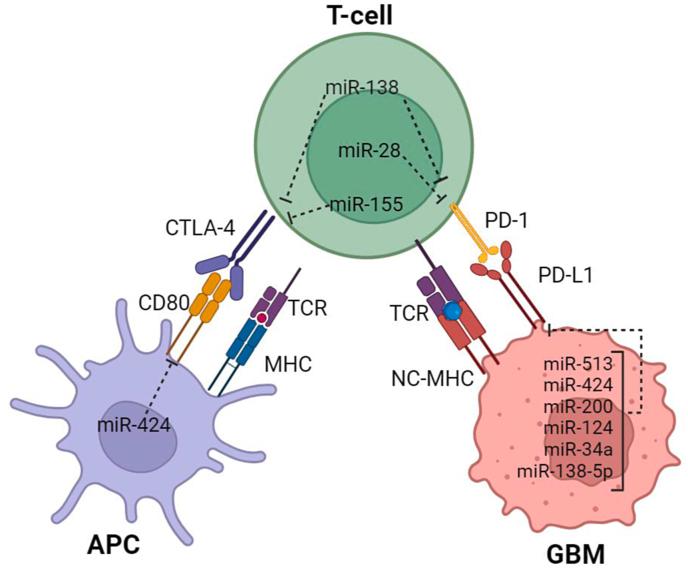
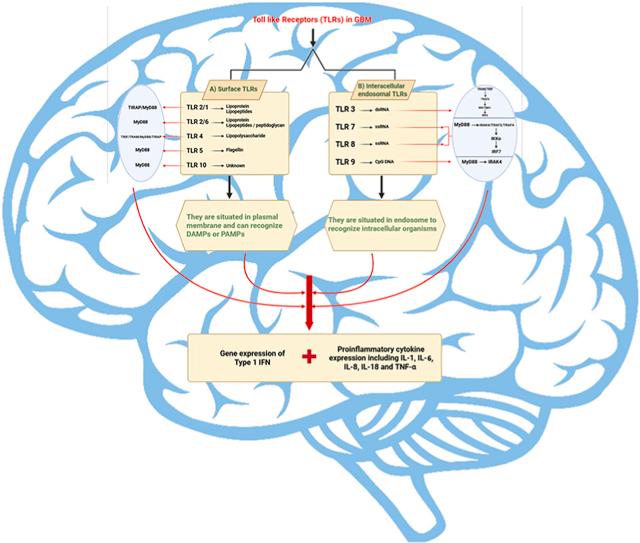
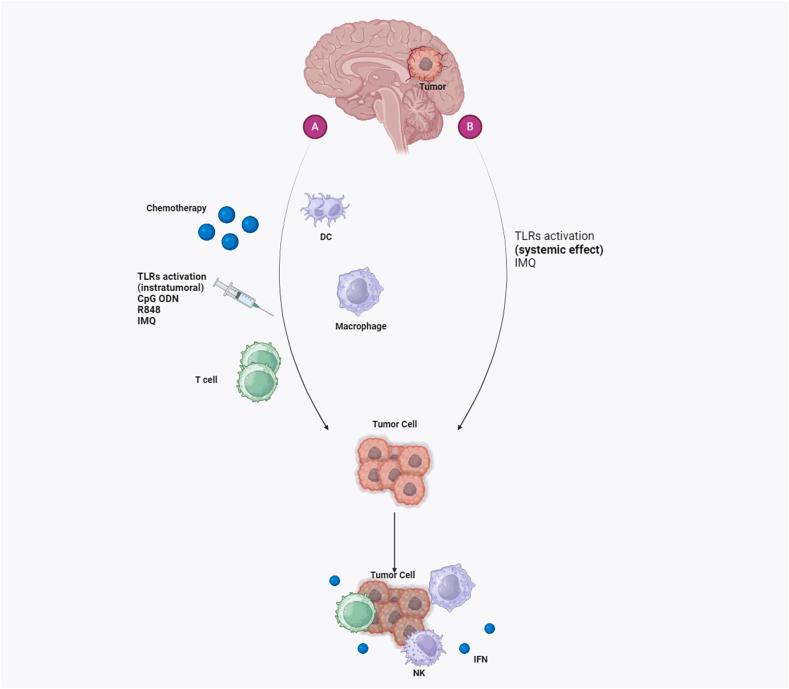
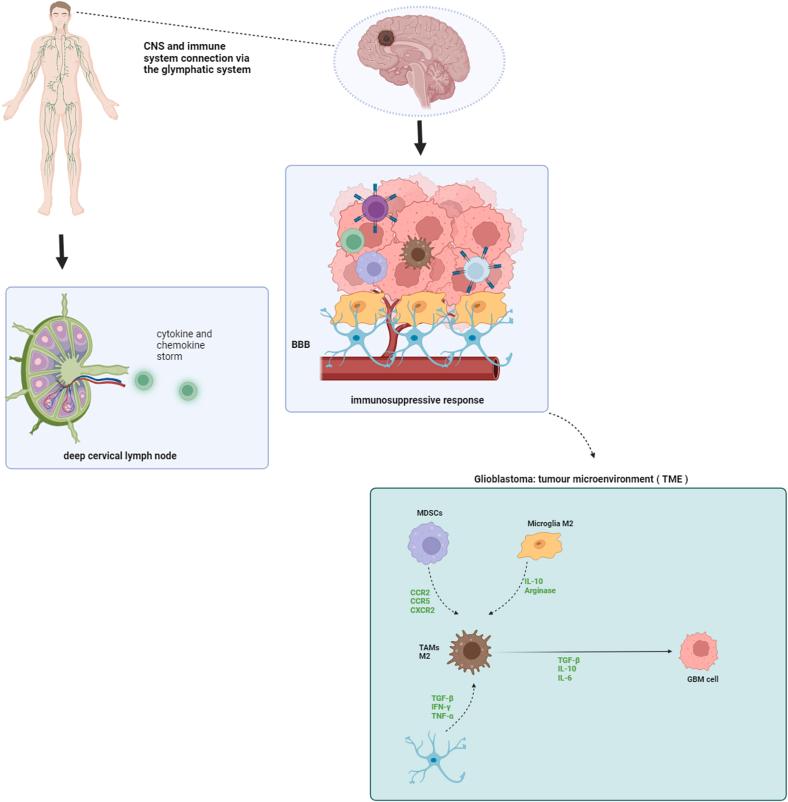
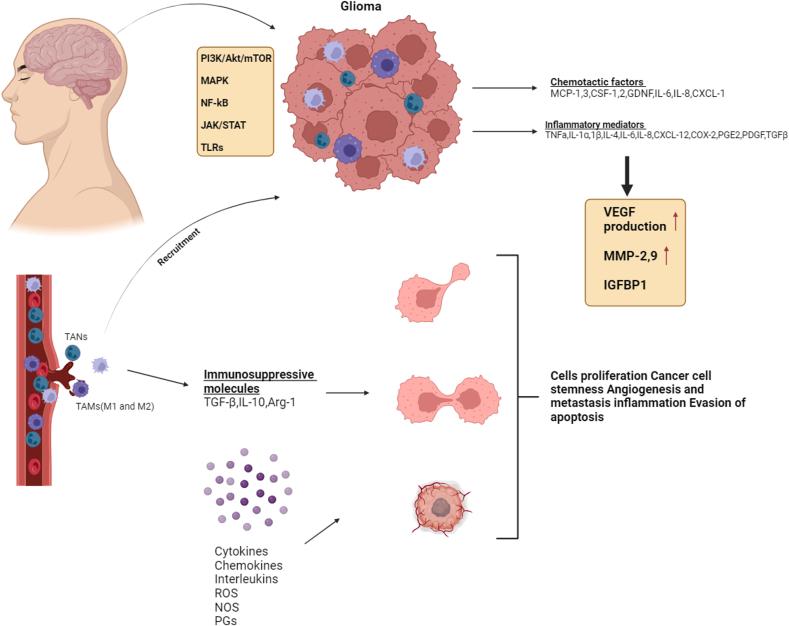
The most malignant brain tumor, glioblastoma multiforme (GBM), has a high mortality rate. Recently, translational elements in GBM therapy have emerged as novel therapeutic strategies in addition to conventional treatment methods. In this way, Toll-like receptor (TLR), PI3K/Akt/mTOR, MAPK/ERK, NOTCH, and other signaling pathways have recently become some of the main signaling pathways in brain tumors. The immunological reactions to brain tumors are mediated by these mechanisms. A family of proteins known as TLRs is essential to the natural defense mechanism because it can identify and react to infections and other danger signals. TLRs have dual functions in the glioma microenvironment including that they can initially activate the innate and adaptive immune responses that support antitumor activity and secondly, their activation can also contribute to tumor progression by promoting inflammation and immune evasion, as they are expressed on both immune cells and tumor cells. TLR agonists are receiving more attention in the treatment of glioma because some of them have demonstrated survival benefits in clinical studies when used in conjunction with immunotherapy, chemotherapy, radiation therapy, and immune checkpoint inhibitors. The most exciting use of TLR agonists is that they can be used as immunomodulators to avoid dose accumulation, boost the efficiency of other therapies, and, by upregulating PD-1, reinforce delayed immune checkpoint resistance against PD-1/PD-L1 inhibition. Therefore, the use of TLR agonists can lead to PD-L1 overexpression, which in turn enhances the efficacy of checkpoint inhibitors and triggers potent anticancer immune responses. In this article, we describe the function of the TLR signaling system, the cellular and molecular elements contributing to the etiology of glioblastoma multiforme, the connection between TLRs and glioma, and their significance for immunotherapy.
最恶性的脑肿瘤——多形性胶质母细胞瘤(GBM),死亡率很高。最近,除了传统治疗方法外,GBM治疗中的转化要素已成为新的治疗策略。通过这种方式,Toll样受体(TLR)、PI3K/Akt/mTOR、MAPK/ERK、NOTCH等信号通路最近已成为脑肿瘤中的一些主要信号通路。对脑肿瘤的免疫反应是由这些机制介导的。一类被称为TLR的蛋白质对天然防御机制至关重要,因为它可以识别感染和其他危险信号并做出反应。TLR在胶质瘤微环境中具有双重功能,包括它们最初可以激活支持抗肿瘤活性的先天性和适应性免疫反应,其次,它们的激活也可以通过促进炎症和免疫逃避来促进肿瘤进展,因为它们在免疫细胞和肿瘤细胞上均有表达。TLR激动剂在胶质瘤治疗中受到越来越多的关注,因为其中一些在与免疫疗法、化疗、放疗和免疫检查点抑制剂联合使用时,已在临床研究中显示出生存获益。TLR激动剂最令人兴奋的用途是它们可以用作免疫调节剂,以避免剂量累积、提高其他疗法的效率,并且通过上调PD-1,增强对PD-1/PD-L1抑制的延迟免疫检查点抗性。因此,使用TLR激动剂可导致PD-L1过表达,进而增强检查点抑制剂的疗效并触发强大的抗癌免疫反应。在本文中,我们描述了TLR信号系统的功能、促成多形性胶质母细胞瘤病因的细胞和分子要素、TLR与胶质瘤之间的联系及其对免疫治疗的意义。

 Zotero 插件