
漫步于藏红花田、大麻叶和樱桃之间,探寻从废弃物中获取抗菌生物制品的途径。
A Stroll Through Saffron Fields, Cannabis Leaves, and Cherry Reveals the Path to Waste-Derived Antimicrobial Bioproducts.
作者信息
Lamponi Stefania, Barletta Roberta, Geminiani Michela, Trezza Alfonso, Frusciante Luisa, Shabab Behnaz, Nyong'a Collins Nyaberi, Santucci Annalisa
机构信息
Department of Biotechnology, Chemistry & Pharmacy, University of Siena, Via Aldo Moro, 53100 Siena, Italy.
SienabioACTIVE, University of Siena, Via Aldo Moro, 53100 Siena, Italy.
出版信息
Pharmaceuticals (Basel). 2025 Jul 3;18(7):1003. doi: 10.3390/ph18071003.
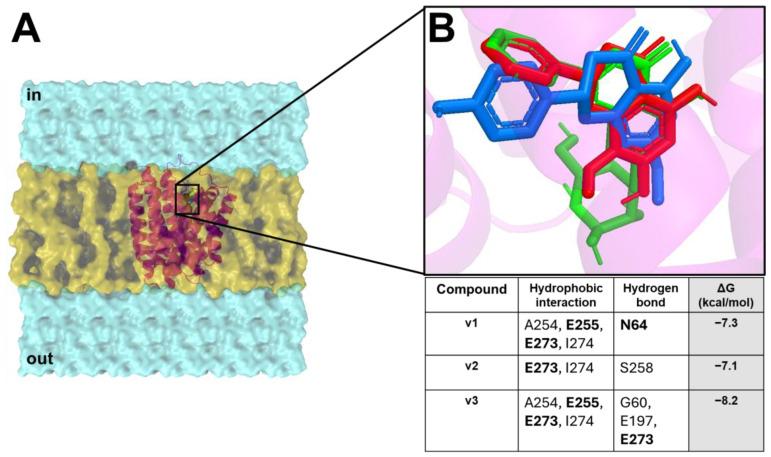
The accumulation of agri-food waste is a major environmental and economic challenge and converting these by-products into bioactive compounds fits within the circular bioeconomy. This study aimed to evaluate the antimicrobial potential of extracts derived from L. leaves (CSE), tepals (CST), and L. cherry waste (VCE) against four key bacterial species (, , , and ). Minimum inhibitory concentration (MIC) assays were performed to assess antibacterial activity, while a bioinformatic pipeline was implemented to explore possible molecular targets. Full-proteome multiple sequence alignments across the bacterial strains were used to identify conserved, strain-specific proteins, and molecular docking simulations were applied to predict binding interactions between the most abundant compounds in the extracts and their targets. CSE and CST demonstrated bacteriostatic activity against and (MIC = 15.6 mg/mL), while VCE showed selective activity against (MIC = 31.5 mg/mL). CodY was identified as a putative molecular target for CSE and CST, and ChaA for VCE. Docking results supported the possibility of spontaneous binding between abundant extract constituents and the predicted targets, with high binding affinities triggering a strong interaction network with target sensing residues. This study demonstrates the antimicrobial activity of these agri-food wastes and introduces a comprehensive in vitro and in silico workflow to support the bioactivity of these agri-food wastes and repurpose them for innovative, eco-sustainable applications in the biotechnology field and beyond.
农业食品废弃物的积累是一项重大的环境和经济挑战,将这些副产品转化为生物活性化合物符合循环生物经济的理念。本研究旨在评估从L.叶片(CSE)、花被片(CST)和L.樱桃废弃物(VCE)中提取的提取物对四种关键细菌物种(、、、和)的抗菌潜力。进行了最低抑菌浓度(MIC)测定以评估抗菌活性,同时实施了一个生物信息学流程来探索可能的分子靶点。利用细菌菌株的全蛋白质组多序列比对来鉴定保守的、菌株特异性的蛋白质,并应用分子对接模拟来预测提取物中最丰富的化合物与其靶点之间的结合相互作用。CSE和CST对和表现出抑菌活性(MIC = 15.6 mg/mL),而VCE对表现出选择性活性(MIC = 31.5 mg/mL)。CodY被鉴定为CSE和CST的推定分子靶点,ChaA为VCE的推定分子靶点。对接结果支持了提取物中丰富成分与预测靶点之间自发结合的可能性,高结合亲和力触发了与靶点传感残基的强相互作用网络。本研究证明了这些农业食品废弃物的抗菌活性,并引入了一种全面的体外和计算机模拟工作流程,以支持这些农业食品废弃物的生物活性,并将其重新用于生物技术领域及其他领域的创新、生态可持续应用。


 Zotero 插件