
翻译后修饰调控心血管疾病中mTOR驱动的细胞死亡。
Post-translational modifications orchestrate mTOR-driven cell death in cardiovascular disease.
作者信息
Guo Jiawei, Wu Yiting, Wan Zhengdong, Zhang Zhaoshan
机构信息
Department of Vascular and Endovascular Surgery, The First Affiliated Hospital of Yangtze University, Jingzhou, China.
Department of Pharmacology, School of Medicine, Yangtze University, Jingzhou, China.
出版信息
Front Cardiovasc Med. 2025 Jul 15;12:1620669. doi: 10.3389/fcvm.2025.1620669. eCollection 2025.
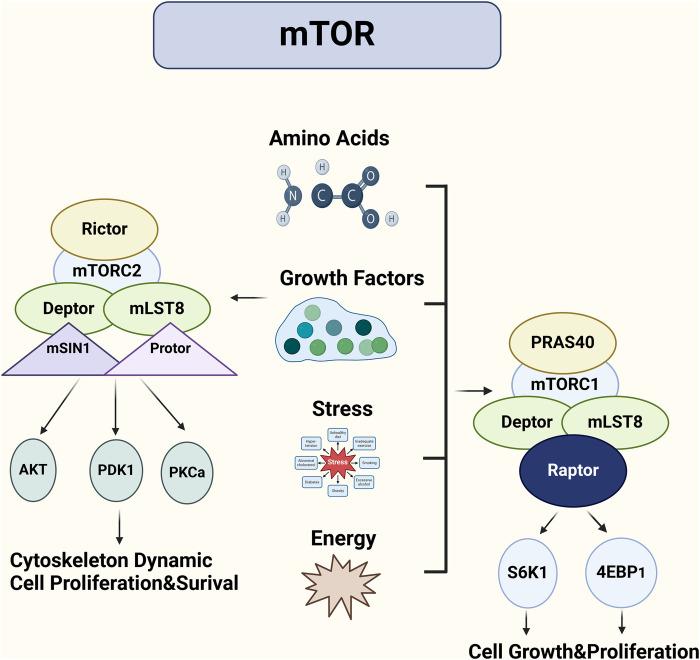
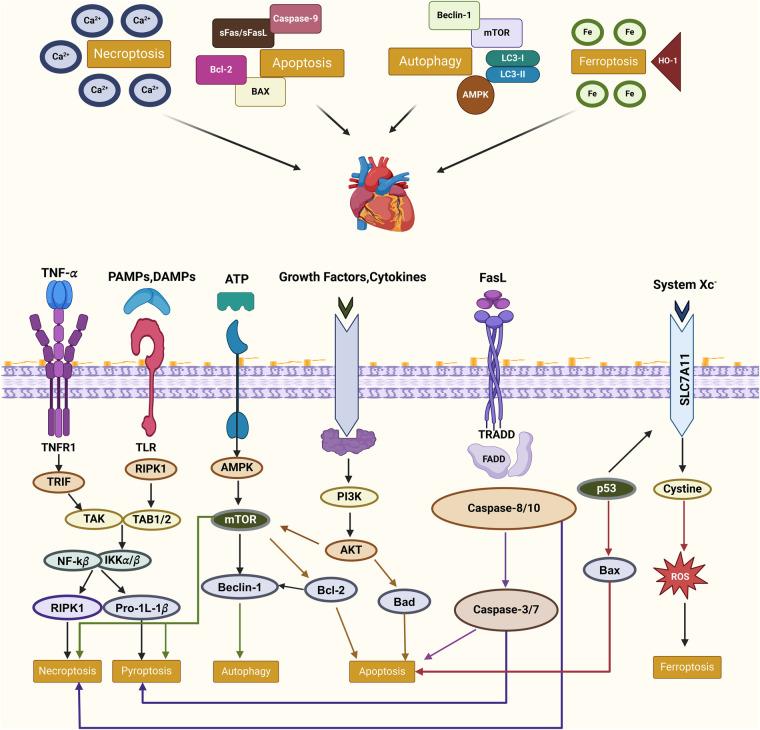
The mechanistic target of rapamycin (mTOR) signaling pathway is a central regulator of cellular physiology, modulating processes such as metabolism, protein synthesis, growth, and various forms of cell death. Increasing evidence has revealed that dysregulation of mTOR activity, often triggered or exacerbated by aberrant post-translational modifications (PTMs), contributes to the onset and progression of cardiovascular diseases (CVDs), including atherosclerosis, myocardial infarction, heart failure, and ischemia-reperfusion injury. PTMs such as phosphorylation, ubiquitination, SUMOylation, acetylation, and glycosylation alter mTOR's upstream regulators and downstream effectors, influencing the balance between apoptosis, autophagy, pyroptosis, and ferroptosis. These regulatory mechanisms provide a molecular basis for cell fate decisions during cardiovascular stress and injury. In this review, we systematically summarize recent advances in the understanding of PTM-mediated control of mTOR signaling, with a focus on cardiovascular pathophysiology. We also highlight emerging therapeutic strategies that target PTMs or the mTOR axis, including mTOR inhibitors, AMPK activators, proteasome blockers, and SUMOylation modulators, all of which show promise in preclinical or clinical settings. Understanding how PTMs fine-tune mTOR activity and cell death may pave the way for novel, targeted interventions in cardiovascular medicine and offer potential avenues for the development of precision therapies.
雷帕霉素的作用靶点(mTOR)信号通路是细胞生理的核心调节因子,可调节代谢、蛋白质合成、生长以及各种形式的细胞死亡等过程。越来越多的证据表明,mTOR活性失调通常由异常的翻译后修饰(PTM)引发或加剧,这会导致心血管疾病(CVD)的发生和发展,包括动脉粥样硬化、心肌梗死、心力衰竭和缺血再灌注损伤。磷酸化、泛素化、SUMO化、乙酰化和糖基化等PTM会改变mTOR的上游调节因子和下游效应器,影响细胞凋亡、自噬、焦亡和铁死亡之间的平衡。这些调节机制为心血管应激和损伤期间的细胞命运决定提供了分子基础。在本综述中,我们系统地总结了对PTM介导的mTOR信号控制的最新认识进展,重点关注心血管病理生理学。我们还强调了针对PTM或mTOR轴的新兴治疗策略,包括mTOR抑制剂、AMPK激活剂、蛋白酶体阻滞剂和SUMO化调节剂,所有这些在临床前或临床环境中都显示出前景。了解PTM如何微调mTOR活性和细胞死亡,可能为心血管医学中的新型靶向干预铺平道路,并为精准治疗的发展提供潜在途径。

 Zotero 插件