
观点:人类营养研究中的衰老生物标志物——聚焦应用、挑战与机遇
Perspective: Biomarkers of Aging in Human Nutrition Research-A Focus on Applications, Challenges, and Opportunities.
作者信息
Loughlin Keeva Nm, Grootswagers Pol, Camps Guido, de Groot Lisette Cpgm
机构信息
Division of Human Nutrition and Health, Wageningen University, Wageningen, The Netherlands.
Division of Human Nutrition and Health, Wageningen University, Wageningen, The Netherlands.
出版信息
Adv Nutr. 2025 Jul 28;16(9):100486. doi: 10.1016/j.advnut.2025.100486.
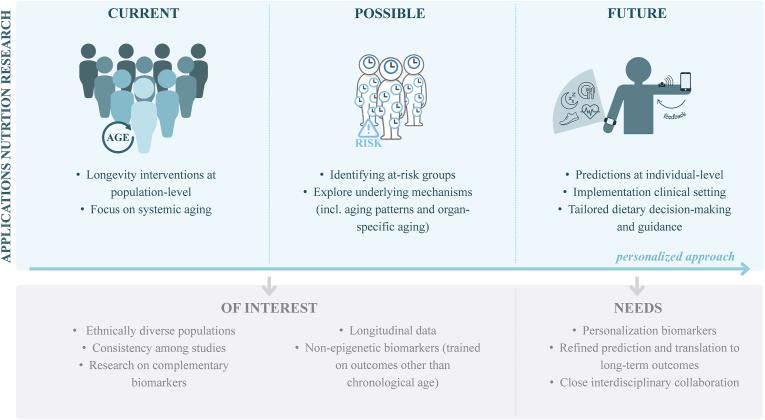
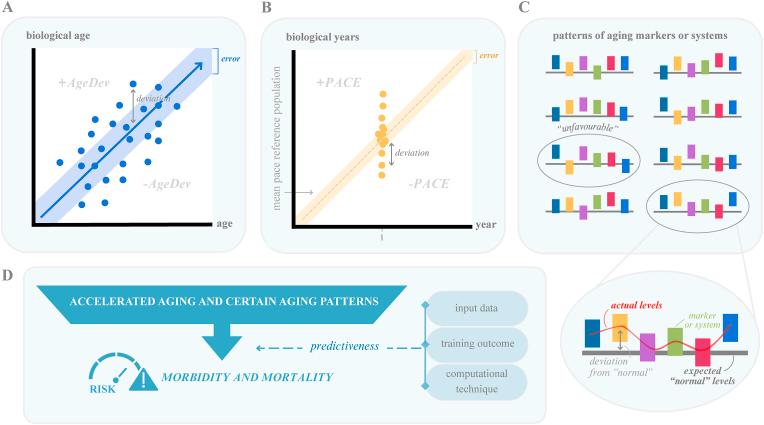
Predictive algorithm-based biomarkers of aging (BoA), such as aging clocks, are increasingly applied within human nutrition research. Despite great promise of these BoA, validation efforts and guidelines for implementation are lagging behind the vast and growing number of available biomarkers, complicating their use and introducing variance across studies. Therefore, in the current perspective paper, we provide practical insights and an initial set of recommendations for consistent future implementation of BoA within nutrition research based on current knowledge, both on a general level and within different research scenarios. We critically reflect on existing observational and experimental nutrition research, and outline the potential application of BoA in identifying at-risk groups, exploring heterogeneity underlying aging and nutritional effects, and personalized approaches. This work aims to support nutritional researchers in making informed decisions on contextually appropriate biomarkers and provides directions for future nutritional research involving BoA, because, despite much needed advancements, we consider BoA exciting and promising tools in nutrition research.
基于预测算法的衰老生物标志物(BoA),如衰老时钟,在人类营养研究中的应用越来越广泛。尽管这些衰老生物标志物前景广阔,但验证工作和实施指南却滞后于大量且不断增加的可用生物标志物,这使得它们的使用变得复杂,并在不同研究中引入了差异。因此,在当前这篇观点论文中,我们基于现有知识,从总体层面以及不同研究场景出发,为未来在营养研究中持续实施衰老生物标志物提供实用见解和初步建议集。我们批判性地反思了现有的观察性和实验性营养研究,并概述了衰老生物标志物在识别高危人群、探索衰老和营养效应背后的异质性以及个性化方法方面的潜在应用。这项工作旨在支持营养研究人员就背景合适的生物标志物做出明智决策,并为未来涉及衰老生物标志物的营养研究提供方向,因为尽管有诸多亟需改进之处,但我们认为衰老生物标志物是营养研究中令人兴奋且前景广阔的工具。

 Zotero 插件