
早产新生儿的围产期糖皮质激素敏感性:分子机制、内源性决定因素及临床意义。
Perinatal glucocorticoid sensitivity in the preterm newborn: molecular mechanisms, endogenous determinants, and clinical implications.
作者信息
Anti Nana A O, Gheorghe Ciprian P, Deming Douglas D, Adeoye Olayemi O, Zhang Lubo, Mata-Greenwood Eugenia
机构信息
Lawrence D. Longo Center for Perinatal Biology, Department of Basic Sciences, School of Medicine, Loma Linda University, Loma Linda, CA, United States.
Department of Obstetrics and Gynecology, School of Medicine, Loma Linda University, Loma Linda, CA, United States.
出版信息
Front Endocrinol (Lausanne). 2025 Jul 16;16:1587891. doi: 10.3389/fendo.2025.1587891. eCollection 2025.
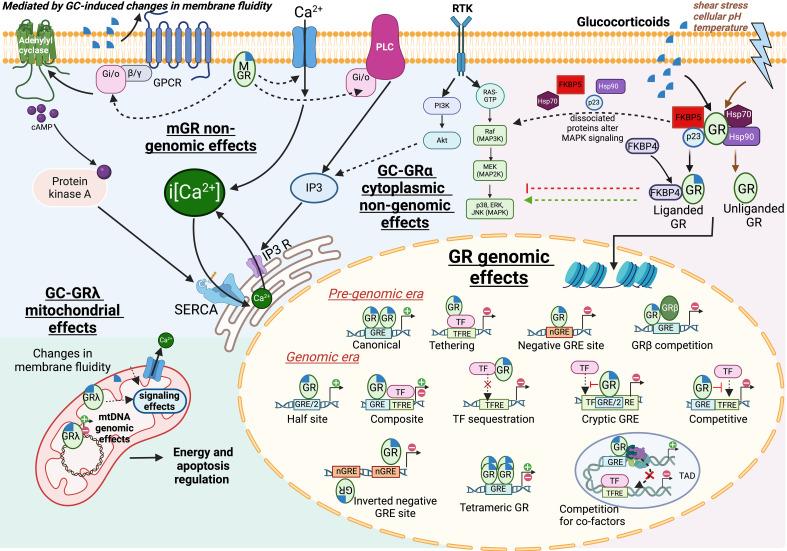
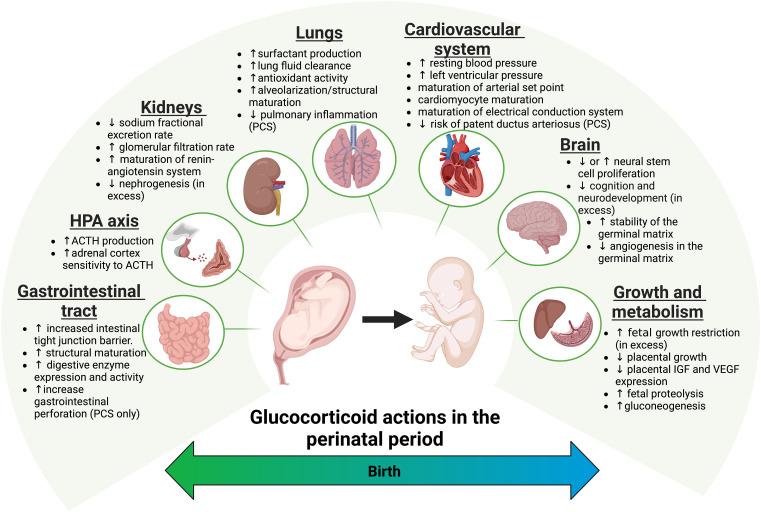
Glucocorticoids are steroid hormones that regulate multiple physiological processes throughout the lifespan and play a central role in the adaptive stress response. Their biological effects are mediated by the glucocorticoid receptor, which acts through both genomic and nongenomic mechanisms to regulate transcriptional signatures and intracellular signaling pathways, respectively. These effects are tissue- and context-dependent, allowing the body to adapt to developmental and environmental changes. Glucocorticoid-mediated effects are influenced by both hormone bioavailability and tissue-specific responsiveness. Reduced glucocorticoid sensitivity has been observed in patients with severe disease or a diminished response to synthetic glucocorticoid therapies. During the perinatal period, the endogenous glucocorticoid cortisol exerts unique developmental effects on the late-gestation fetus that are essential for extrauterine life. Antenatal glucocorticoid therapy has demonstrated beneficial effects in preventing prematurity-related diseases, while postnatal glucocorticoid treatment reduces inflammation and improves oxygenation in bronchopulmonary dysplasia. However, these therapies exhibit variable responses, both in terms of their beneficial and adverse effects. Furthermore, preterm newborns are exposed to adverse intrauterine environments, including placental insufficiency and infection, which-when combined with immaturity-result in dysregulated perinatal glucocorticoid homeostasis. Intrauterine stressors can therefore alter fetal glucocorticoid sensitivity, partially explaining the variability in clinical outcomes observed among preterm newborns. These adverse conditions may also interact with genetic and physiological factors, such as gestational age and fetal sex, further amplifying glucocorticoid homeostasis dysregulation. In this review, we explore the clinical and basic science evidence on the endogenous determinants of perinatal glucocorticoid sensitivity, with an emphasis on their clinical implications for disease risk and the efficacy of glucocorticoid therapy in the preterm newborn.
糖皮质激素是一类甾体激素,在整个生命周期中调节多种生理过程,在适应性应激反应中起核心作用。它们的生物学效应由糖皮质激素受体介导,该受体分别通过基因组和非基因组机制发挥作用,以调节转录特征和细胞内信号通路。这些效应具有组织和环境依赖性,使身体能够适应发育和环境变化。糖皮质激素介导的效应受激素生物利用度和组织特异性反应性的影响。在患有严重疾病或对合成糖皮质激素疗法反应减弱的患者中,已观察到糖皮质激素敏感性降低。在围产期,内源性糖皮质激素皮质醇对晚期妊娠胎儿产生独特的发育影响,这对宫外生活至关重要。产前糖皮质激素治疗已证明对预防早产相关疾病有益,而产后糖皮质激素治疗可减轻支气管肺发育不良中的炎症并改善氧合。然而,这些疗法在有益和不利影响方面均表现出可变的反应。此外,早产新生儿暴露于不良的宫内环境,包括胎盘功能不全和感染,这些因素与不成熟相结合会导致围产期糖皮质激素稳态失调。因此,宫内应激源可改变胎儿糖皮质激素敏感性,部分解释了早产新生儿中观察到的临床结局的变异性。这些不利条件还可能与遗传和生理因素相互作用,如胎龄和胎儿性别,进一步加剧糖皮质激素稳态失调。在本综述中,我们探讨了围产期糖皮质激素敏感性内源性决定因素的临床和基础科学证据,重点关注它们对疾病风险的临床意义以及糖皮质激素治疗对早产新生儿的疗效。


 Zotero 插件