
22q11.2缺失综合征相关精神分裂症患者脑类器官中皮质神经元发育的异常进程
Aberrant pace of cortical neuron development in brain organoids from patients with 22q11.2 deletion syndrome-associated schizophrenia.
作者信息
Rao Sneha B, Sun Zhixiong, Brundu Francesco, Chen Yannan, Sun Yan, Zhu Huixiang, Shprintzen Robert J, Tomer Raju, Rabadan Raul, Leong Kam W, Markx Sander, Kushner Steven A, Xu Bin, Gogos Joseph A
机构信息
Mortimer B. Zuckerman Mind Brain and Behavior Institute, Columbia University, New York, NY, USA.
Stavros Niarchos Foundation Center for Precision Psychiatry and Mental Health, New York, NY, USA.
出版信息
Nat Commun. 2025 Aug 1;16(1):6986. doi: 10.1038/s41467-025-62187-x.
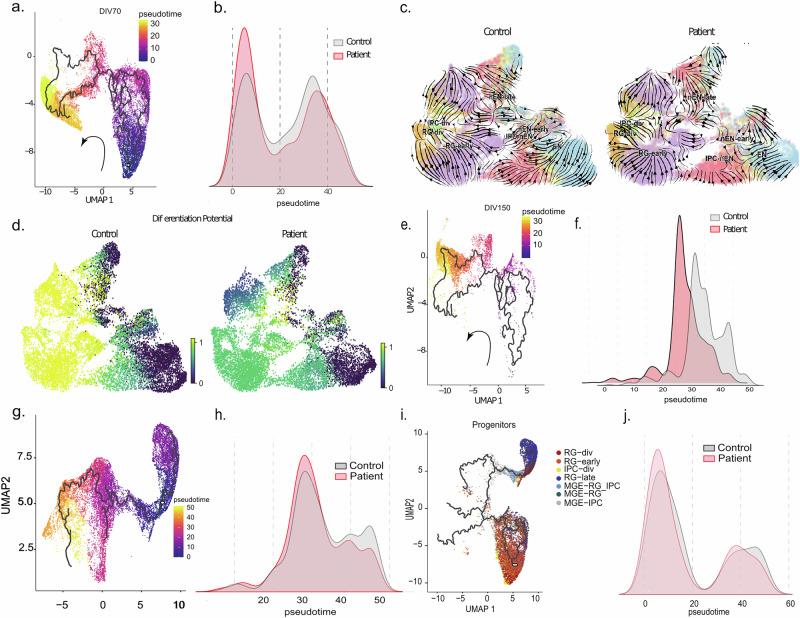
Children and adults with 22q11.2 deletion syndrome (22q11.2DS) experience cognitive and emotional challenges and face a markedly increased risk for schizophrenia (SCZ), yet how this deletion alters early human brain development remains unclear. Using cerebral cortex organoids derived from individuals with 22q11.2DS and SCZ, we identify cell-type-specific developmental abnormalities. Single-cell RNA sequencing and experimental validation reveal delayed cortical neuron maturation, with increased neural progenitor proliferation and a reduced proportion of more mature neurons. We observe disrupted molecular programs linked to neuronal maturation, sparser neurites, and blunted glutamate-induced Ca²⁺ responses. The aberrant transcriptional profile is enriched for neuropsychiatric risk genes. MicroRNA profiling suggests that DGCR8 haploinsufficiency contributes to these effects via dysregulation of genes that control the pace of maturation. Protein-protein interaction network analysis highlights complementary roles for additional deleted genes. Our study reveals consistent developmental and molecular defects caused by 22q11.2 deletions, offering insights into disease mechanisms and therapeutic strategies.
患有22q11.2缺失综合征(22q11.2DS)的儿童和成人面临认知和情感挑战,患精神分裂症(SCZ)的风险显著增加,但这种缺失如何改变人类早期大脑发育仍不清楚。利用源自22q11.2DS和SCZ患者的大脑皮质类器官,我们确定了细胞类型特异性的发育异常。单细胞RNA测序和实验验证揭示了皮质神经元成熟延迟,神经祖细胞增殖增加,更成熟神经元的比例降低。我们观察到与神经元成熟、神经突稀疏和谷氨酸诱导的Ca²⁺反应减弱相关的分子程序紊乱。异常的转录谱富含神经精神疾病风险基因。微小RNA分析表明,DGCR8单倍体不足通过控制成熟速度的基因失调导致这些影响。蛋白质-蛋白质相互作用网络分析突出了其他缺失基因的互补作用。我们的研究揭示了由22q11.2缺失引起的一致的发育和分子缺陷,为疾病机制和治疗策略提供了见解。
 Zotero 插件