
一项为期两年的热量限制干预可能会降低血糖生物学年龄生物标志物——一项初步研究。
A 2-year calorie restriction intervention may reduce glycomic biological age biomarkers - a pilot study.
作者信息
Pribić Tea, Das Jayanta K, Đerek Lovorka, Belsky Daniel W, Orenduff Melissa, Huffman Kim M, Kraus William E, Deriš Helena, Šimunović Jelena, Štambuk Tamara, Frkatović-Hodžić Azra, Kraus Virginia B, Das Sai Krupa, Racette Susan B, Banskota Nirad, Ferrucci Luigi, Pieper Carl, Lewis Nathan E, Lauc Gordan, Krishnan Sridevi
机构信息
Genos Ltd, Glycoscience Research Laboratory, Zagreb, Croatia.
Longitudinal Studies Section, Translation Gerontology Branch, National Institute on Aging, National Institutes of Health, Baltimore, MD, USA.
出版信息
NPJ Aging. 2025 Aug 1;11(1):71. doi: 10.1038/s41514-025-00254-9.
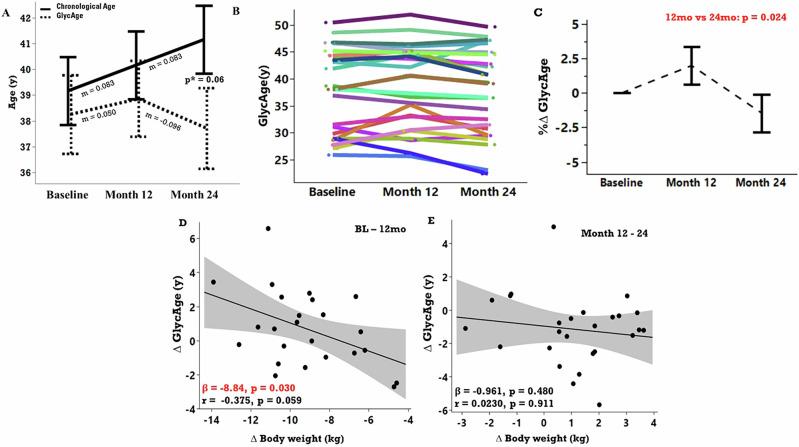
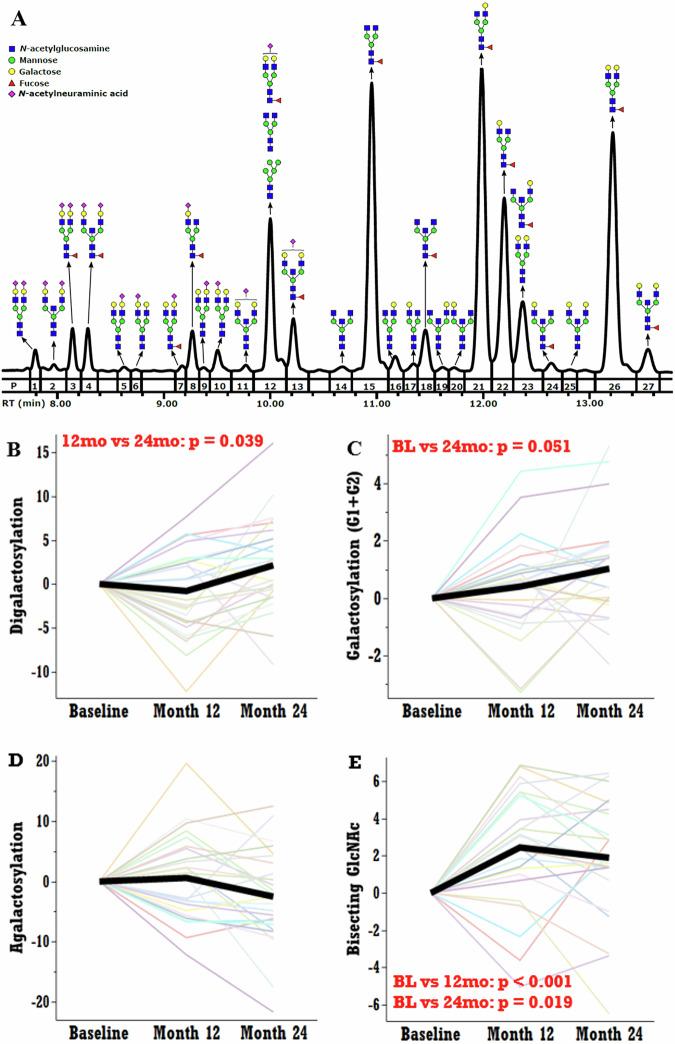
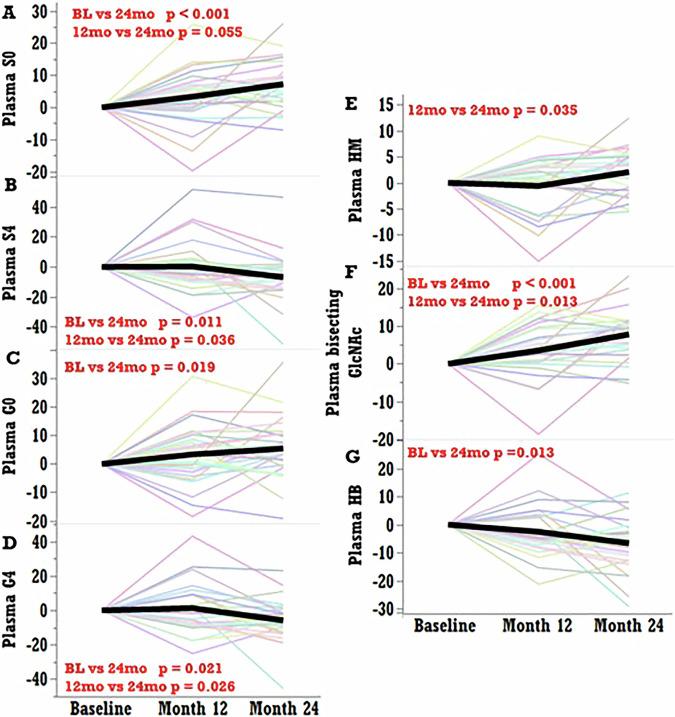
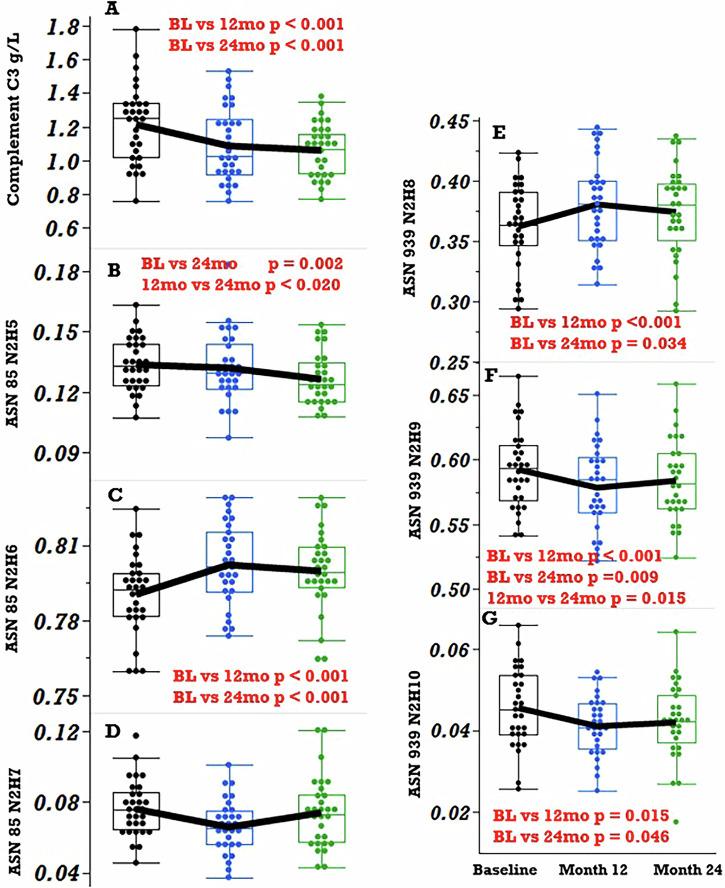
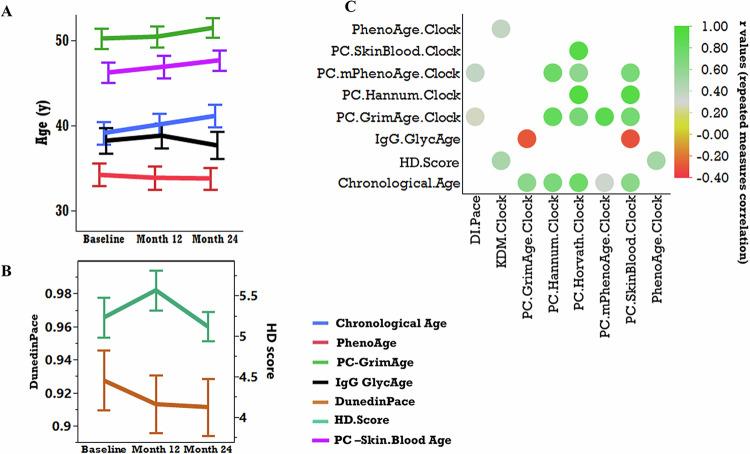
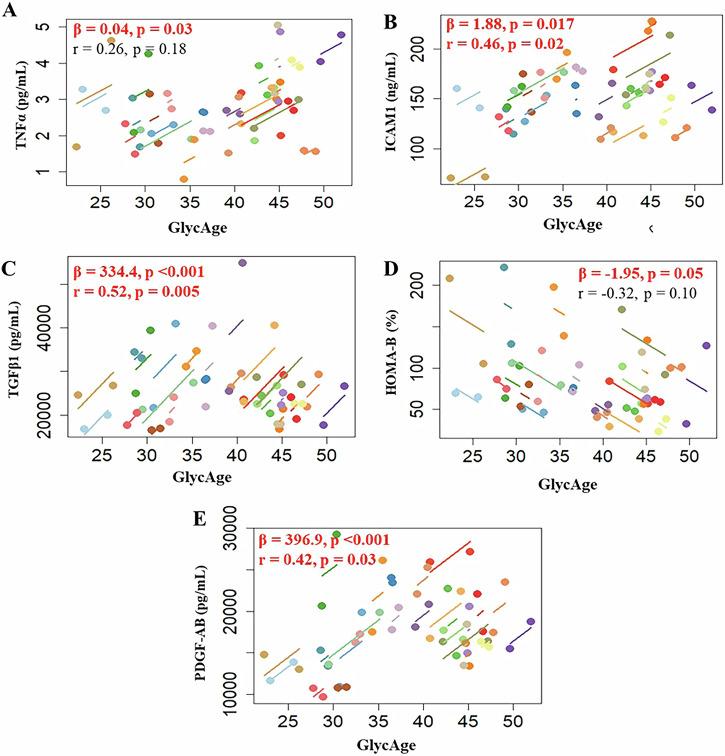
In this pilot study, a subset of CALERIE Phase 2 (No. NCT00427193, registered 25th Jan 2007) participants (n = 26) were evaluated for the effects of 2 years of 25% calorie restriction (CR) on N-glycosylation of IgG, plasma, and complement C3, as well as IgG-based biological age (GlycAge). Plasma samples were collected at baseline (BL), 12 (12mo), and 24 months (24mo). IgG galactosylation was higher at 24mo compared to BL (p = 0.051) and increased from 12mo to 24mo (p = 0.016); GlycAge decreased over the same period (p = 0.027). GlycAge was positively associated with TNF-α (p = 0.030) and ICAM-1 (p = 0.017). Between BL and 24mo, plasma high-branched glycans declined (p = 0.013), bisecting GlcNAcs increased in both plasma (p < 0.001) and IgG (p = 0.01), complement C3 protein (p < 0.001), C3-Man9 (p < 0.001), and C3-Man9Glc1C3 (p = 0.046) were reduced. The absence of a control group warrants cautious interpretation.
在这项初步研究中,对热量限制长期效应综合评估的第2阶段(编号NCT00427193,于2007年1月25日注册)的部分参与者(n = 26)进行了评估,以研究2年25%热量限制(CR)对IgG、血浆和补体C3的N-糖基化以及基于IgG的生物学年龄(糖龄)的影响。在基线(BL)、12个月(12mo)和24个月(24mo)时采集血浆样本。与基线相比,24个月时IgG半乳糖基化更高(p = 0.051),且从12个月到24个月有所增加(p = 0.016);同期糖龄下降(p = 0.027)。糖龄与TNF-α(p = 0.030)和ICAM-1(p = 0.017)呈正相关。在基线和24个月之间,血浆高分支聚糖下降(p = 0.013),血浆(p < 0.001)和IgG(p = 0.01)中的平分型GlcNAc增加,补体C3蛋白(p < 0.001)、C3-Man9(p < 0.001)和C3-Man9Glc1C3(p = 0.046)减少。由于缺乏对照组,故解释时需谨慎。
 Zotero 插件